
Related videos:
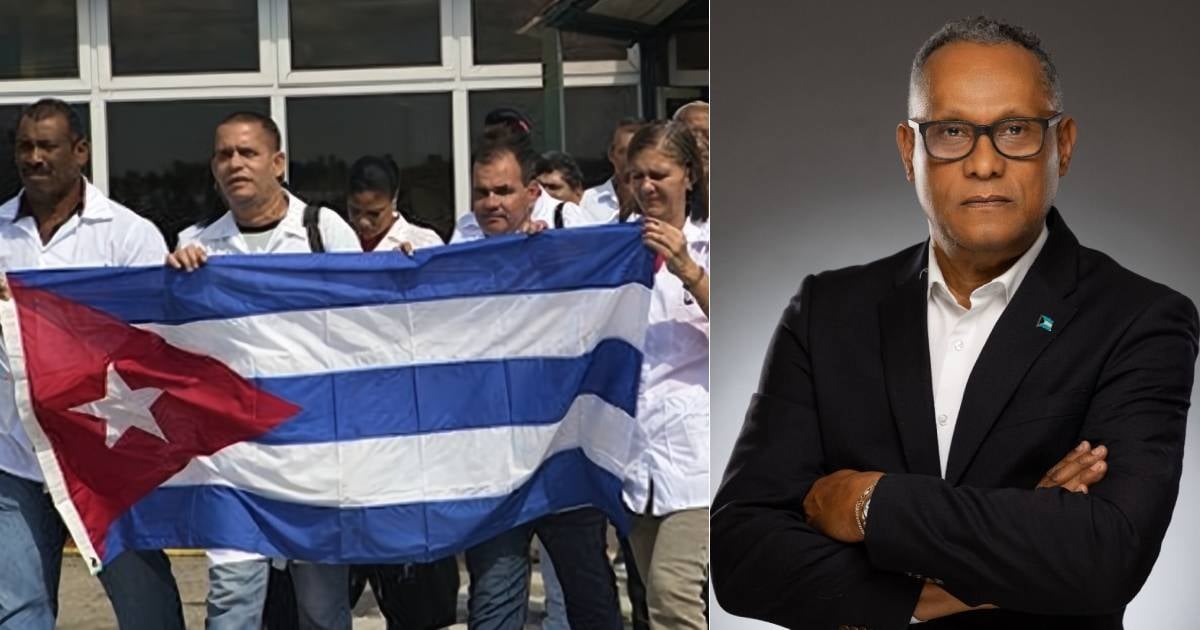
The government of Bahamas revealed some of the conditions of the new employment contract that it will offer to Cuban doctors working in the archipelago, while waiting for the final approval from the United States to implement the agreement. The announcement marks another step in the transformation of a program that has long been criticized by Washington as a form of "forced labor" controlled by the Havana regime.
According to statements from the Minister of Health and Wellness, Dr. Michael Darville, cited by the local newspaper The Tribune, Cuban professionals will now have greater autonomy and control over their living conditions, in contrast to the previous agreements managed by the Cuban state agency Comercializadora de Servicios Médicos Cubanos (CSMC).
"The main change is that Cuban professionals will now arrange their own accommodation and have more freedom over their living arrangements," Darville explained to The Tribune, adding that the Cuban embassy used to require everyone to live in the same place, something that the new contract completely eliminates.
An agreement under review by Washington
The minister confirmed that the draft contract was sent to U.S. officials, who must approve it before it goes into effect.
“We want to ensure that the diplomatic note meets all the requirements before moving forward,” Darville noted. “Hopefully, between this week and next, we will have a clearer indication, but we want to act quickly to resolve this issue and put it behind us.”
The measure comes after warnings from the United States to revoke visas for Bahamian officials if the country continued participating in the traditional hiring scheme with Cuba, which Washington considers a form of human trafficking.
In June, Darville had already indicated that Bahamas would cancel contracts managed by Cuban intermediaries and would offer direct agreements with its own Ministry of Health, ensuring that salaries are paid in full to the workers.
The end of state mediation
A contract leaked in 2022 by the organization Cuba Archive revealed that the Bahamian government paid up to $12,000 per month for each Cuban doctor, while the professionals received only between $990 and $1,200, with the remainder going to the coffers of the CSMC, which is dependent on the Cuban State.
The new framework aims to definitively close that gap and align with the demands of Washington, which has praised Nassau's efforts to ensure fair working conditions.
In statements prior to Caribbean Life, the chargé d'affaires of the U.S. in the Bahamas, Kimberly Furnish, described the reform as "a positive step," insisting that "everyone deserves to receive their salary directly, without the intervention of any government."
Doctors between hope and uncertainty
Currently, about 35 Cuban professionals —including ophthalmologists, nurses, laboratory technicians, and physiotherapists— are providing services in the Bahamas. Most have expressed their desire to remain in the country, where they are essential for a healthcare system that is short on staff.
However, their future remains uncertain, pending U.S. approval and under the watchful eye of Havana, which has responded to the Bahamian reforms with silence.
“Cuban doctors want to stay, but we depend on what the United States says,” Darville himself acknowledged in previous statements.
If Washington gives the green light, the Bahamas will become the first country in the Caribbean to pay Cuban professionals directly, breaking decades of financial control by Havana over its medical missions.
A change that would not only alleviate diplomatic pressure but also provide doctors with a unique opportunity to work with dignity and receive the full benefits of their labor.
Filed under: