
Related videos:
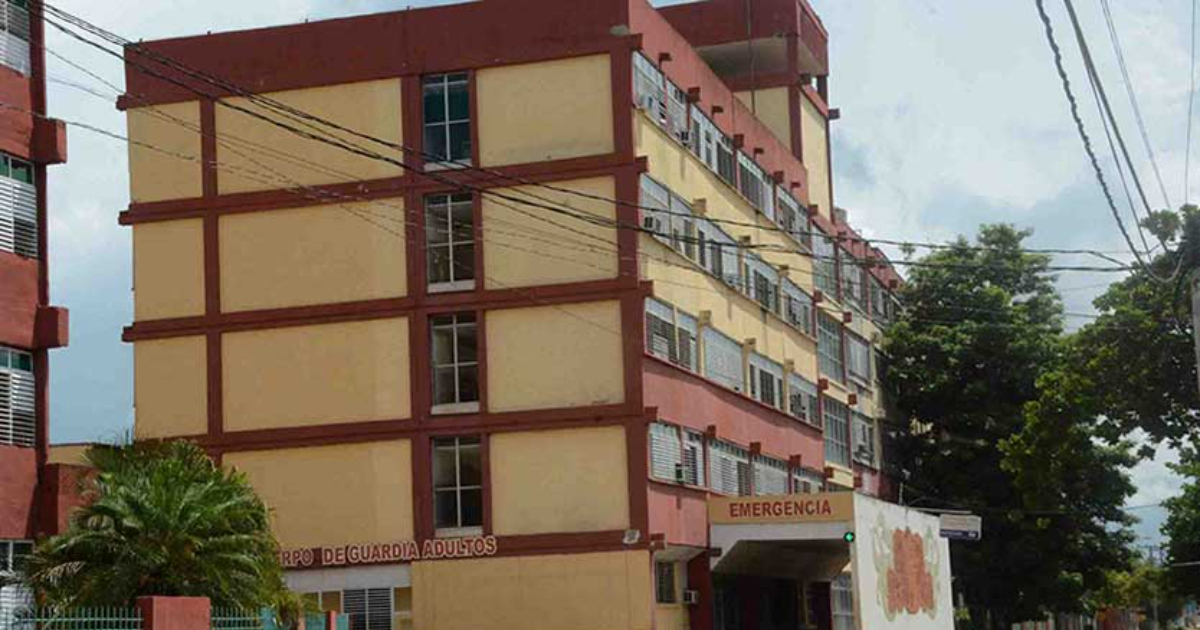
Cuban activist Guelmi Abdul publicly reported on social media this Monday that several patients in the oncology department at the "Antonio Luaces Iraola" Provincial Hospital in Ciego de Ávila were sent home without receiving chemotherapy treatment due to a lack of venous infusion equipment, an essential supply for administering intravenous medications.
“Right now at 10:20 am, oncology patients at the hospital are unable to receive treatment. Only those who brought their own IV fluids will be attended to. The rest will go home. This is the reality, it hurts, yes, it hurts... but it must be shown,” wrote Abdul on his Facebook account.
According to the activist, the treatments have been rescheduled for next month, which poses a direct threat to people with serious illnesses. "There is no shortage, there is misery, which is different and distinct. Because if there is enough for the big bosses, there should be enough for the unfortunate people," she lamented.
The complaint sparked a widespread response on social media. The Camagüeyan journalist and activist José Luis Tan Estrada shared the post on his wall. "Only those who bring their venoclisis purchased from outside, at 250 or 300 CUP, not including delivery, are being treated. Those who don't have it have to wait until next month," he wrote. He also highlighted the seriousness of the institutional silence: "In the meantime, no immediate solution has been provided by the health authorities."
Among the comments on his own post, Abdul also directly questioned a hospital worker who tried to justify the situation: “If you felt humanity, love, empathy, and could feel the pain of an oncology patient, you would be shouting to the world looking for your intravenous equipment, demanding it from your superiors, and not justifying so many lies in a collapsed country.”
The post generated a wave of reactions among patients, families, and citizens across the country. Some comments described the situation as a "silent genocide," "total abandonment," and "a slow death," while others lamented having to turn to the black market to acquire venous infusion equipment, which prices would range between 250 and 300 Cuban pesos. There were also responses from users who defended the dedication of the medical staff, asserting that the oncology team "does the impossible" to care for patients, even amid shortages. On the other hand, some comments sought to justify the situation from a perspective more aligned with institutional discourse, claiming that the problem is not the hospital's fault but rather a result of the country's general context.
The Antonio Luaces Iraola Hospital has been the focus of other recent complaints. In September, CiberCuba reported the case of a recently operated patient who became trapped in a malfunctioning elevator within the medical center, without assistance from staff and lacking backup power for critical systems.
Abdul's complaint joins other warnings about the progressive deterioration of the Cuban healthcare system, such as the case of the Pediatric Hospital of Camagüey, where in recent days a mother reported that dozens of children were attended to by a single pediatrician, amidst a dengue outbreak.
So far, the Ministry of Public Health (MINSAP) has not issued any official statement regarding the situation in Ciego de Ávila nor explained why cancer patients must bring their own supplies to receive treatment.
Filed under: