
Related videos:
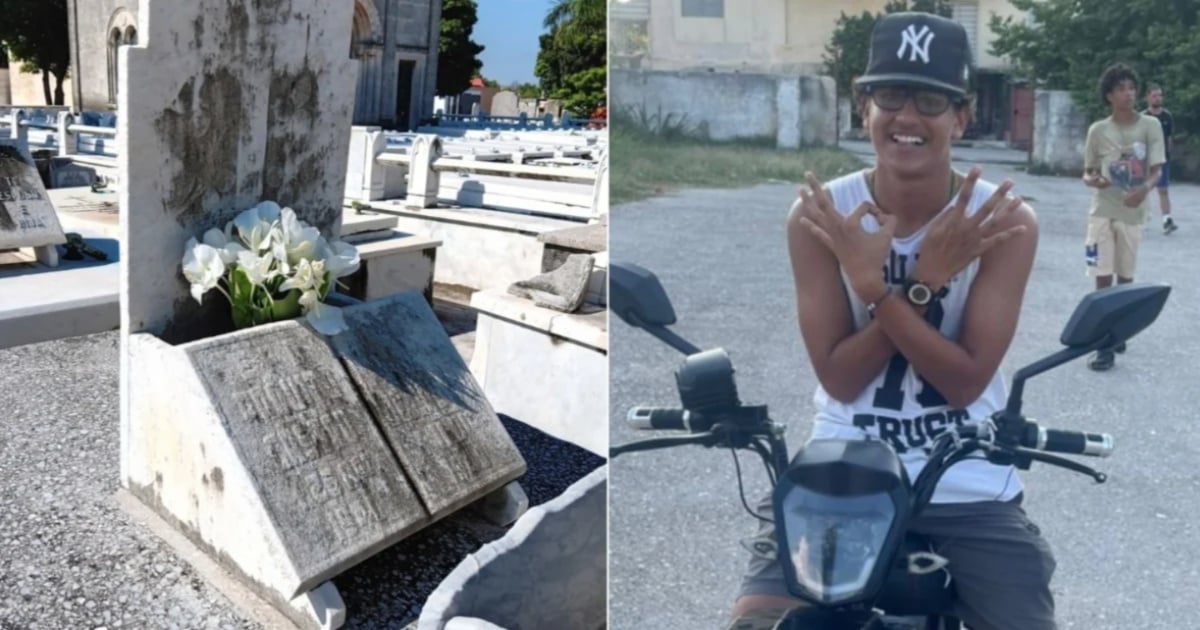
The mother of the young Cuban Antonio Rassi Roque, who passed away on August 18, 2025 while serving in the Active Military Service (SMA) at the El Calvario Military Unit in Havana, spoke out publicly after holding a meeting with high-ranking Army officials, during which she demanded the dismissal of First Lieutenant Aldo, a political figure from unit 5050, whom she holds directly responsible for her son's death.
According to the woman, on November 19, she was received at her request by the Ministry of Revolutionary Armed Forces (MINFAR) by the head of the Western Army of the General Staff, the head of the Territorial Military Prosecutor's Office, and the politician from the Western Army, who informed her that the case of Antonio Rassi “is under investigation and will be handled with total ‘transparency’”.
In that meeting, the mother specifically requested that among the results of the investigation, the definitive removal of Lieutenant Aldo, the political officer of unit 5050, be included.
The woman claims that her allegations are based on testimonies from soldiers who, on the same day her son was killed, heard directions given to those leaving the dining hall that they were not to discuss anything so it would not leak outside the unit.
According to her version, the army politician himself would have acknowledged the truth of that order, which is why the mother insists that the other testimonies pointing to Aldo as the main responsible party de the pressures on the young man should be taken into account.
After insisting for days, the mother finally managed to see the unit chief, Captain Ricardo Martínez, and the first lieutenant Aldo himself.
In that meeting, which she refers to as “much to my regret,” she again spoke directly to the political officer: “It was disgusting and upsetting for me as a mother who lost her son in your home to know that someone as despicable and abusive as he was with Antonio was so close to me,” she wrote.
“You are to blame for my son's death… it's disgusting to know that you wear that uniform while others defend it with pride; you are trashing the work of an institution,” she added.
In her testimony, the mother claims that her son was threatened and harassed by the unit's politician “to the point that his mental health suffered.”
He claims that Aldo "was living above him daily" and that, nonetheless, on August 18—after Antonio finished the first part of the shift—he called to inform him that he was withdrawing the leave scheduled for July 21 and that he could only leave on the 19th to return on August 20.
That exchange led to the first verbal confrontation between them, according to the mother, when Aldo yelled at him: “soldier, stand at attention!”, in front of some students who were passing by, which she describes as an abuse of power.
"I will not rest until you are removed from your position, and I will request a direct investigation from MINFAR against you as many times as necessary," he warns in his message to the political officer.
The woman recalls that her 18-year-old son, “never had the opportunity to study at university or enjoy his life as the good and well-mannered boy he was,” and laments that there is now a “destroyed” family and a mother “who weeps for the loss of a son she will never see again.”
It also urges the head of the Western Army, identified as Feijóo, to take into account what has been expressed and not allow Aldo to remain in his position, extending his displeasure to Captain Ricardo Martínez, the unit commander.
The context of Antonio Rassi's case has been documented by the independent media elTOQUE, which confirmed, citing sources close to the family, that the young man took his own life through self-harm within the El Calvario Military Unit in Havana.
The recruit was mourned and buried in the capital, while authorities, according to the publication, continue to avoid taking responsibility for the deaths of young people during military service.
Rassi's death is part of a series of recruit fatalities in recent years, linked to accidents, untreated illnesses, suicides, and alleged abuses within military units.
According to the testimony of Félix Alfredo González, the father of another recruit who died in 2021, at least seven young people died between July and August 2025 while serving in the military.
González, who has become one of the most critical voices against the mandatory SMA, asserts that the authorities do not take responsibility for justice or for making reparations to families: “The government turns a blind eye,” he has repeatedly denounced.
The case of Antonio Rassi reignites criticism against Mandatory Military Service, in place since 1963 and questioned by human rights organizations and the families of recruits.
Filed under: