
Related videos:
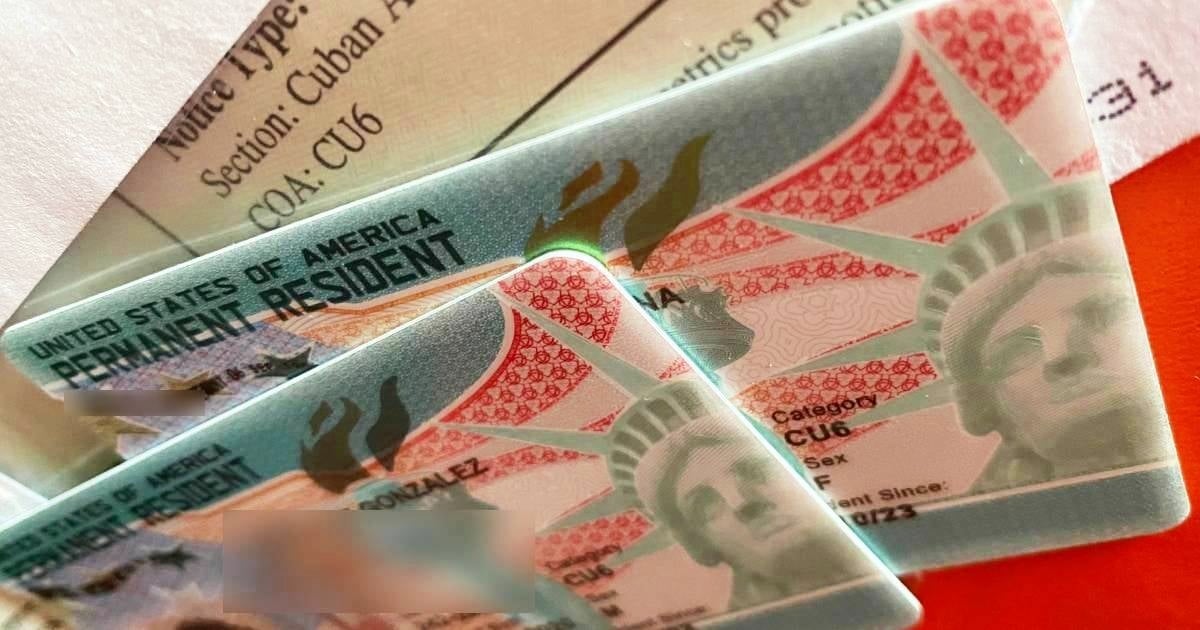
Cuba and Venezuela are among the 19 countries whose citizens with permanent residency in the United States will undergo an extensive review of their Green Cards, by order of President Donald Trump.
The U.S. Citizenship and Immigration Services (USCIS) confirmed that the measure is part of a “thorough and large-scale” review of the green cards issued to migrants from countries of national security concern, reported EFE.
In addition to Cuba and Venezuela, the list includes Afghanistan, Haiti, Iran, Yemen, Sudan, Libya, Somalia, Eritrea, Chad, Equatorial Guinea, the Republic of Congo, Myanmar, Laos, Togo, Sierra Leone, Turkmenistan, and Burundi.
Asked by CNN about which countries are included in the list of “countries of concern,” the U.S. Citizenship and Immigration Services (USCIS) responded that it consists of the 19 countries listed in a presidential proclamation signed by Trump in June, which restricts travel and reviews backgrounds for national security reasons.
Additionally, the Department of Homeland Security (DHS) informed the U.S. media that it is also reviewing the asylum cases approved during the Joe Biden administration, as part of a parallel immigration verification process.
The review could directly impact thousands of Cubans and Venezuelans living in the United States under family reunification programs, political asylum, or humanitarian parole.
Sources from USCIS indicated that cases under review could face delays, additional requests for documentation, or revocations of residency if irregularities are detected.
“By direction of the president, I have ordered a thorough, large-scale review of every Green Card for every foreign national from each country of concern,” wrote USCIS Director Joseph B. Edlow on his official X account.
The order is based on an executive provision signed by Trump in June, which imposes travel restrictions and bans on citizens of those countries.
Now, the government is expanding the scope of control to those who are already legally residing in the country.
The measure reinforces the restrictive shift in Trump's immigration policy, focused on national security and internal control.
The president has reiterated his intention to end the Temporary Protected Status (TPS) and the humanitarian parole that benefit citizens of Cuba, Venezuela, Haiti, and Nicaragua.
The announcement comes after the decision to suspend all immigration applications from Afghans, following the shooting in Washington in which two National Guard members were injured.
Although that event was the catalyst for the new review, Trump's directive encompasses the 19 countries deemed at risk, according to USCIS, including Cuba and Venezuela.
The presidential proclamation, signed in June, has been known as the "travel ban". Specifically, the order involved for Cubans the temporary suspension of various types of visas, affecting both immigrants and non-immigrants.
The measure banned the issuance of tourist, business, and study visas, limiting the entry of Cuban nationals into the United States with B-1 (business), B-2 (tourism), B-1/B-2 (tourism and business), F (academic study), M (vocational training), and J (student or professional exchange) visas.
Filed under: