
Related videos:
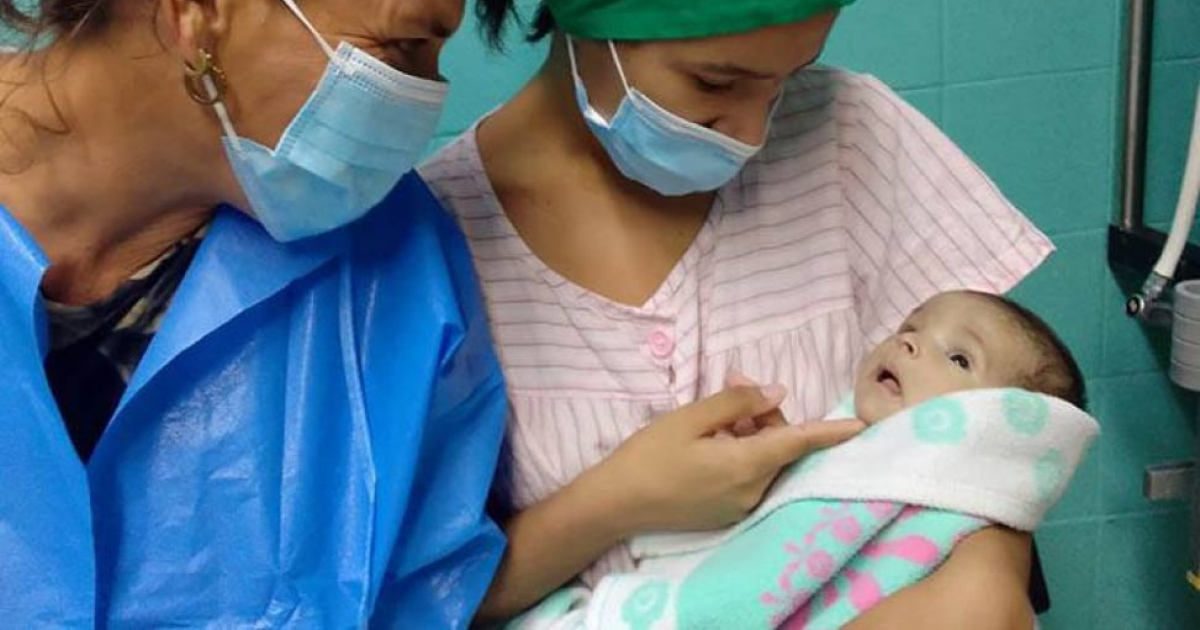
The little Maylom Martínez Abreu left the José Ramón López Tabrane Gyneco-Obstetric Hospital in Matanzas on Tuesday, after 63 days of hospitalization and an extreme battle that began even before he was born.
The baby contracted chikungunya vertically during gestation and spent 46 days intubated, in such a critical condition that, according to his doctors, many doubted he would survive.
Her recovery is extraordinary news amid a country plunged into a health emergency that is spiraling out of control.
The case was managed by the Neonatology Service at the Matanzas center, where the team of pediatricians, neonatologists, intensivists, physiatrists, nurses, and physiotherapists worked to the limits of their capabilities to keep the newborn alive, who was born in fetal distress, with meconium aspiration, and in the context of confirmed arboviral infection.
Her mother, Litzaidis de la Caridad Abreu Piña, was admitted at 38.5 weeks of pregnancy with a high fever and a positive diagnosis for chikungunya, which necessitated an emergency cesarean section.
Maylom was born weighing 3,910 grams (8.62 pounds), but his condition was so fragile that he was placed on mechanical ventilation from the very beginning.
On the second day of life, he suffered from disseminated intravascular coagulation, one of the most serious episodes a newborn can face.
For weeks, he remained in critical condition.
Dr. Liliana Amieva Ruiz, head of Neonatology, explained to the weekly Girón that the process was a learning experience for the entire service, as they had never faced a positive chikungunya case in a newborn before.
The specialist wanted to acknowledge the work of physiotherapist Adisnay González Rodríguez, who began assisting Maylom while she herself had just suffered from chikungunya.
Her interventions successfully reduced the joint stiffness caused by the virus, allowing the little one to finally be extubated.
A shining story in the midst of the healthcare crisis
Maylom's discharge from the hospital comes at a time when Cuba is facing one of the worst public health crises in recent years.
The arbovirus epidemic - primarily chikungunya and dengue - has overwhelmed a context marked by deteriorating hospitals, extreme shortages of supplies, a lack of personnel, and thousands of patients without adequate care.
The Ministry of Public Health itself acknowledged on Tuesday that nine minors remain in critical condition due to causes associated with arboviral diseases. In total, 71 people are in serious or critical condition.
Despite these figures, authorities insist on describing the evolution of cases as "positive," a narrative that contrasts with the complaints from families and healthcare workers regarding the lack of medication, the overcrowding of hospitals, and the precariousness of basic services.
The official figures also do not inspire confidence.
Cuba reports over 42,000 cases of arboviral diseases since the onset of the outbreak, but only 1,462 have been confirmed by PCR, clearly reflecting the diagnostic incapacity in a system where laboratories operate with minimal resources and many polyclinics can only assess clinical symptoms.
This adds to the fatalities: the Government raised the official death toll to 44 due to chikungunya and dengue, including several minors.
Authorities have taken weeks to acknowledge fatalities, and with each update, suspicions grow about an evident underreporting, fueled by a lack of transparency and testimonies from families who claim their cases were never reported.
While the population endures days of fever, pain, and mosquitoes without access to fumigation or insecticides, the government has preferred to blame citizens for not taking preventive measures, rather than acknowledging the collapse of vector control campaigns and the lack of resources to tackle the outbreak.
A ray of hope
In that bleak scenario, the medical discharge of little Maylom is a bright exception: a triumph of human effort despite the lack of resources, scarcity, and institutional neglect.
The doctors who attended to him did not work with an abundance of resources or in ideal conditions; quite the opposite: they worked in the same hospitals that patients and professionals report day after day, where basic supplies, antibiotics, diagnostic tools, and often even water are lacking.
Maylom's recovery is undoubtedly a reason for celebration for his family and for the professionals who cared for him. However, it also serves as a painful reminder of the vulnerability of thousands of children who today suffer from fever in homes without medication, of families who must improvise treatments at home, and of a healthcare system that presents itself as "victorious" while reality proves otherwise.
Maylom survived. Not everyone has that chance.
Filed under: