
Related videos:
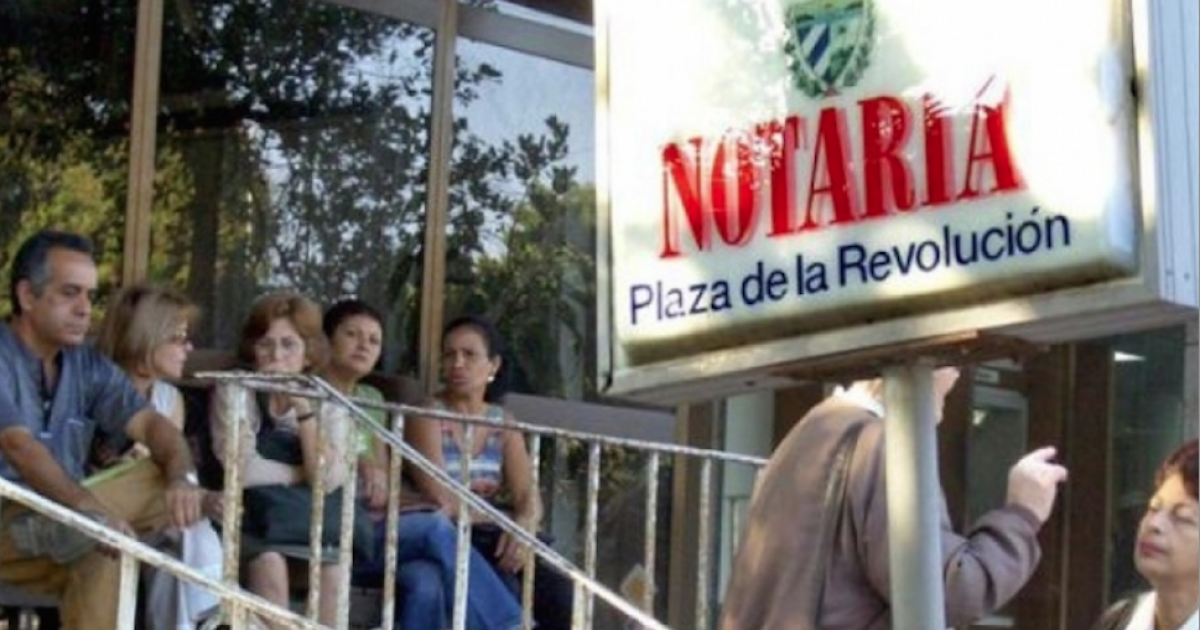
Cuban authorities announced that, due to the improvement of the epidemiological situation in several provinces, they will reopen this week the offices of Notaries, as well as those of the Civil Registry and Property Registry.
The aforementioned offices will have extended hours until seven in the evening.
Since last year, following the approval of Resolution 382/20 by the Ministry of Justice, the government has simplified the cumbersome legal processes that used to be associated with obtaining official documents for citizens.
With the pandemic, which forced the closure of offices, many of these procedures became exclusively virtual.
From the website of the Ministry of Justice or from a mobile phone, it is now possible to request criminal records, certifications from the Civil Registries, and Last Will Acts and Declarations of Heirs.
In 2020, the government also removed the expiration date for birth, marriage, and death certificates issued by the Civil Registry.
Starting this Tuesday, the Cuban capital will extend public mobility and transportation options until 10 PM.
They will also reopen with reservations a large number of dining establishments.
Reinaldo García Zapata, governor of Havana, emphasized that they will not reopen those places where active COVID-19 transmission events are occurring, and the buffet service restriction will remain in place.
From Matanzas, its governor, Mario Sabines Lorenzo, announced that this Friday, 81 units - now certified in its 13 municipalities - will begin providing service for consumption on-site, until 8:00 PM.
The easing of restrictions also includes commerce (until five in the afternoon), access to beaches and other public places—always with family—and outdoor cultural centers; however, nightclubs and bars are not included.
Parties and dances remain prohibited.
Urban and intermunicipal transport will remain operational until 9:00 PM; this means that the service at this level will resume, but not for interprovincial travel. Consequently, border control with other territories will continue as part of the closure established for entering or leaving Matanzas.
The government's intention is the gradual reopening of all food service units, both in the state and private sectors, in the provinces of La Habana and Matanzas, while continuing to comply with the established hygiene and epidemiological protocols.
The Minister of Domestic Trade affirmed in a televised appearance last week that "by acting responsibly, steps can be taken to gradually recover some social activities, given the psychological and economic impact caused by COVID-19, as there are also self-employed workers whose income depended on their businesses."
Meanwhile, Dr. Francisco Durán García, the national director of Epidemiology at the Ministry of Public Health (MINSAP), stated that the territories of Matanzas, Havana, Cienfuegos, Ciego de Ávila, Santiago de Cuba, Guantánamo, Mayabeque, and the Special Municipality of Isla de la Juventud maintain epidemiological stability and have reduced the reports of cases.
Therefore, they are in a position to open the services, for which a commission must assess the sanitary conditions, and health and state inspections will be conducted.
The Cuban government reported at the end of this Sunday 6,673 new positive cases of coronavirus and 64 new deaths from the disease.
With the latest records, the country has reached a total of 776,125 diagnosed patients with the disease and 6,601 deaths since the pandemic began in March 2020.
Filed under: