This Saturday, an official acknowledged that the country would transition to a scenario where there will be no fuel, a crisis reminiscent of the dreaded "Option Zero," which referred to the extreme energy and economic crisis that Cuba experienced during the Special Period in the nineties.
The Vice Governor of the province of Cienfuegos, Rolando José Rajadel Alzuri, stated in comments broadcast by the telecenter Perlavisión that it is "evident" that Cuba will have no fuel reserves in the economy.
That first statement, however, is not the most serious one. According to the official, "we will also go through without fuel in emergency generators".
Due to that situation, the resident of Cienfuegos requested priority be given in the province to the generation of basic services for the population.
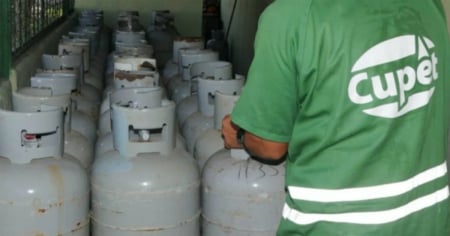
At the same time, he ordered a "urgent" assessment of fuel availability for each CUPET and to cease non-essential activities.
"We need to try to extend the processes of vitality on these topics (...) lest we continue with normal life and be surprised that there is no element of vitality for basic issues," he stated.
"Primary needs must be secured. Everything else has to come to a halt. It must come to a halt because not a single liter of diesel is coming into the economy of this province," he stated in a televised working meeting.
During his speech, the official revealed that the Cienfuegos refinery is currently operating "by gravity" and the product is only used for distributed generation.
"Therefore, it is occupied territory, everything is closed, under review activity by activity,” he declared.
This situation brings to mind the so-called "Zero Option", an economic policy implemented by the Cuban government during the 1990s, particularly following the collapse of the Soviet Union.
With no alternatives following the overall collapse of the economy, this policy was designed to address the severe economic crisis in the country due to the loss of subsidies.
The "Zero Option" involved a series of austerity measures and economic adjustments to ensure the survival of the regime in Cuba.
These measures included reducing energy consumption, the rationing of food and other basic products, and promoting "self-sufficiency" in local food production.
The use of bicycles and other non-motorized means of transportation was also encouraged to save fuel, as well as the installation of community kitchens for meals in every neighborhood.
However, the dictator Fidel Castro himself denied the strategy in front of the press, as in his opinion, reaching a "Zero Option" would mean reaching the grave.
More than three decades later, and with the recent energy collapses, the issue has regained significance.
Frequently Asked Questions About the Energy Crisis and the "Zero Option" in Cuba
What is the "Zero Option" and how is it related to the current crisis in Cuba?
The "Zero Option" was a strategy implemented in Cuba during the 1990s to address a severe economic and energy crisis following the collapse of the socialist bloc. It consisted of extreme austerity measures, such as the rationing of basic resources. Currently, there are concerns that Cuba may face a similar situation due to the lack of fuel and ongoing economic difficulties.
What is the current situation of fuel supply in Cuba?
The fuel supply in Cuba is extremely critical, with reports of long lines at gas stations and days of waiting to obtain gasoline. The shortage severely impacts the economy and the daily life of citizens, with rationing measures and a flourishing black market due to the lack of availability.
What measures has the Cuban government taken in response to the energy crisis?
The Cuban government has attempted to address the energy crisis by prioritizing the residential sector and restricting economic activities to ensure electricity supply to the population. It has also implemented a rationing system for purchasing fuel through the Apk Ticket application, limiting purchases to 40 liters per user at certain service stations.
How is the fuel crisis affecting the daily lives of Cubans?
The fuel crisis in Cuba is severely impacting the daily lives of citizens, raising transportation costs and resulting in long waits at gas stations. The shortage has led to a rise in prices in the black market and has further complicated the already challenging economic situation of the country, affecting essential sectors such as health and transportation.
Filed under: