
Related videos:
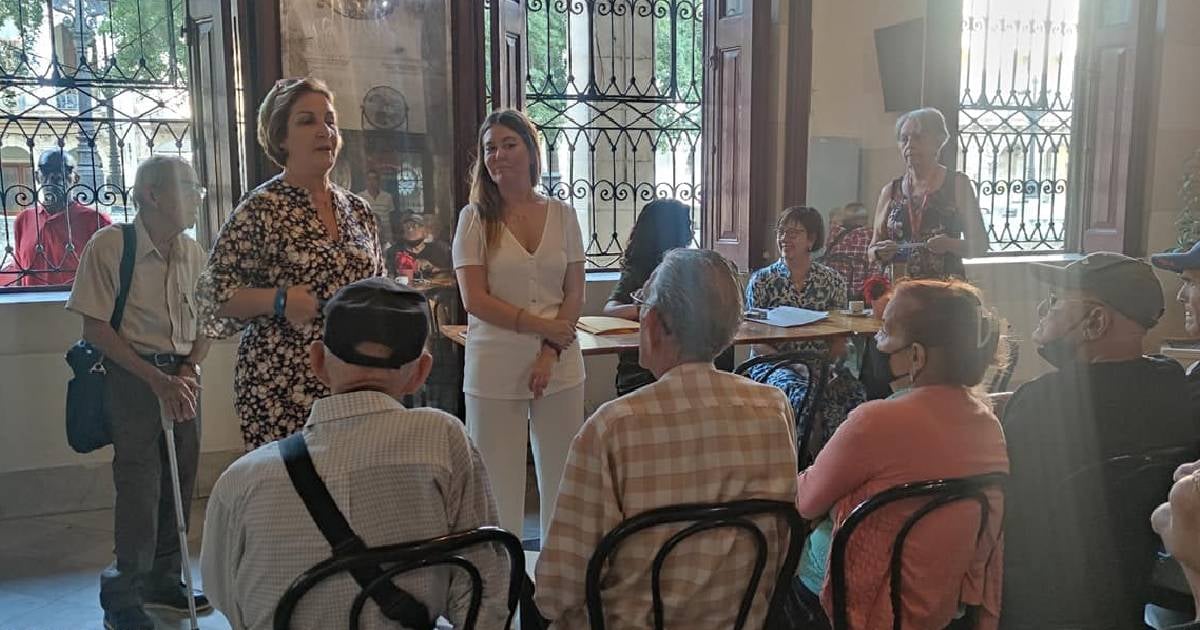
During the nationwide blackout affecting all of Cuba since the night of last Friday, March 14, the General Director of Emigration of the Principality of Asturias, Olaya Romano, held a series of meetings with emigrants and descendants of Asturians in Havana.
Despite the difficulties imposed by the lack of electricity, Romano met with the board of the Federación de Asociaciones Asturianas en Cuba (FAAC), reaffirming the Asturian government's commitment to its community on the island.
According to information shared by the FAAC, the Asturian delegation, which also includes social workers from the Government of the Principality of Asturias, had an exchange with emigrants and descendants of Asturians to explain “the return policies, providing guidance to facilitate their implementation”.
The blackout, which started around 8:15 p.m. on Friday due to a malfunction at a substation in Havana, left a large part of the country without electricity, including Havana.
This incident is the fourth of its kind in the last six months, reflecting the deep energy crisis that the Caribbean nation is experiencing.
The relationship between Asturias and Cuba dates back several centuries, with a significant wave of migration in the second half of the 19th century, when around 80,000 Asturians emigrated to the island.
In recent years, the Asturian government has implemented various initiatives to support its emigrants and their descendants in Cuba.
In 2024, a call for financial aid was launched aimed at Asturians and their descendants living in Latin American countries, including Cuba.
These subsidies are intended for individuals over the age of 65 who are in situations of need or lack sufficient income.
Additionally, adults aged 18 to 64 who have been victims of gender-based violence, suffer from a permanent disability, or have a serious illness can also apply for this assistance.
Also, the scholarship program "Study in Asturias" has been implemented, which offers up to 15,000 euros to partially cover the expenses of master's studies at the University of Oviedo.
This program is aimed at descendants of Asturian emigrants up to the second degree of consanguinity, residing in Latin American countries, such as Cuba.
During his visit, Romano presented in Cuba the return plans of the Asturian government, which aim to facilitate the return of emigrants and their families to the Principality, providing economic support and comprehensive guidance for their reintegration.
And he did so in a context where the energy situation in Cuba remains critical, with efforts underway to restore electricity service in the affected areas. Meanwhile, the Asturian community on the island expresses gratitude for the presence and support of the authorities from the Principality during these difficult times.
Frequently Asked Questions about the Energy Crisis in Cuba and Support from Asturias
What is the cause of the massive blackout in Cuba?
The massive blackout in Cuba was due to a malfunction at a substation in Havana, which caused the disconnection of the National Electric System (SEN). This incident has left a large part of the country without electricity and marks the fourth of its kind in the last six months, reflecting the severe energy crisis the island is experiencing.
What actions is the Principality of Asturias taking to support Asturian emigrants in Cuba?
The Principality of Asturias is implementing various initiatives to support Asturian emigrants in Cuba. These include financial assistance for individuals over 65 years old and for adults between 18 and 64 years old in situations of need. They have also launched the scholarship program "Studying in Asturias" and repatriation plans to facilitate the return of emigrants and their families to Asturias.
How does the energy crisis affect daily activities in Cuba?
The energy crisis in Cuba has severely impacted daily activities. It has led to the closure of airports, cancellation of classes, interruption of essential services, and challenges in everyday life, such as cooking and refrigerating food. The lack of electricity has also caused chaos in transportation and the local economy.
What kind of support has Cuba received from other countries to address the energy crisis?
Cuba has received support from China in the form of parts, accessories, and technological equipment to assist in the recovery of distributed power generation. These resources are intended to alleviate the energy crisis affecting the country, although it is acknowledged that long-term structural solutions are needed to resolve the issues within the electrical system.
Filed under: