The Cuban leader Miguel Díaz-Canel Bermúdez recently visited the municipalities of Jobabo and Colombia in the province of Las Tunas, where he acknowledged that serious social and economic issues continue to plague the tranquility of the population.
During the summary of the examination conducted by the highest party authority in both regions, Díaz-Canel insisted that "problems cannot overwhelm us," and called on local authorities to maintain resilience in the face of adversity, according to the official Periódico 26.
One of the main topics addressed was the growing corruption in the relationships between state entities and the non-state sector of the economy, which was initially promoted as a necessary complement.
Díaz-Canel acknowledged that serious irregularities have been detected in the leasing of premises and the payment for services and products with public funds, and announced that criminal responsibility will be sought in the most serious cases.
"In response to that, more popular control, to involve the people more in monitoring those connections," threatened the leader, who on other occasions has made similar statements.
He also warned about the increase in drug trafficking in the country, stating that "the Revolution was not made to allow a scourge like this that destroys families," although it is a growing problem in the nation he leads.
In his speech, he also addressed other manifestations of marginalization that, according to him, do not always stem from economic shortages. While he did not provide further details, the regime could be pointed to as a cause of this problem.
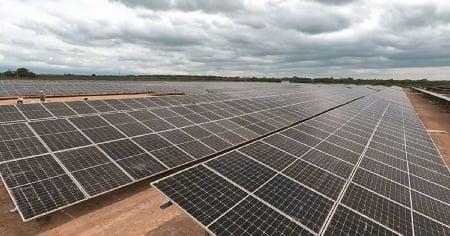
The president himself acknowledged that, despite the installation of solar panels in water supply systems, the pressure of the service has not improved in many small communities.
This publicly acknowledged contradiction reflects the management failures in the projects promoted as solutions to the crisis, something that happens quite frequently.
Díaz-Canel also addressed the issue of banking, acknowledging that there is a "conceptual problem" in linking the digitization of payments with a lack of cash, which has impacted large segments of the population, especially in rural areas.
In economic terms, he expressed moderate optimism about the possibility of the sugar company Colombia producing brown sugar this year, which would partially alleviate the local energy and economic situation.
However, sugarcane production in the area faces challenges, such as the presence of aging strains that affect the quality of the raw material, emphasized the official source.
The assessment made by the communists, despite some progress in popular mobilizations for agricultural production, revealed significant concerns about the electric service, water supply, inflation, issues arising from banking, inefficient land usage, and the increase in crime related to livestock.
Roberto Morales Ojeda, Secretary of Organization of the Central Committee, criticized the low level of engagement of the municipal political leadership with the population during his speech and acknowledged that many of the issues raised in previous visits have not been addressed.
Morales also expressed regret that the number of government officials affiliated with the Party is insufficient, although he clarified that membership is not mandatory to hold a public office.
However, this fact highlights the political apathy that exists in the country, where the majority of the population sees the Party as a hindrance to development rather than a driving force.
Finally, Morales announced that starting in May, a second cycle of visits to the municipalities will begin, focused not on diagnostics, but on evaluating what has changed since the last inspection: "The evaluations will be based on the results," the leader threatened.
As part of this visit to Las Tunas, and in light of statements from the Cuban leader, which highlight his detachment from the country's issues, Díaz-Canel emphasized the need to "work hard" and strengthen the relationship with the people as a remedy to confront the economic and social crisis that is suffocating the island.
He also visited the Manifiesto de Montecristi Agricultural Polytechnic Institute in the municipality of Jobabo, where he concluded, brilliantly, that this educational center "has everything."
During the leader's visit to a nursing home in the eastern province, the state-run press emphasized that "the food was quite good" and "the care was wonderful," once again highlighting the disconnection of the regime's propaganda media from the harsh reality faced by the Cuban people.
Frequently Asked Questions about the Social and Economic Situation in Cuba under Díaz-Canel's Leadership
What are the most serious social and economic problems that persist in Cuba according to Díaz-Canel?
Díaz-Canel acknowledged that serious social and economic problems persist in Cuba, such as corruption, drug trafficking, and marginalization, which affect the tranquility of the population. He also mentioned issues related to banking services and agricultural production that negatively impact the country's economy.
What measures does Díaz-Canel propose to combat corruption in Cuba?
Díaz-Canel announced that criminal responsibility will be requested in the most serious cases of corruption and proposed greater popular control, involving the population in the oversight of the links between state entities and the non-state sector.
How is the energy crisis affecting daily life in Cuba?
The energy crisis in Cuba has led to prolonged blackouts, affecting both production and access to basic services such as drinking water. These blackouts have generated increasing social unrest, severely impacting the quality of life for Cubans.
What is Díaz-Canel's position on banking in Cuba?
Díaz-Canel defends banking as a necessary measure for the economic functioning of the country, despite the criticism and associated problems, such as cash shortages and failures in banking services, which particularly affect rural areas.
Filed under: