
Related videos:
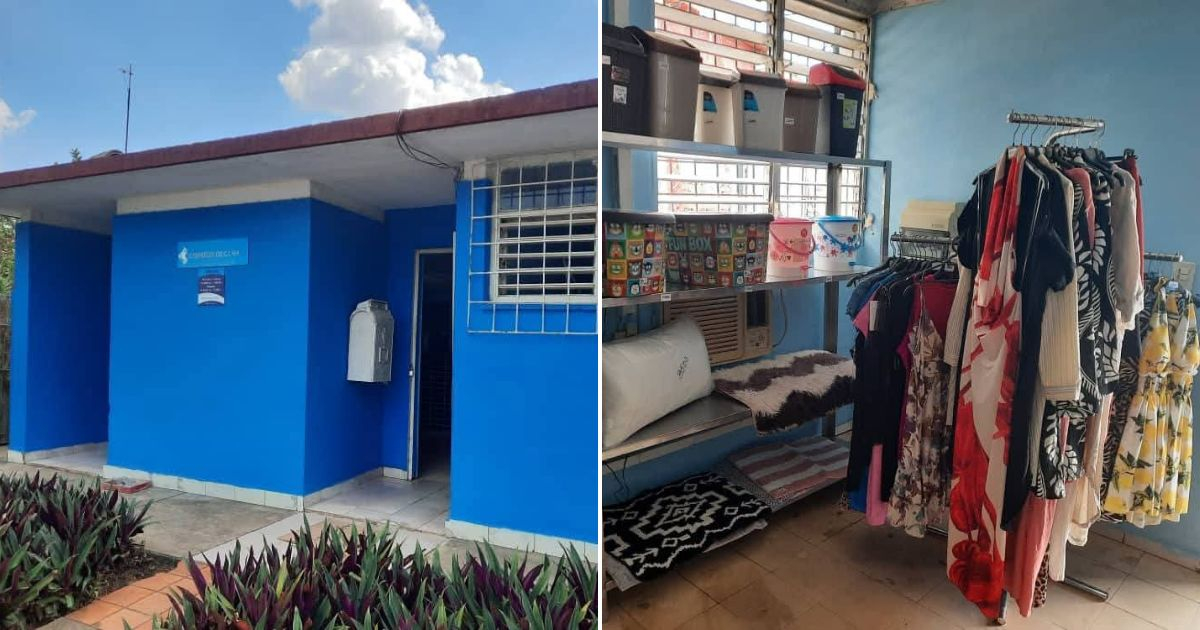
Amid the scarcity and lack of income, even a post office in Cuba ends up becoming a point of sale for essential products.
This time, it was the Postal Company of Pinar del Río that announced that its office in the Viñales municipality began selling merchandise to the public, in what can be described as a sort of "correocuevita."
The initiative, according to a note published by the Business Group Correos de Cuba on its Facebook profile, is part of its strategy for “service diversification” and linkage with economic actors.
In this case, the partnership was with the mipyme "Mi Casa Peti," which supplies goods on consignment for direct sale.
The post office now sells hygiene products, food, clothing, household items, and other essential goods.
Everything, according to the company, without disrupting the postal and financial services they were already providing.
Although framed as a measure to improve income and working conditions for staff, the image of a post office turned into a store raises suspicion and comments among users on social media.
Xavier González Benitez summarized with irony: “Really? Just when it seems like nothing is going to surprise… bam… the correocuevita.”
In a country where daily survival forces the reinvention of even the most basic institutional functions, it seems more like a consequence than an innovation for a post office to sell food or detergent.
While postal offices like the one in Viñales are focusing on "diversifying" their offerings by selling basic goods, clothing, or food, there is a persistent failure to fulfill one of the key economic objectives of Correos de Cuba: to ensure a safe and efficient parcel delivery service.
Numerous users have consistently reported serious irregularities in the service. Among the recent cases is that of a Cuban who sent a cellphone and received a different item, as well as that of a young woman who reported the theft of personal items from an international package. These incidents, far from being isolated, add to a long list of complaints about improper handling, losses, and incomplete deliveries.
Even those who send packages from abroad face difficulties. A Cuban on a mission in Mexico shared his experience of utilizing postal services to assist his family, an effort marked by a lack of tracking and a widespread distrust of the postal system.
Despite this situation, the government has attempted to present an image of progress by boasting about supposed improvements in package deliveries. However, citizen complaints contradict that narrative and reveal a deep disconnect between institutional priorities and the actual needs of users.
Frequently Asked Questions about "Correocuevita" in Viñales and the Economic Situation in Cuba
What is the "Correocuevita" in Viñales?
"Correocuevita" is a post office in Viñales that has started selling basic products such as food, clothing, and hygiene items. This initiative arises as part of a strategy to diversify services and connect with economic actors to improve the income and working conditions of the staff, amidst the shortages facing the country.
Why has a post office become a sales point in Cuba?
The transformation of a post office into a point of sale responds to the need to find new ways to generate income in the context of economic scarcity in Cuba. The sale of basic products in a post office is a measure to address the lack of income and improve the working conditions of the staff, without interrupting traditional postal and financial services.
How does "Correocuevita" compare to the informal market of La Cuevita in Havana?
The "Correocuevita" in Viñales and the informal market of La Cuevita in Havana share the characteristic of being places where basic products are sold amid scarcity. However, La Cuevita is known for being an informal market with lower prices and greater variety than state stores, but it has issues with hygiene and lack of state control, whereas the "Correocuevita" is part of an institutional effort to diversify services.
What other measures has the Cuban government taken to address the shortage?
The Cuban government has implemented several measures to address the shortage, such as opening stores that operate exclusively in foreign currency and selling alternative products in bakeries and other establishments. However, these actions have drawn criticism for exacerbating economic inequality and failing to address the structural causes of the shortage, as reflected in the partial dollarization of the economy and the dependence on remittances from abroad.
Filed under: