
Related videos:
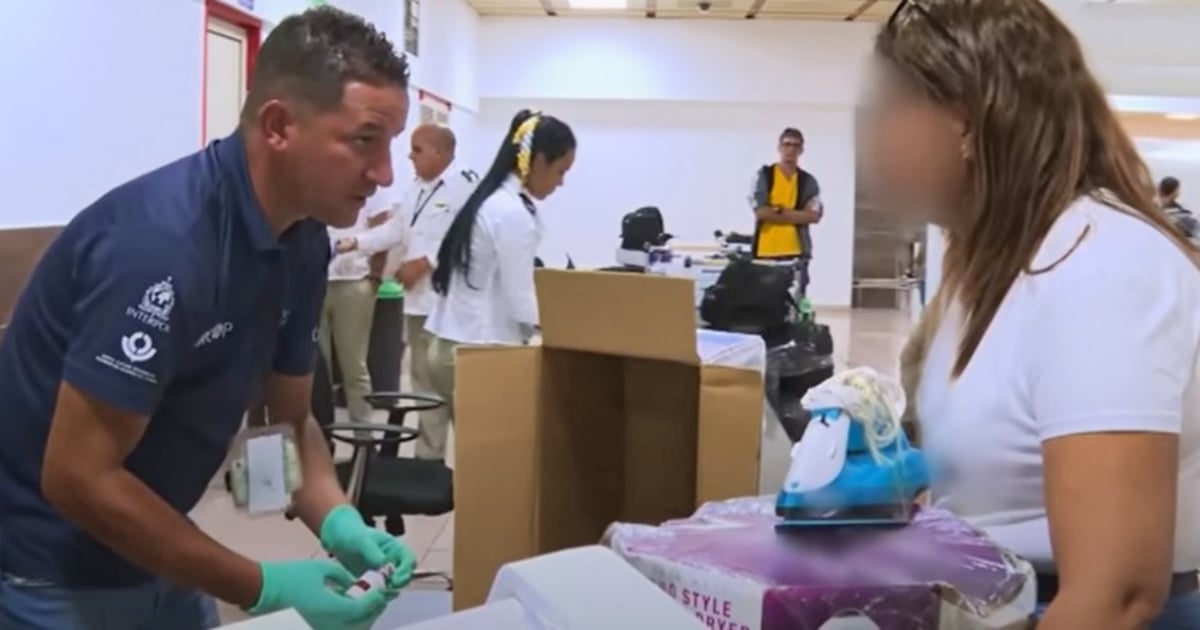
A Cuban citizen residing in Guyana was arrested at José Martí International Airport in Havana after it was discovered that she was transporting cocaine hidden in appliances.
The incident was captured by the cameras of the show "Alto Frontera", from the YouTube channel History Latinoamérica. This documentary series follows control operations at airports and land borders in Latin America, showcasing how authorities detect and confront smuggling and drug trafficking attempts. The episodes feature real cases.
The discovery: cocaine among cartons and appliances
The arrest took place at Terminal 3, one of the busiest in the country, with an estimated flow of 30,000 passengers daily, according to the source mentioned.
The program explained that agents from the General Customs of the Republic noticed the excess baggage carried by the passenger, which raised the first red flags.
During the routine X-ray scan, anomalies were detected in two boxes that allegedly contained appliances.
Although nothing irregular was found inside the devices at first, the excessive weight and the abnormal bulging of the cardboard edges led to a more thorough inspection.
It was then that the officers discovered carefully concealed folds, where a suspicious substance had been hidden.
A quick on-site test, the narcotest, confirmed that it was cocaine hydrochloride.
The defense of the accused: "I didn't know what I was carrying."
The citizen, visibly nervous in front of the officers, claimed not to know the contents of the packages. She stated that she had been entrusted with the task by a third party and only limited herself to transporting it.
“I haven't been here in three years,” he said in his attempt to distance himself from the matter.
However, the authorities were emphatic in stating that ignorance does not exempt one from criminal responsibility, and that the transport of prohibited substances carries severe legal consequences.
The case was transferred to the national drug enforcement agency for investigation, while the woman was formally detained.
The authorities reported that she will be prosecuted for international drug trafficking, a crime in Cuba that can carry sentences of over 15 years in prison.
The “blind mules” are on the rise: A growing phenomenon
This type of incident is not isolated. Cuban authorities have warned in recent years about the rise of so-called blind mules, individuals who transport packages without knowing their contents, often in exchange for payment or other benefits.
According to statements made in March by Isnavis Chacón, head of the Havana airport customs, there is a growing trend of individuals selling space in their luggage or accepting packages from third parties without checking the contents.
"Many of the people who are trafficking drugs today are blind mules. The agencies pay them for what they are bringing, pack their luggage for them, and they don't know what they are carrying," the official stated to state media.
Chacón was clear in recalling that, according to current legislation, the passenger is fully responsible for their luggage, regardless of whether they knew its contents or not.
Multiple methods for camouflaging drugs
Concealment techniques have become more sophisticated. Customs has reported cases of narcotics hidden in packages of coffee, processed foods, sausages, condiments, diapers, electronic cigarettes, and even sealed medicine bottles.
There have also been documented situations where, unfortunately, elderly people were used to transport seemingly innocent packages delivered by "relatives or friends" from abroad, which actually contained prohibited substances.
Official warning: "That trip could end in jail."
The authorities' warning is clear. “It is very sad that the trip you planned for so long to reunite with your loved ones ends with a bitter experience behind bars,” Chacón stated, emphasizing the human cost of these actions.
In the context of reinforcing the official discourse against drug trafficking, the Cuban regime has promoted exemplary trials and drug raids in several cities across the country.
Sanctions for drug trafficking in Cuba can reach up to 30 years in prison, life imprisonment, and even the death penalty in aggravated cases.
A structural problem still without a solution
Although authorities have intensified controls and warnings, some analysts believe that a repressive approach is not enough to address a deeper structural issue.
The increase in drug trafficking on the island also reflects the economic deficiencies and precariousness that drive many people to accept risks in exchange for some form of compensation.
Filed under: