
Related videos:
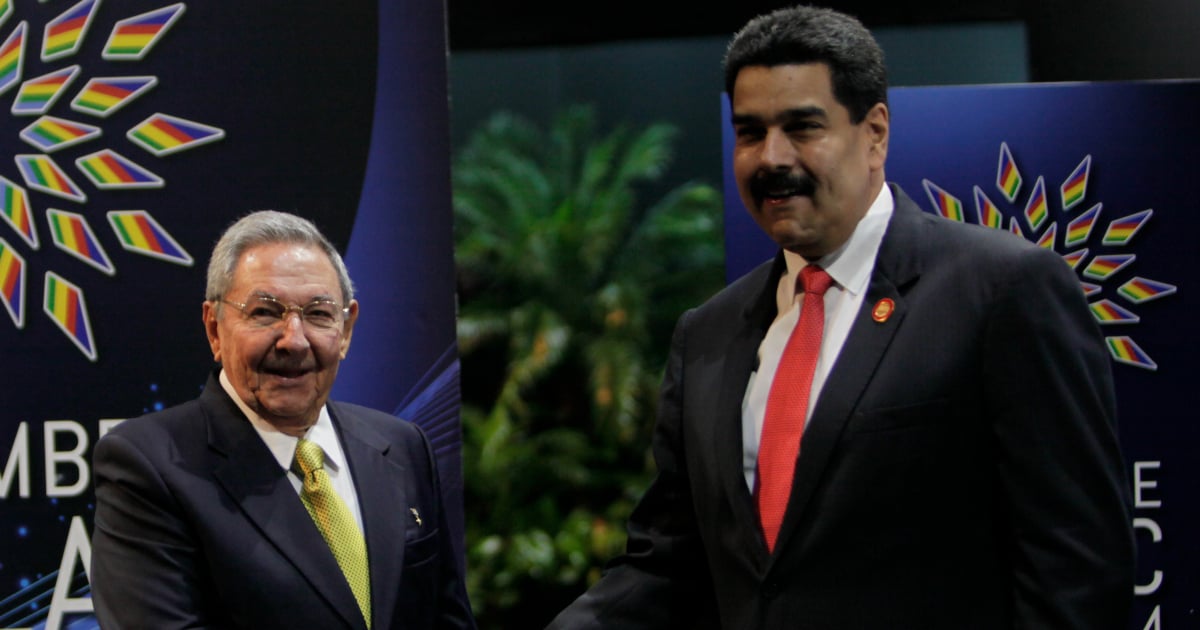
The Venezuelan dictator president Nicolás Maduro congratulated Raúl Castro this Tuesday on his 94th birthday, highlighting his "tireless work for humanity" and his "revolutionary struggle" as cornerstones of Cuban independence.
In his message, shared via Telegram, the dictator stated: “Dear brother and friend, Raúl Castro Ruz, on this very special day as we celebrate your birthday, on behalf of the Venezuelan people, I extend a strong embrace of brotherhood and our deepest gratitude for your tireless work in favor of Cuba, Latin America, and humanity.”
Maduro even compared him to the apostle José Martí. “Your revolutionary struggle has been fundamental in endowing the Cuban people with dignity and independence. You are a true interpreter of the genuine spirit of José Martí, the visionary of a united and free Latin America.”
But the words of the Venezuelan leader contrast with a Cuba plunged into a deep crisis: uncontrolled inflation, shortages, miserable wages, and unstoppable emigration.
Despite having formally retired from power, Raúl Castro continues to act as a symbolic guarantor of Castroism, supporting the authoritarian model that he established with his brother Fidel.
Even last March, he declared in a defiant tone: “I’m still young! Does anyone have any doubts?” in a televised message that many interpreted as a statement of leadership.
Meanwhile, the island that promised glasses of milk for everyone in 2007 cannot guarantee even the basics for its population. The legitimacy of the "continuity" promoted by its political heir Miguel Díaz-Canel wavers amid repression, shortages, and popular protests like those of July 11.
Maduro's congratulation is part of the empty revolutionary rhetoric that connects Caracas and Havana, though in reality, both governments are facing a growing popular rejection and a collapse of the political and economic model they claim to defend.
Frequently asked questions about the crisis in Cuba and the figure of Raúl Castro
What is Raúl Castro's current role in Cuban politics?
Raúl Castro continues to act as a symbolic figure and guarantor of Castroism, even though he has formally retired from power. Despite his advanced age, he maintains his influence during key moments and positions himself as a symbol of continuity for the Cuban regime.
How does the economic crisis affect the legitimacy of the Cuban regime?
The economic crisis in Cuba, characterized by inflation, shortages, and massive emigration, has generated a growing popular rejection and questions about the legitimacy of the regime. Unfulfilled promises and daily hardships have heightened social discontent.
What impact does Raúl Castro's figure have on the current situation in Cuba?
Raúl Castro represents the symbol of continuity of the regime, but he is also seen as part of the problem. His presence and statements aim to project stability, although many associate him with the economic collapse and the lack of effective reforms.
What challenges does the current Cuban political model face?
The Cuban political model faces significant challenges of legitimacy and sustainability due to the economic crisis, mass emigration, and popular protests. The lack of effective solutions and the repression of critical voices have worsened the situation.
How has the Cuban regime responded to criticism and protests?
The Cuban regime has responded to criticism and protests with repression and information control. While it attempts to project an image of stability, the reality is that it faces increasing public dissatisfaction and scrutiny of its management.
Filed under: