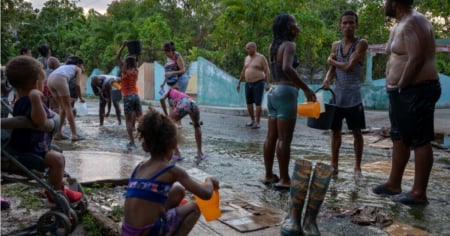
More than 500,000 people in Cuba are facing severe disruptions in drinking water supply, as acknowledged by National Television in a report aired this Monday.
Santiago de Cuba, epicenter of the crisis
The situation is particularly critical in Santiago de Cuba, where the water sources are barely at 20% of their capacity. More than 300,000 people in that province do not have access to water, an essential resource for daily life and basic hygiene.
This is joined by other provinces such as Holguín, Las Tunas, Guantánamo, and Ciego de Ávila, which also face a shortage of drinking water. Although authorities assure that the infrastructure is in place, continuous breaks and the lack of parts and equipment make stable distribution of the resource unfeasible.
Deteriorated infrastructure and unfulfilled promises
The current situation is similar to that of June 2021, when the president of INRH also reported that more than 500,000 Cubans were facing issues accessing drinking water for the same reasons.
This Monday, Rodríguez confirmed that the INRH has received supplies to repair damaged equipment and a budget for the acquisition of new products abroad. However, he did not specify when Cubans might notice improvements in water service.
Meanwhile, the pumping stations continue to suffer breakdowns, and some are affected by the prolonged blackouts that in many areas exceed 20 hours a day. This combination of blackouts, water shortages, and high temperatures is turning life in Cuba into an extreme experience.
Living Without Water in Cuba
The lack of potable water not only compromises personal and household hygiene, preventing proper laundry, personal care, or cleaning of the home, but also severely affects agricultural production, which is the foundation of many families' livelihoods and industrial development.
Living without continuous access to water is not just an inconvenience; it is a violation of the basic human right to water, as enshrined by the United Nations. When combined with a lack of electricity and a food crisis, it becomes an explosive cocktail for the Cuban population, which continues to lack clear answers and urgent solutions from the regime.
Frequently Asked Questions about the Water Crisis in Cuba
How many households are affected by the lack of drinking water in Cuba?
More than 500,000 households in Cuba are facing severe disruptions in the supply of drinking water, according to a report by Televisión Cubana. This situation is especially critical in provinces such as Santiago de Cuba, Holguín, Las Tunas, and Ciego de Ávila.
What are the main causes of the water crisis in Cuba?
The water crisis in Cuba is due to a combination of factors, including an intense drought, breakdowns of pumping equipment, and an energy deficit that affects supply stations. The deteriorated infrastructure and the lack of parts for repairs also contribute to the crisis.
How does the lack of drinking water impact the daily lives of Cubans?
The lack of drinking water severely impacts personal and household hygiene, making it difficult to wash clothes, bathe properly, or clean the home. Furthermore, it jeopardizes agricultural production and public health, turning life in Cuba into an extreme experience.
What measures has the Cuban government taken to address the water crisis?
The Cuban government has announced investment plans and received donations to improve the water infrastructure, but no significant improvements in water supply have been observed. The lack of a swift and effective response has generated criticism and discontent among the population.
What is the situation of the water infrastructure in Santiago de Cuba?
In Santiago de Cuba, the situation is particularly critical, with water sources at 20% of their capacity and more than 300,000 people without access to water. The lack of adequate infrastructure and the collapse of pumping stations have worsened the situation in this province.
Filed under: