
Related videos:
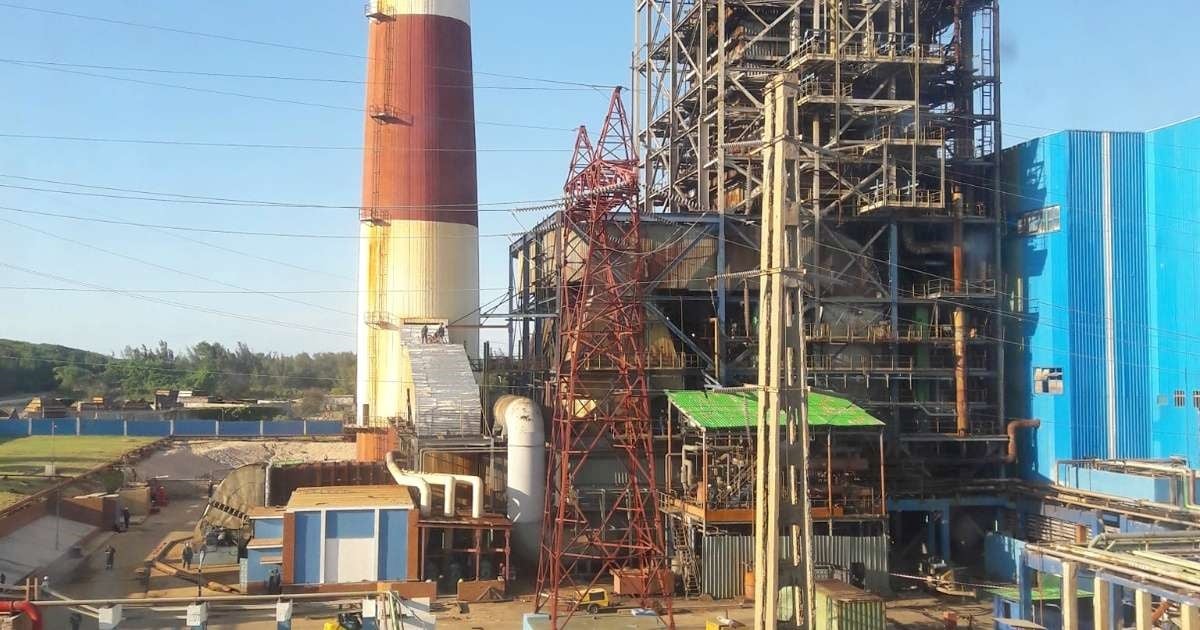
Amid a severe water crisis impacting Matanzas, the largest thermoelectric plant in the country, the CTE Antonio Guiteras, is one of the main contributors to the imbalance in the water supply in the city.
The existence of institutions and companies that are major water consumers is one of the reasons for the negative impacts on the population.
“In the province, we have identified high consumption areas such as our hospitals; however, they are making an extraordinary effort to comply with the regulations,” assured Guillermo Cué Lugo, director of the Matanzas Water and Sewer Company, in statements to the official newspaper Girón.
In the case of the “Guiteras,” Cué explained that when the plant operates correctly, it stays within the established consumption parameters, but that is not the situation now. “At this moment, it is in a crisis that affects the city's water supply due to a breakdown in one of its heaters, which is causing it to consume more than planned,” he revealed.
While entire neighborhoods receive only three to four hours of water supply a day—when the norm would be 16—the "Guiteras" is hoarding water resources at a time of severe scarcity. This situation, far from being an isolated incident, illustrates how the poor technical condition of a strategic facility leads to the collapse of other essential services.
The impacts in the city of Matanzas are worsened by electrical spikes in the well fields, which prevent stabilizing the service in the mid, high, and low areas. According to Cué, efforts are being made with the Electric Union to try to protect those fields, although no visible results have been achieved so far.
In the rest of the province, the issues are characterized by the condition of the pumping equipment. Out of the 225 units, 12 are out of service. Among the most affected are La Julia (Matanzas), Jovellanos (with three units non-operational), Pedro Betancourt, and Gertrudis. Some repairs are currently underway, such as in Fructuoso Rodríguez (Limonar) and San José de los Ramos (Colón).
In the Ciénaga de Zapata, an area with longstanding supply issues, only two pumps are operational. One of them, although small, provides minimal supply to Playa Larga.
Although the distribution of water in trucks has quadrupled, it is still insufficient. Many communities continue to lack adequate coverage, and the role of the delegates has been crucial, but clearly inadequate in the face of growing demand and limited resources, the media outlet pointed out.
He added that between the 28th and 30th, the addition of four or five out-of-service pumps was scheduled. However, as long as the main consumer of the resource continues to operate inefficiently, which burdens the city, no fix will be sufficient.
In Matanzas, water is only pumped for a couple of hours a day and there are areas where the delivery cycle by truck has stretched to 16 days, a combination that leaves thousands of people trapped in a crisis that remains without a real solution.
The province is facing one of its worst water supply crises in years, with pumping equipment out of service, collapsed hydraulic networks, constant blackouts, and infrastructure at its breaking point, despite being, ironically, an area with abundant underground water reserves.
Meanwhile, health authorities in Cárdenas recently raised the alarm about an outbreak of hepatitis that has spread in that city. This is a highly contagious disease that is transmitted through contaminated water or food, or through direct contact with an infected person.
The increase in hepatitis A cases in Cuba is directly linked to the consumption of water contaminated with feces. Issues with access to safe drinking water and poor hygiene conditions have worsened this situation.
Frequently Asked Questions about the Water and Energy Crisis in Matanzas
What is the main cause of the water crisis in Matanzas?
The main cause of the water crisis in Matanzas is the poor technical condition of the Antonio Guiteras thermoelectric plant, which consumes more water than planned due to a break in one of its heaters. This has caused an imbalance in the water supply in the city, exacerbated by issues with pumping equipment and collapsed hydraulic networks.
How does the Antonio Guiteras thermoelectric plant affect the water supply in Matanzas?
The Antonio Guiteras thermoelectric plant consumes an excessive amount of water due to technical failures, which directly affects the water supply in Matanzas. This situation is critical in a context where water is pumped for only a few hours a day and many areas rely on supply through tank trucks.
What measures are being taken to improve the water situation in Matanzas?
The authorities are attempting to repair the pumping equipment and increase the distribution of water in tankers. However, these measures have not been sufficient to resolve the crisis, as demand continues to exceed the available water supply.
What impact does the energy crisis have on the water supply in the province?
The energy crisis has hindered the proper functioning of pumping systems, limiting operating time to just a few hours a day. This has exacerbated the water shortage, as frequent blackouts make it difficult to maintain a steady supply of water to the population.
How is this situation affecting public health in Matanzas?
The water crisis and the consumption of contaminated water have contributed to the outbreak of hepatitis A in the city of Cárdenas, in Matanzas. Poor hygiene conditions and limited access to safe drinking water have exacerbated this public health situation.
Filed under: