
Related videos:
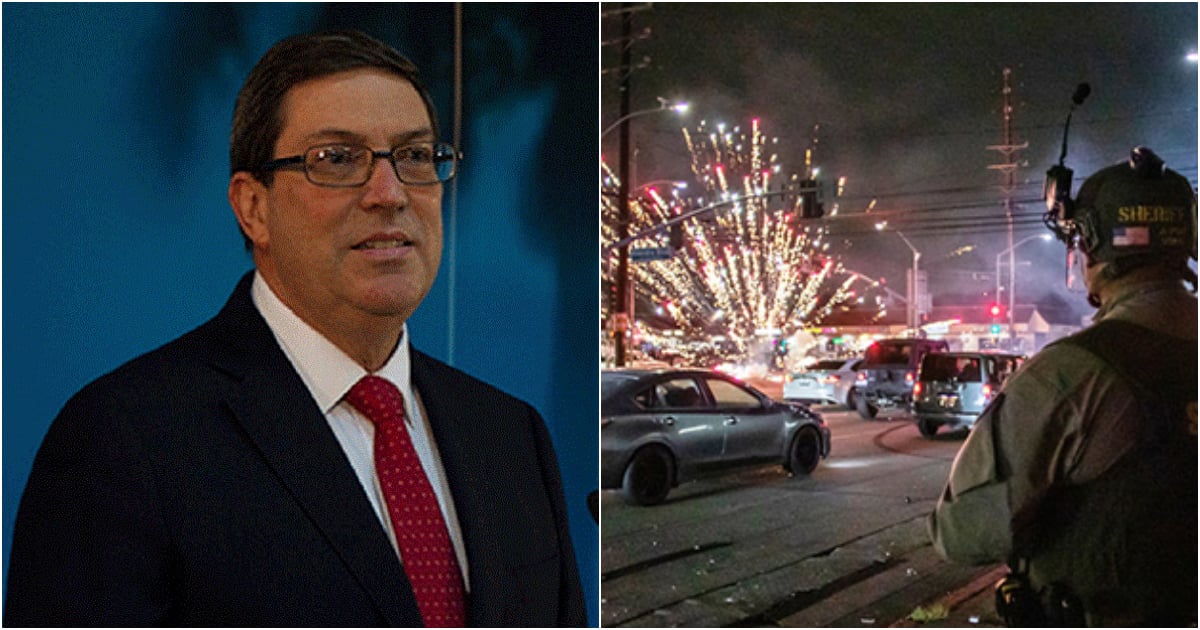
The Minister of Foreign Affairs Bruno Rodríguez Parrilla sparked a wave of critical responses after posting a denunciation on his X account regarding the excessive use of force during recent protests in Los Angeles, United States.
“In protests in Los Angeles, we witnessed excessive use of force, the involvement of the U.S. National Guard, attacks on journalists, and violations of migrants' rights. Yet, we have not seen any condemnation of these actions from anti-Cuban politicians. Their hypocrisy is severe and disturbing,” wrote the chancellor.
However, their silence on the repression in Cuba, especially during July 11, 2021, and its aftermath, was quickly pointed out by users, who wasted no time in reminding them of the events of 11J. On that date, tens of thousands of Cubans took to the streets in various cities to demand freedom and were met with a wave of repression that included mass arrests, summary trials, and disproportionate sentences.
"And what did you see on July 11, 2023, and the following days in Cuba?" questioned a user. Others urged him to "post the photos from July 11" and to stop "publishing videos from other countries."
Criticism has focused on the evident lack of coherence of the Cuban government, which rushes to denounce events abroad but maintains absolute silence about the repression within its own borders.
Several comments reminded him that in Cuba, even those who attempt to march peacefully "with a flower in hand" are repressed, and that even today there are prisoners for protesting, without any minimum guarantees of legal defense.
One of the users was even more straightforward in labeling the chancellor as “hypocritical” for representing a government that “oppresses its people at the slightest protest” and makes exclusive use of force in response to any dissenting demonstration.
The accumulated indignation over the repression of July 11, the imprisonment of protesters, and systematic censorship has once again emerged strongly on a social network where every official attempt to divert international attention encounters the echo of a citizenry that does not forget.
The episode reveals the disconnect between the external discourse of the Cuban government and its internal practices. While denouncing violence in other countries, it avoids any criticism of its own history of repression, in an attempt to legitimize its international position while ignoring the demands of its people.
Rodríguez also faced strong criticism when he celebrated the massive protests on Saturday, April 5, in the United States against the authoritarian profile of Donald Trump's administration. From official spokespersons and media controlled by the Communist Party, the government amplified images of the marches.
"It's called democracy... you choose who to vote for, and you can go out and protest if you disagree. Something you can't do... you always vote for the same failed model, and it's very difficult for you to protest without ending up worse than you already are," a user commented.
In Cuba, anyone who dares to express their disagreement with the regime is immediately stigmatized, harassed, or imprisoned. Citizen mobilizations are suppressed with unjustified detentions, digital connection blockades, massive police operations, and smear campaigns against those who dare to raise their voices.
The government's double standard does not stop there. While it applauds the respect for the right to protest in the United States, that very same right is a chimera on the island. The Article 56 of the Constitution, which in theory protects peaceful demonstrations, remains a mere piece of paper: there is no legal mechanism to enforce it. And any attempt to exercise it is labeled as an affront to the "socialist system."
This contradiction of the regime, which defends the protests of others while repressing its own is not new, but it is particularly cynical in the current context. The official propaganda, which demands sovereignty and non-intervention when Cuba is criticized, has no qualms about interfering, distorting, and exploiting international events to support its ideological narrative.
Trump ordered the deployment of about 2,000 National Guard soldiers in California without the consent of Governor Gavin Newsom, in response to protests against the immigration raids carried out by Immigration and Customs Enforcement (ICE).
The Los Angeles police clashed with protesters in the city center and the suburb of Paramount, California, after declaring a protest illegal and pushing to disperse the crowd.
"If you lay a hand on a law enforcement officer, you will be pursued with the full force of the law," threatened Homeland Security Secretary Kristi Noem.
Frequently asked questions about the double standards of the Cuban regime regarding protests and human rights
Why does the Cuban regime criticize repression in the U.S. but silence repression in Cuba?
The Cuban regime has been criticized for its double standards in denouncing repression in other countries while silencing human rights violations in its own territory. It often uses these international events to divert attention from internal repression, such as the mass detentions and summary trials that occurred during the protests on July 11, 2021, in Cuba.
What happened during the protests on July 11, 2021, in Cuba?
On July 11, 2021, tens of thousands of Cubans took to the streets to demand freedom and political change. The Cuban regime responded with a wave of repression that included mass arrests, summary trials, and disproportionate sentences, highlighting the harsh reality of the lack of human rights on the island.
How does the Cuban government respond to criticism of its double standards on human rights?
The Cuban government often ignores or downplays criticism regarding its double standards on human rights, attributing internal problems to external factors such as the U.S. embargo. However, this stance is viewed as an attempt to divert attention from its own violations of the fundamental rights of Cubans.
What is the Cuban regime's stance on the protests in the U.S.?
The Cuban regime has praised the protests in the U.S., calling them a legitimate exercise of democracy. However, this stance contrasts with the repression of protests in Cuba, where any manifestation of dissent is met with detentions and censorship. This inconsistency is seen as a strategy to strengthen its international ideological narrative while ignoring the demands of its people.
What does the Cuban regime say about the human rights of Cubans abroad?
The Cuban regime has expressed concern for the human rights of Cubans abroad, especially in the U.S., but this concern is met with skepticism. Many critics argue that the regime uses Cubans abroad as a source of income through remittances while ignoring human rights violations within the island.
Filed under: