
Related videos:
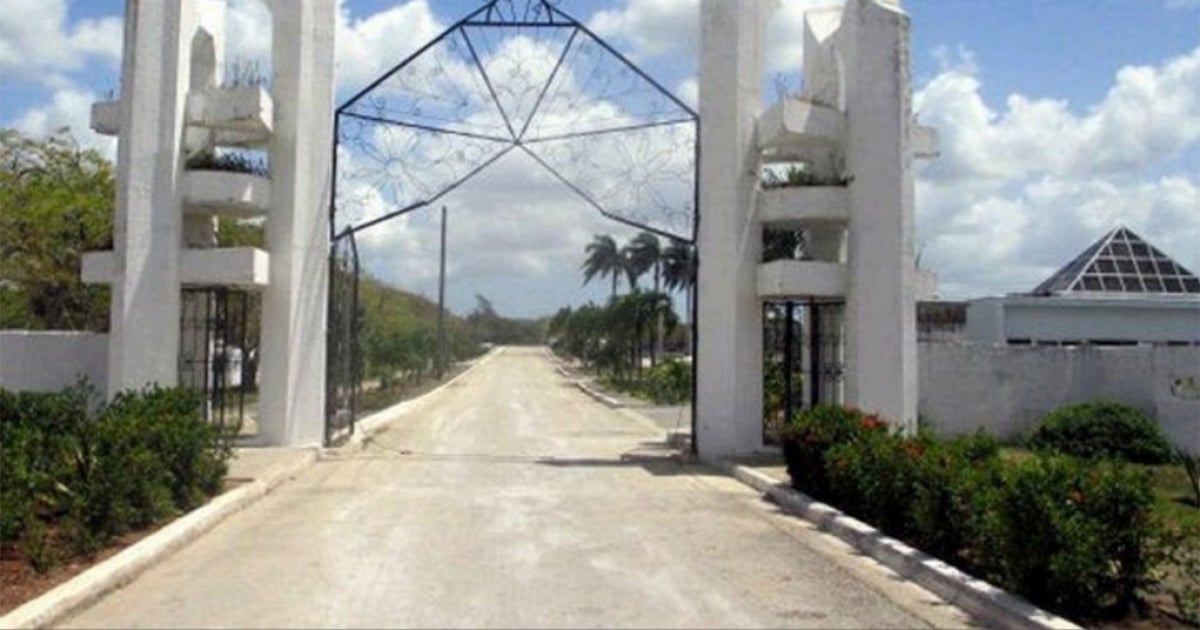
More than 20 graffiti with slogans against the Cuban regime appeared on the wall of the Mayabe cemetery in Holguín this week.
According to the independent media 14 y Medio, more than 20 graffiti featuring phrases like "Down with the dictatorship," "Homeland and life," "Díaz-Canel, jerk," or "Freedom for the people" appeared last Thursday on the wall of the cemetery.
The place was occupied early on by agents of the Ministry of the Interior (MININT) who kept watch on those passing by to prevent them from taking photos, while they attempted to erase the graffiti.
“I couldn’t take out my phone even to check a message (…) They didn’t take their eyes off me, I was afraid for a moment that they would take me away,” said the driver of an electric tricycle who passed by the cemetery early Thursday to the independent media.
The independent media shared images of the newly painted wall after the graffiti had been removed.
A tanker truck loaded with lime was needed to cover the graffiti, witnesses reported.
The emergence of posters against the regime is becoming increasingly common in a context increasingly marked by citizen discontent.
In early June, a sign with the phrase "Down with the dictatorship" appeared in one of the busiest areas of Sancti Spíritus, which caused a significant stir on social media and among passersby who witnessed the scene before it was removed by MININT agents.
The message was painted in black letters on a prominent wall located right at the intersection of the Central Highway and Mártires Avenue (Marcos García), in front of the provincial headquarters of the Ministry of Science, Technology, and Environment (CITMA) and the "José Martí" University.
At the end of last year, several critical posters against Raúl Castro appeared in the town of Dos Caminos in the municipality of San Luis, in the province of Santiago.
On that occasion, the texts, written with black pencil on the walls of what seemed to be a house, said: "Down with Raúl" and "Ping... there's hunger."
In Cuba, these increasingly frequent expressions of protest are often repressed, and authorities arrive at the scene with experts, dogs, and specialized personnel to identify those responsible and imprison them.
In May of last year, a court sentenced nine years in prison to the young Jorge Luis Boada Valdés, alleged author of a large poster against the regime that appeared in the Santos Suárez neighborhood of Havana in January 2022.
Frequently Asked Questions about Expressions of Discontent in Cuba
What slogans were painted in the Holguín cemetery?
The slogans painted on the wall of the Holguín cemetery included phrases like "Down with the dictatorship," "Homeland and life," "Díaz-Canel, you bastard," and "Freedom for the people." These expressions reflect a growing discontent towards the Cuban regime.
How did the authorities react to the graffiti in the Holguín cemetery?
The Cuban authorities responded quickly to the graffiti by deploying agents from the Ministry of the Interior (MININT) to monitor the area and prevent any photographs from being taken. They used a tanker truck loaded with lime to cover the graffiti, demonstrating their intent to suppress any form of public protest.
Why are protests increasing in Cuba?
The protests in Cuba are increasing due to a severe economic crisis, characterized by food shortages, prolonged blackouts, and precarious basic services. The lack of effective solutions from the government has exacerbated public discontent, driving the population to express their frustration through demonstrations and graffiti.
What measures does the Cuban government take in response to public demonstrations of discontent?
The Cuban government often represses public demonstrations of discontent using security forces to erase graffiti and detain those presumed responsible. Occasionally, operations are deployed that include forensics and dogs to investigate and imprison protesters, as part of an effort to maintain control over political expression in the country.
Filed under: