
Related videos:
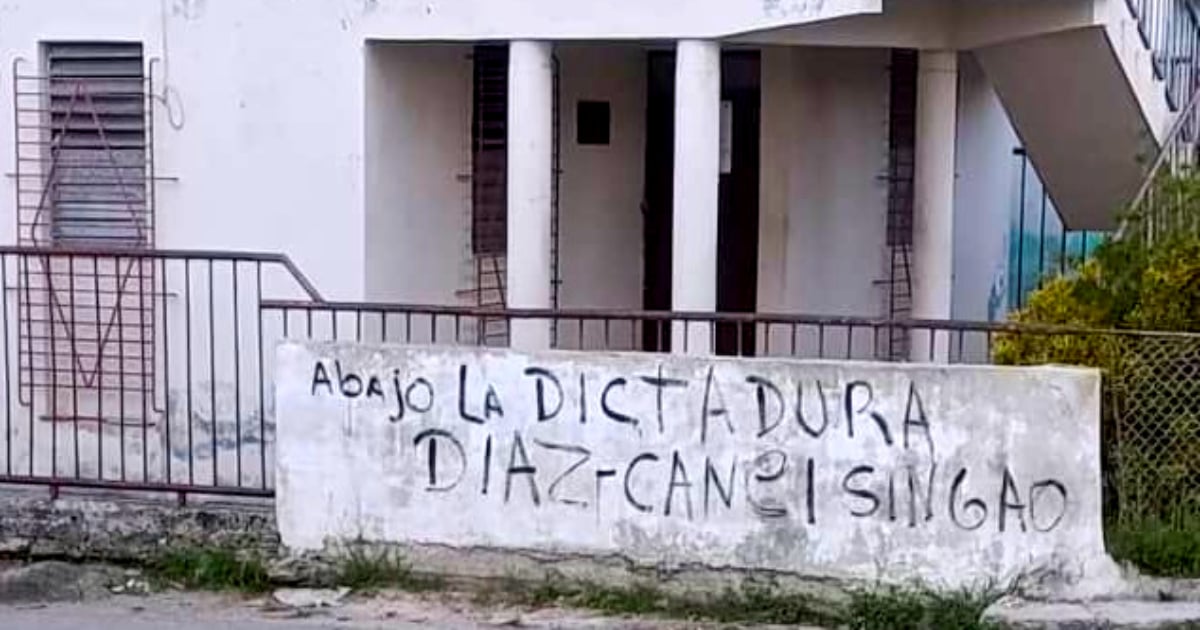
A graffiti with the phrase “Down with the dictatorship. Díaz-Canel is a jerk” appeared this week on the outer wall of a medical office in the La Hata neighborhood of the Guanabacoa municipality in Havana, as a new expression of popular discontent against the Cuban leader and the prevailing political system on the island.
The graffiti was reported by academic and journalist José Raúl Gallego on social media, who identified the exact location: the medical post situated on Concha Street, at the corner with 20th Street, on the way up to the special school 28 de Enero.
According to the activist, this is an area with a strong military presence, as numerous buildings have been constructed there for officials of the Revolutionary Armed Forces (FAR).
The message, written in large black letters, denounces the "dictatorship" and directs an insult at Miguel Díaz-Canel.
The expression “Díaz-Canel singao”, widely popularized since the social outbreak on July 11, 2021, has been used on multiple occasions as a symbol of social rejection. Its origin is linked to a song by the rapper Aldo el Aldeano, who introduced the chorus as a countercultural slogan.
This type of message has become more frequent in public spaces in Cuba in recent years, especially during periods of economic crisis, blackouts, repression, or price hikes such as the recent increase in ETECSA prices. Recently, similar incidents were reported in the Playa municipality of Havana and another in a central corner of Sancti Spíritus.
Although these expressions of protest are often quickly erased by agents of the Ministry of the Interior (MININT), they are managed to be captured by neighbors and activists who share them on social media.
For many, these graffiti represent acts of symbolic resistance amidst a climate of censorship and fear. The emergence of such dissenting posters often involves the deployment of police experts and repressors in the area, who go as far as taking fingerprints and tracking with dogs in search of the authorship of the message.
The rapid spread of these images reflects a citizenry that, despite repression, continues to seek ways to express its outrage at the worsening living conditions in Cuba and the lack of freedoms.
Filed under: