
Related videos:
The Ministry of Communications (MINCOM) of Cuba announced recent changes to its management structure.
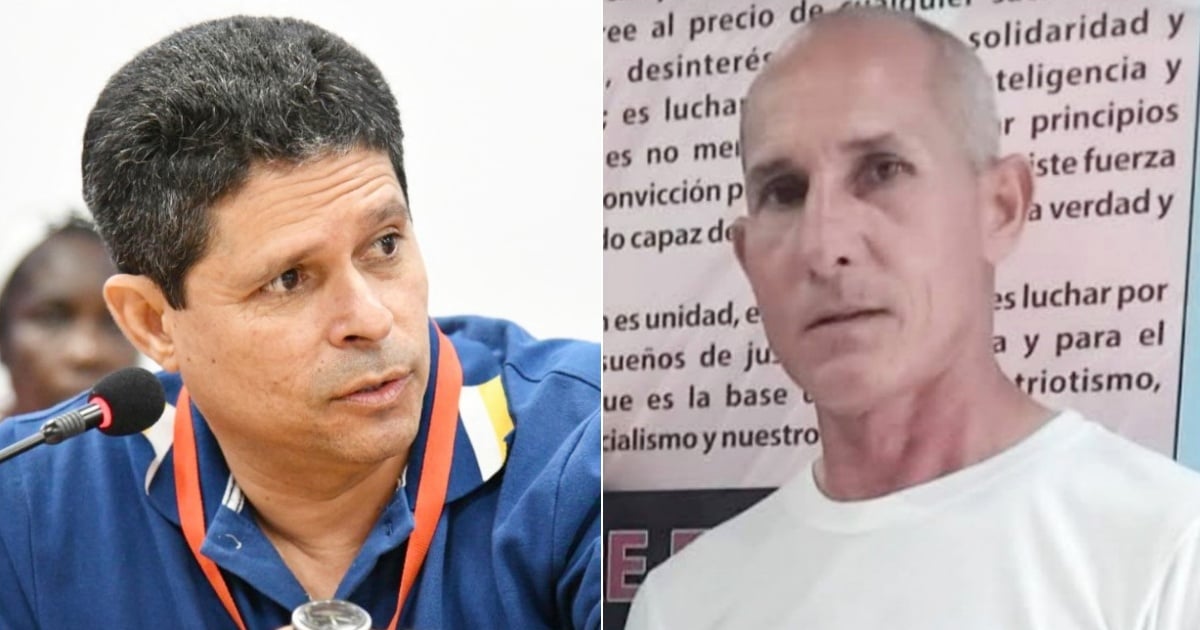
The Telecommunications engineer Pablo Julio Pla Feria has been promoted to the position of Deputy Minister of Communications, while Douglas Leyva López, who previously served as director in the province of Las Tunas, has been appointed President of the Cuban Postal Business Group.
The official statement from MINCOM does not specify that the promotion of Pablo Julio Pla Feria involves the dismissal of Ernesto Rodríguez Hernández, who a few weeks ago appeared on the Mesa Redonda regarding the ETECSA price hike, while the minister, Mayra Averich, was in Russia leading an official delegation.
Pablo Julio Pla Feria, new deputy minister
The Ministry of Communications detailed that Pablo Julio Pla Feria, appointed as the new deputy minister, began his career in 1993 as a training technician at the Integral Communications Company.
Since 1994, he worked in various areas of the Territorial Management of ETECSA in Las Tunas, holding technical and management positions for nearly two decades.
These include roles such as "Telecommunications Traffic Specialist, Deputy Manager of the Public Telecommunications Branch," and director of territorial management.
In 2012, he was appointed territorial delegate of the Ministry of Informatics and Communications in Las Tunas, and later moved on to work at the central headquarters of the Ministry, first as the director of Investments and Technological Development, and then as the general director of Communications.
Beginning in 2020, he headed the National Directorate of the Youth Computer and Electronics Clubs, and since 2022, he has been the President of the Business Group of Correos de Cuba.
According to official information, during their management, projects were promoted such as the automation of postal processes, the development of the DTO2 platform for e-commerce, and the creation of a state micro, small, and medium enterprise dedicated to messaging that began operations in December 2024. Agreements were also established with new logistics operators.
Douglas Leyva López, at the helm of Correos de Cuba
The new president of the Cuban Postal Business Group is Douglas Leyva López, who previously held the general management position at the Postal Company in Las Tunas.
Trained in the education sector, Leyva began his career in 1991 as a basic secondary school teacher.
Later, he held leadership positions in educational centers and in the Municipal Directorate of Education before joining the postal system in the municipality of Manatí in 2006.
In the following years, he rose within the structure of Correos de Cuba, first as deputy general director in the territorial division and then as assistant director.
Since 2016, he served as the general director of the company in Las Tunas, where, according to the official statement, the entity achieved "positive results in meeting the established plans and targets."
Initiatives are also being reported, such as the introduction of new commercial services, improvements in working conditions, and sustained economic growth, despite the challenges faced by the sector.
No new details have been disclosed regarding other restructuring within the organization.
The new appointments in the Ministry of Communications come at a particularly sensitive time for the sector.
In recent weeks, the increase in ETECSA rates, both for mobile services and internet access, has prompted a strong reaction on social media, independent media, and among users on the island.
The measure, implemented in a context marked by inflation and the devaluation of the Cuban peso, has been criticized for its impact on access to essential services such as digital communication and e-commerce.
This scenario has revived public scrutiny of the management of the telecommunications system and the role of the Ministry of Communications, including its subordinate companies.
Recent decisions at the top management level of the sector may be aimed, at least in part, at addressing these tensions, although the official statement does not directly reference these issues.
In any case, the challenges for the new authorities are significant: regaining user trust, ensuring stable services, and advancing technological modernization in a complex national environment.
Frequently asked questions about the new appointments in the Ministry of Communications of Cuba and the ETECSA rate hike
Who are the new leaders in the Ministry of Communications of Cuba?
Pablo Julio Pla Feria has been appointed as the new Deputy Minister of Communications, while Douglas Leyva López has taken over as the president of the Cuban Postal Business Group. These changes come at a critical time for the sector, marked by significant public discontent due to the increase in rates by ETECSA.
What has been the public's reaction to ETECSA's price hike?
The increase in ETECSA's rates has sparked a strong backlash among users within Cuba. The new measures have been criticized for their negative impact on access to essential services such as digital communication and e-commerce, especially in an unfavorable economic context due to inflation and the devaluation of the Cuban peso.
What justifications has ETECSA provided for the increase in rates?
ETECSA has justified the increase in rates as a necessary measure to close income gaps and maintain the sustainability of telecommunications services. The company claims that it faces difficulties in generating sufficient revenue due to fraud in international recharges and high levels of debt.
What is the economic context that Cuba faces in relation to ETECSA?
Cuba is experiencing a complex economic situation, characterized by rising inflation and the devaluation of the Cuban peso. ETECSA heavily relies on international top-ups to sustain its operations, a fact that has been criticized for its impact on social equity and access to essential telecommunications services.
Filed under: