
Related videos:
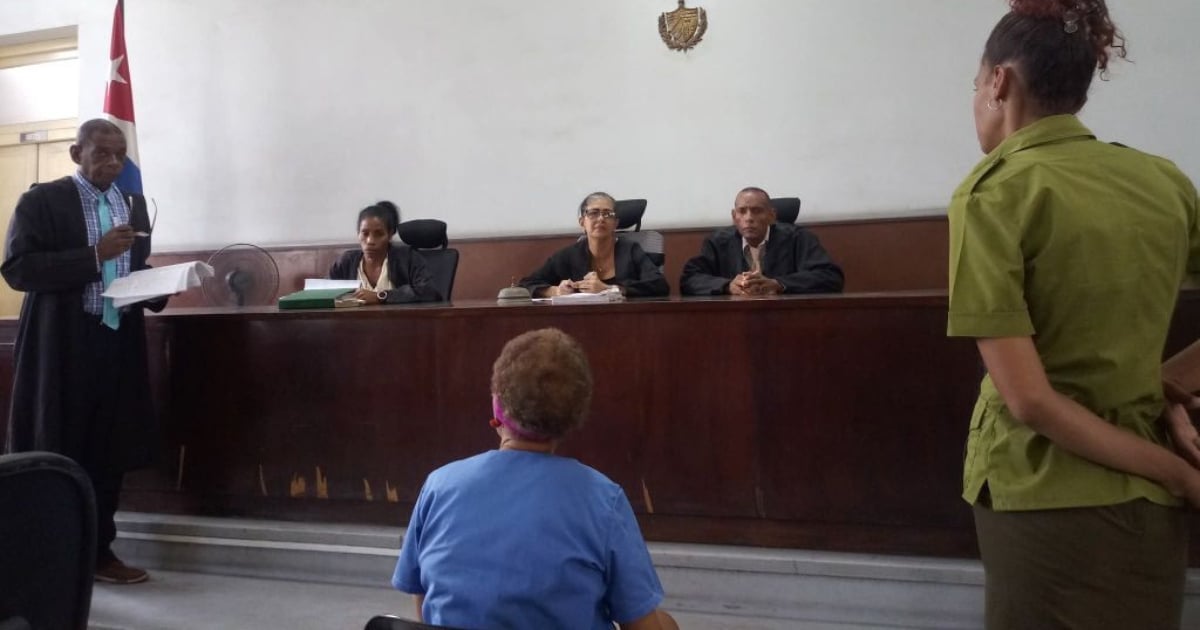
The Provincial People's Court of Santiago de Cuba recently held several public oral trials for crimes related to illicit drugs, in which sentences ranging from eight to 12 years in prison were imposed.
In case No. 63/2025, a 25-year-old young man was sentenced to 12 years of imprisonment for trafficking hydrochloride cocaine. According to the ruling, he operated as a link in an international network based in Suriname, receiving drugs through package shipments, which he then resold in Santiago de Cuba.
On September 27, 2024, while returning by bus from Havana, "where he obtained the drugs, the accused was intercepted by officers from the Anti-Drug Section at the El Cristo checkpoint," and two packets containing 260 grams of cocaine, cash, and two mobile phones were seized. The confiscation of assets linked to the crime was also ordered, according to a report from the Provincial Court published in the official newspaper Sierra Maestra.
Another 12-year sentence was handed down to a 64-year-old Venezuelan citizen, charged in case No. 59/2025. She attempted to introduce 2,000 grams of cocaine concealed in two boxes of cake and waffle mix, coming from the Dominican Republic. The arrest occurred on March 15, 2024, at Antonio Maceo International Airport, where money in various currencies and a mobile phone were also confiscated.
In case No. 52/2025, a 23-year-old man was sentenced to eight years for selling marijuana. “This accused purchased the plant material from unidentified individuals, packaged it into what are known as candies or cigarettes, and then sold them in the vicinity of his home,” the report stated.
Although he had no criminal record, the court took into account his "disordered social behavior" and his connections to trafficking networks. At the time of his arrest on September 17, 2024, he was carrying 77 packages containing 20 grams of marijuana, which the prosecution claimed was equivalent to 500 cigarettes.
Similarly, as part of case No. 61/2025, a sentence of eight years was handed down against a 24-year-old man, arrested with cocaine, crack, and marijuana. According to the ruling, he had been producing and distributing drugs from his home in Santiago de Cuba since an unspecified date, using materials seized during a house search on September 12, 2024.
According to the source, all the sentences included additional sanctions such as the deprivation of rights and a prohibition on leaving the country.
The authorities emphasized that in the proceedings "the procedural guarantees and respect for due process were upheld," although in none of the cases is it mentioned whether the accused had effective defense or the conditions of their detention are detailed.
The hearings, held in the Room for Crimes Against State Security, were presented as examples of the "zero tolerance" policy towards drugs, promoted by the Cuban judicial system.
The trials took place within the framework of the Third National Exercise for the Prevention and Confrontation of Crime, Corruption, Drugs, and Social Indiscipline.
The central message is clear: exemplary punishment, seizures, and public exposure. However, beyond the official discourse, what remains unaddressed is why more and more people—mostly young individuals—are willing to take the risk of engaging in these activities. In an environment of prolonged crisis, inflation, and scarcity, the punitive approach does not seem to stop the problem; it merely amplifies its visibility.
Until June 28, the Third National Exercise for the prevention and confrontation of crime, corruption, drugs, and social indiscipline is taking place, a large-scale operation that began on the 23rd under the control of the Communist Party, the Ministry of the Interior, and other state structures.
The initiative includes actions of popular oversight, fiscal audits, energy inspections, and public trials for cases deemed "noteworthy," in what appears to be an attempt to reinforce state control over the daily lives of Cubans.
The practice of holding "exemplary trials" has historically been used by the regime to send warning messages to the population, especially during times of economic crisis and growing discontent.
On the very day of the 23rd, the communist government continued its punitive offensive against the consumption of the drug known as "the chemical" and requested 8 to 9 years of imprisonment in Matanzas for two young people accused of its consumption and transportation.
In this regard, the Provincial People's Tribunal of Havana for transporting an air conditioner shipped from abroad that contained more than one kilogram of liquid cocaine hydrochloride inside.
A citizen in Cienfuegos was sentenced to eight years of imprisonment for selling synthetic cannabinoids known as "the chemical," while in Matanzas, two young individuals accused of its consumption and transportation received sentences of eight and nine years in prison.
For years, the sale and consumption of drugs, particularly among young people, has become normalized in many Cuban cities, with substances like "químico" available on every corner and no serious institutional response.
A few days ago, the Provincial People's Tribunal of Santiago de Cuba sentenced a man to eight years in prison for an offense related to illegal drugs.
Filed under: