
Related videos:
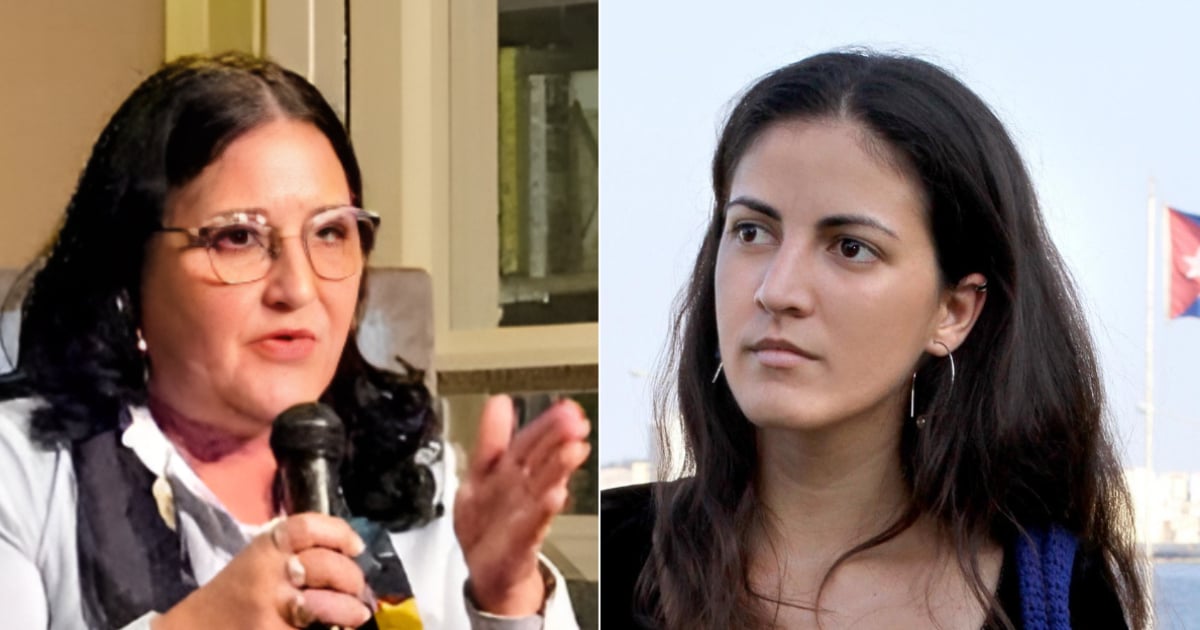
The Deputy Director General for the United States at the Cuban Ministry of Foreign Affairs (MINREX), Johana Tablada de la Torre, sparked significant backlash after referring to the activist Rosa María Payá as a "political appointment," who was recently elected as a commissioner of the Inter-American Commission on Human Rights (IACHR) of the OAS.
"The appointment by the Secretary of State and self-proclaimed defender of human rights is one of the most prominent defenders of the violation of the human rights of the Cuban people," the official wrote on the social network X (formerly Twitter), commenting on a defamatory post by the chancellor Bruno Rodríguez Parrilla.
The disqualification is part of a campaign by the Cuban diplomatic apparatus against the election of the opposition candidate. In this regard, Rodríguez Parrilla also accused the United States of "blackmailing" the member states of the OAS to impose a "mercenary," while an official statement from MINREX asserted that Havana "does not recognize any authority" from that regional organization.
A boomerang insult
But what was intended to be a propaganda attack ended up backfiring against the regime.
The term “puppet government” is widely used among Cubans —both inside and outside the island— to refer to the ruler Miguel Díaz-Canel, appointed directly by Raúl Castro without free elections or real citizen participation.
Dozens of users on social media reacted with irony and direct criticism. "Oh, but does this politician know what it means to be appointed?" wrote one internet user. Another was more blunt: "The one who was appointed is the dictator of Cuba, who was not elected in free elections."
They also recalled the unresolved murder of Oswaldo Payá and Harold Cepero, which occurred in 2012 under circumstances questioned by the CIDH itself, and linked this event to the systematic repression of the regime against peaceful dissent. “Payá gathered signatures for a plebiscite. You killed him. That was the peaceful way to end the dictatorship,” noted a user.
Others openly mocked Tablada's rhetorical slip: “Did someone say appointed by finger? Were they calling me?”, wrote a user, accompanying the fictional statement with a photo of Díaz-Canel. “Speaking of appointed by finger... Canel”; “The fasting is affecting you, Johana,” were some of the other responses the diplomat received from the regime.
Tablada: Propaganda as a Profession
Tablada de la Torre is a well-known figure for his unconditional defense of the Cuban regime in international forums.
His record includes denials of evidence regarding Chinese espionage bases in Cuba, attacks on the American diplomat Mike Hammer, and a long series of statements aligned with the official narrative that exclusively blames the U.S. embargo for all of the country's problems.
Her role, far from traditional diplomacy, appears more connected to institutional propaganda. The contradiction of using the term "appointment by finger" —precisely when referring to an activist elected by a vote in the OAS— not only discredits her but also highlights the double standard with which the regime evaluates democratic processes.
Rosa María Payá: Legitimacy and Support
Unlike the leadership imposed by inheritance within the Cuban communist apparatus, Rosa María Payá was nominated by the U.S. government and elected by a vote of the OAS member states, which grants her democratic legitimacy and institutional support. Her election was celebrated by various human rights organizations and advocates for freedom in the region.
In the face of this, the disqualifications issued by Cuban diplomacy reveal not only intolerance but also a deep fear that dissenting voices might occupy positions of power in international organizations. The fact that the response has been so virulent and riddled with contradictions only confirms the regime's discomfort with a figure who embodies an alternative to authoritarianism.
Filed under: