
Related videos:
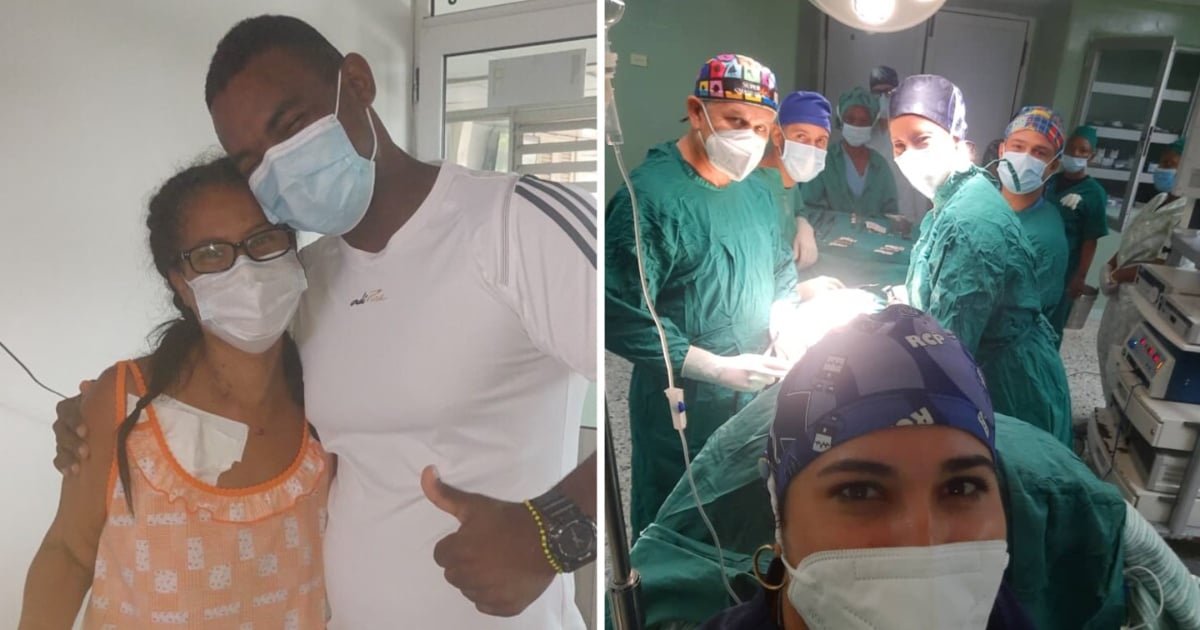
The Cuban regime celebrated this Friday a high-risk kidney transplant performed at the "Dr. Abelardo Buch López" Nephrology Institute in Cuba, after a 28-year-old young man donated a kidney to his 50-year-old mother, a social worker from Matanzas with chronic kidney disease who had been undergoing hemodialysis.
According to a report from the Ministry of Public Health (MINSAP), the procedure, which involved a multidisciplinary team of surgeons, nephrologists, urologists, anesthesiologists and nursing staff, was described by medical authorities as an "example of what can be achieved" when “science, will, and love” come together.
The donor, Evelio Joel Hernández Martínez, former player of the Cocodrilos baseball team from Matanzas and a graduate in Physical Culture, was successfully operated on despite his strong build, which required a demanding surgical approach.
The surgery for the mother, Misleivy Martínez Zulueta, took place immediately afterwards and was followed by a recovery process in intensive care, from which she evolved favorably.
The head of the transplant unit, Dr. Christian Leyva de la Torre, emphasized that the intervention is part of the effort to "recover" transplant activity in the country, which is facing a serious crisis that has left patients without the procedure.
Dr. Raquel Rondón Reytor, head of the operating room, emphasized the high degree of complexity associated with these types of procedures, which require extensive logistics, a large amount of supplies, and total commitment from the staff.
The patient, deeply grateful to the medical team and her son, expressed: “It was his decision. It was very difficult for me to accept it because it’s not easy, but he was always very willing. I know he is a great human being, and now he is my savior.”
This case, extensively promoted by official media, has been used by the regime to showcase the achievements of the health system amidst a deep health and economic crisis.
However, this celebration contrasts with recent reports that Cuban children and young people with kidney failure have been unable to access transplants due to a lack of supplies, infrastructure, and political will.
Parents and doctors have warned that many minors remain on waiting lists with no scheduled date for surgery, while the country is undergoing a severe crisis of medical supplies and hospital equipment.
Specialized surgical activity in transplants has drastically decreased in Cuba, and although the regime claims it is trying to reactivate it, the material conditions remain inadequate.
Most completed cases—such as this mother-child transplant—depend on extraordinary efforts and do not reflect the overall reality of the system, which today marginalizes vulnerable groups like pediatric patients.
The lack of equity in access to healthcare, combined with state centralization and propaganda, sidelines dozens of children and families who, unlike the celebrated media case, lack the resources or support to receive life-saving treatments.
Frequently Asked Questions about the Situation of Kidney Transplants in Cuba
What was the outcome of the kidney transplant performed in Cuba where a son donated a kidney to his mother?
The kidney transplant was successful. Evelio Joel Hernández Martínez donated a kidney to his mother, Misleivy Martínez Zulueta, who has recovered well after the surgery at the "Dr. Abelardo Buch López" Institute of Nephrology in Cuba. This case was used by the Cuban regime to showcase the achievements of the healthcare system, despite the growing criticisms regarding the lack of supplies and resources in the country.
What is the current situation of kidney transplants in Cuba?
Although the Cuban regime celebrates successful cases such as the transplant between mother and child, the reality is that many patients, especially children, do not have access to transplants due to a lack of supplies and political will. Despite efforts to reactivate transplant activities, the material conditions remain inadequate, and many patients remain on waiting lists with no scheduled date for surgery.
What challenges does the Cuban healthcare system face in terms of transplants and complex medical treatments?
The Cuban healthcare system faces serious limitations due to a lack of supplies, infrastructure, and specialized personnel. Patients with severe illnesses, such as kidney failure, often cannot access the necessary treatments and rely on extraordinary efforts or international aid. Furthermore, the centralization and state propaganda often conceal the true extent of the health crisis facing the country.
What impact does the propaganda of the Cuban regime have on international perception of its health achievements?
The Cuban regime uses individual success stories to promote a positive image of its healthcare system. However, this propaganda contrasts with reports of precarious conditions and a lack of equity in access to medical treatments. While certain achievements are celebrated, many patients, especially the most vulnerable, lack the resources and access to life-saving treatments.
Filed under: