
Related videos:
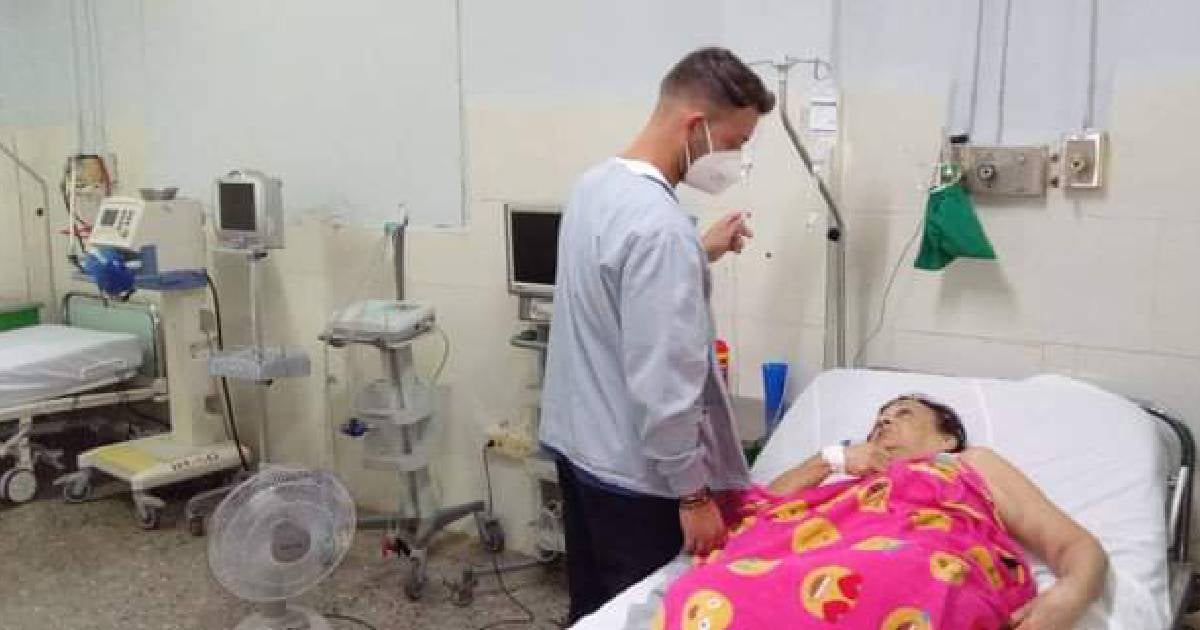
Despite the efforts of various professionals, health services in the province of Artemisa continue to be affected by a shortage of specialized personnel, the deterioration of equipment, and planning that fails to meet the actual needs of the communities.
In specialties such as otorhinolaryngology, surgery, and rheumatology, access is limited or nonexistent. The current strategy is insufficient to reverse the inequality in primary care, the official newspaper El artemiseño acknowledged.
The testimony of patients like Teresa Guerra Alarcón, who expresses gratitude for the care provided by the angiologist Darién Montesino in San Antonio de los Baños, highlights the dedication of some committed doctors. However, that level of care is not guaranteed across all specialties or in all regions.
Dr. Yanelis Mojica, director of the José Hipólito Pasos y Caballero polyclinic, acknowledges that specialties like otorhinolaryngology and ophthalmology cannot maintain the necessary frequency due to the blackouts, which even affect the administration of basic exams.
A patient interviewed in ophthalmology explained that despite having an appointment, he sometimes has to reschedule it according to the Electric Company’s schedule. "If not, even if the doctor is available, you cannot have a fundus exam or a refraction test," he summarized.
In the municipality of Candelaria, dermatologist Adiamnis Borrego earns the respect of over 30 patients each week. However, the demand in orthopedics and rheumatology far exceeds the supply. There are no specialists to support a stable community projection, despite the aging demographic.
San Cristóbal is not exempt from the situation either. Although the Comandante Pinares hospital promotes outpatient consultations, it does not even have a specialist in maxillofacial surgery. In the community, cardiology, coloproctology, surgery, and orthopedics are glaringly absent, specialties that require equipment that no longer exists in many health areas.
According to Yolani Torres Martínez, the director of the institution, specialists visit the areas of Candelaria, Bahía Honda, and San Cristóbal on a monthly basis for the surrounding municipalities. Bahía Honda provides transportation for the transfer to their facilities, while they reach Candelaria through the transportation guaranteed by the hospital.
The provincial director of Medical Assistance, Sahirys González Piloto, acknowledges that the shortage of human resources is serious and that reorganization is the only way to alleviate the situation. However, she also admits that not everything is well-structured.
We aim to reorganize ourselves so that the community feels the human resources deficit less. We are all aware of this situation, but with the specialists we have, we must reach out to the community. In general, the greatest shortages are in orthopedics, surgery, rheumatology, gastroenterology, and endocrinology, although this is not the case throughout the entire province," he pointed out.
“Especially,” he added, “there is work to be done to provide better care in Caimito and Bauta, where there are no specialists living there, nor are they training others. And these are precisely the municipalities with the greatest shortage of doctors in primary healthcare.”
González also referred to the phenomenon of residents who remain in Havana after training there, which only worsens the local availability. Meanwhile, the strategy of transferring patients between hospitals is being upheld with effort, but it does not address the root of the problem: territorial inequality in access to healthcare.
In summary, the system does what it can with what it has, but that is not enough. The good intentions of the doctors are insufficient when the structure does not support them. Reorganization is no longer an option; it is an urgent necessity.
According to the Statistical Yearbook on Public Health and Social Assistance, published by the National Office of Statistics and Information (ONEI), the number of physicians in Cuba decreased from 94,066 in 2022 to 80,763 in 2023, a concerning exodus of over 13,300 health professionals.
This exodus is not exclusive to doctors. The general health personnel in Cuba, which includes dentists, nurses, technicians, and other graduates in the field, also experienced a significant decline, noted the state entity.
This exodus of professionals –many of whom have crossed borders–, combined with the export of around 37,000 doctors to other countries in 2023, the lack of medical supplies, and the deterioration of hospital infrastructure, has significantly reduced the quality of care in the country.
In 2023, the ratio of inhabitants per doctor reached 127 for every physician, compared to 113 recorded in 2022. The number of available hospital beds for medical care also decreased, with only 38,483 beds in 2023, representing a reduction of 3,369 units compared to the previous year, according to the publication.
Numerous citizen reports in recent years highlight the gradual deterioration of health institutions across the country, something acknowledged by official spokespersons, who have admitted that in Cuban hospitals “we are filled with difficulties, we have shortages, lack of supplies,” and that “sometimes the treatment is not the best either.”
The Cuban government attributes the lack of medications, equipment, and the deterioration of infrastructure to the sanctions resulting from the U.S. embargo, but at the same time it maintains the medical services export program, one of its main sources of income.
In this regard, the Cuban government retains the majority of the salary paid by host countries for the presence of medical missions from the island. On the other hand, many doctors cannot refuse to participate in the missions without facing repercussions, ranging from work sanctions to restrictions on leaving the country.
In April, the United States government reported that the Cuban government earns over 4.9 billion dollars annually from medical missions; this message was conveyed a day after calling for an end to human trafficking through such practices.
In this regard, the Cuban Deputy Minister of Foreign Affairs Carlos Fernández de Cossío has attempted to dismantle the accusations of forced labor in Cuba's international medical missions, asserting that the state program "is very similar" to those of American, European organizations, or even United Nations agencies.
Although Fernández de Cossío has insisted that the missions are based on "bilateral agreements with each country," the regime does not allow doctors to negotiate their conditions, nor to practice their profession freely outside of state supervision.
The claim that doctors are “better paid” and “treated with dignity” contradicts what Cuban physicians themselves have been denouncing for years. Many of them flee during missions, breaking away from their families and facing the penalty of not being able to return to the island for at least eight years.
Frequently Asked Questions about the Health System Crisis in Artemisa, Cuba
What are the main problems facing the healthcare system in Artemisa?
The healthcare system in Artemisa faces a shortage of specialists, deteriorating equipment, and blackouts that affect medical services. Specialties such as otolaryngology, ophthalmology, and rheumatology have very limited access, exacerbating inequality in primary care. Moreover, the lack of human resources and the emigration of doctors worsen the situation, forcing authorities to constantly reorganize in an attempt to alleviate the medical care deficit.
How does the lack of electricity affect medical services in Artemisa?
The blackouts in Artemisa disrupt the performance of basic medical exams and scheduled consultations. The lack of electricity means that even if a doctor is available, procedures such as eye fundus examinations or refraction tests cannot be conducted. This forces appointments to be rescheduled and impacts the quality and continuity of medical care.
What measures are being taken to improve the healthcare system in Artemisa?
The health authorities in Artemisa are attempting to reorganize human resources and transfer patients between hospitals to improve care. However, these measures are insufficient to address the underlying problem due to the lack of specialists and resources. The current strategy does not succeed in reversing the territorial inequality in access to healthcare, and the reorganization appears more as an urgent need than an effective solution.
What impact does the emigration of doctors have in Artemisa?
The emigration of doctors has caused a worrying brain drain of health professionals in Cuba, exacerbating the shortage of personnel in Artemisa. In 2023, the number of doctors in the country decreased significantly, and many residents training in Havana do not return to their home provinces. This exodus, combined with the export of medical services, has drastically reduced the quality of local healthcare.
Filed under: