
Related videos:
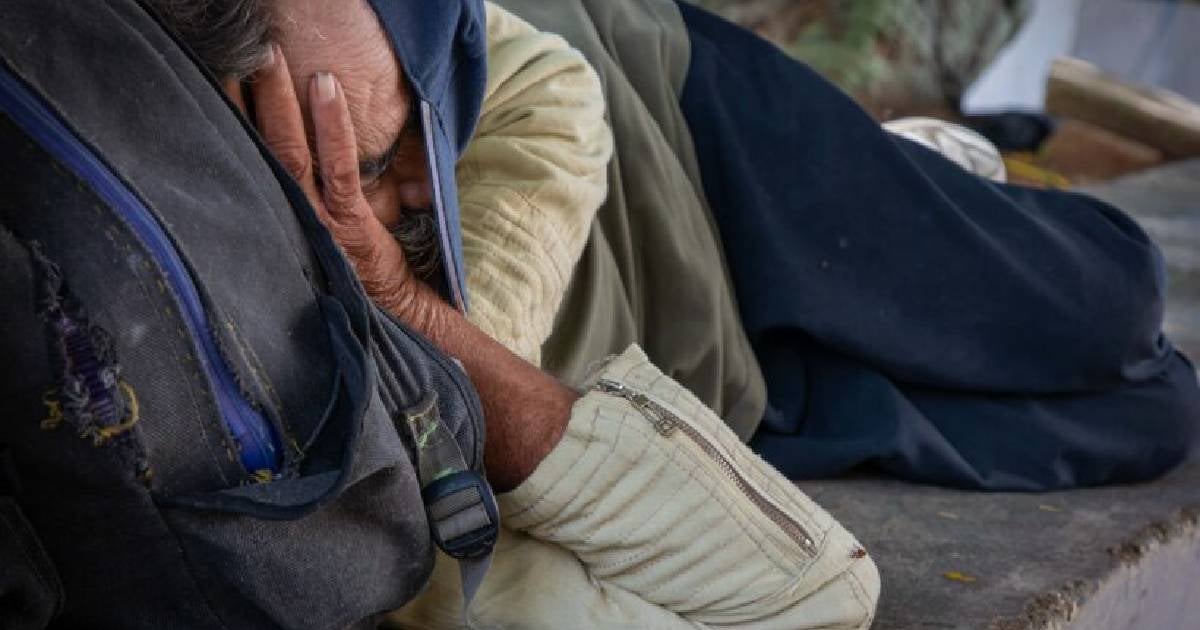
While the Cuban State glosses over poverty with euphemisms and unrealistic figures, a growing population of elderly, sick, and marginalized individuals survives in the open air in the province of Matanzas, without effective policies to support them or a real willingness to acknowledge what the country hides under the rug.
The so-called Athens of Cuba is not just about theater, beaches, and poetry: there is another city beneath the city. In that forgotten layer live those who have lost almost everything—home, family, mental health, jobs—and scavenge through waste to survive.
This reality has been given technical names: “wandering behavior,” “needy,” “hobo,” as if dressing up misery would make it less severe. But beneath the institutional terms are human beings with stories that no report can sanitize, as reflected in the official newspaper Girón in the first part of a report on begging in the Matanzas territory.
One of the testimonies collected is from Violeta, 74 years old. Fragile in appearance, muscular from having to carry "two bags filled with cans of imported beer," her biceps are proof that there are people in the country who literally bear the weight of the crisis.
The elderly woman asserted that the sale of aluminum at the state-run raw materials collection company "isn't as profitable anymore because they pay you, more or less, 60 pesos per kilogram; and a kilogram of aluminum is still a kilogram of aluminum these days, but 60 pesos isn't what it used to be."
"How many cans of beer were needed for him to develop that physique? The ones consumed at a lavish party in a bar for the newly rich? The ones drunk on a holiday or at an event organized by a company's surplus union?" asked the media.
Violeta does not officially qualify as homeless, even though she scavenges in the same places as those who do. Her situation is neither an illness nor idleness: it is poverty. And no one wants to take responsibility for that.
The official report presented by the mayor of Matanzas mentions 27 cases in the municipality (and 44 in the province) among "divers," "vagrants," and "needy individuals."
But "just taking a walk through the streets of Matanzas makes it clear that the figures reported by the provincial work group do not match reality," noted the source. But acknowledging this would mean admitting that the social model not only fails but also excludes the most vulnerable.
The Agreement 10056/2025 from the Council of Ministers, published in the Official Gazette, and in effect since April 28, 2025, defines "wandering" behavior and allocates institutional responsibilities.
However, authorities from the municipal directorate of Labor and Social Security and General Health could not even specify when the last transfer of these individuals to a Social Protection Center occurred. An official interviewed stated that it happened "at the end of May," when the conversation with reporters took place on April 30. Even basic arithmetic does not seem to be clear.
The theory is impeccable: daily detection, classification, transfer, medical care, and reintegration. The reality: a bureaucratic limbo and solutions that often arrive too late or never at all.
Worse still, the law now penalizes those who, despite having the ability to work, repeatedly wander or beg. However, there is little reflection that the available jobs are precarious, poorly paid, and often unattainable for people without a support network.
The case of Ramón Valdés, 72 years old and sitting with a poorly written sign asking for food on Calle Medio, the city's main commercial street, is another example of how misery has become visible. He says he just wants to get to Santiago de Cuba, where his sister is waiting for him. He may be lying, or he may not. But the need is real, as is the abandonment.
Roberto Molina, another older man who sleeps in the park, refuses to go to the Provincial Social Protection Center, located in Jagüey Grande, 80 kilometers from the main city.
“Are you going there? To that place of abuse?”, he questioned, noting that “no one who has been there and returned speaks well of it.” He stated that no one, whether a social worker or a public administration official, has ever come to see him. He picks things out of the trash, fixes them up, sells them, and sleeps almost every night in the Parque de Los Chivos, next to the central Plaza de la Vigía.
According to the newspaper, he carries his belongings organized in bags inside a backpack. His sense of "order, bordering on obsession, despite his unfavorable circumstances," contrasts with the institutional negligence that should be addressing him.
Matanzas has one less former athlete among its wanderers thanks to timely intervention. But what about the others? Who speaks for them? Who hears what they scream without saying a word?
Girón stated that “the inhabitants of the underground city are increasing in number, while the country faces an economic and moral crisis, whether due to external or internal factors. These are spasms of society, remnants of the previous day, undeniable evidence that some social policies are no longer sufficient or need to be pursued with greater effort.”
They also show that "we need to sharpen and refine our sensitivities and, above all, we cannot turn our backs on them, just as dust is hidden in the corners when cleaning the house."
The report emerges after the government itself acknowledged on Wednesday that more than 310,000 residents on the island are currently in a state of poverty or social vulnerability, amid a deep economic crisis and intense public controversy over recent official statements denying the existence of homelessness on the island.
The Agreement 10056/2025 of the Council of Ministers defines “street people” as “a multicausal disorder of human behavior” that involves “instability and insecurity at home, lack of self-care and economic autonomy, absence of family support or protection, as well as a favorable life project.”
The measure does not clearly address how to reverse begging, but rather how to manage its visibility. As a user commented weeks ago on the official portal Cubadebate: “One thing is to eradicate begging and another is to eradicate beggars.”
It also does not address the structural causes of the phenomenon centered around the collapse of the economic model, family disintegration, demographic aging, and mass emigration. The State does not acknowledge its responsibility in this crisis and chooses reactive measures to conceal its symptoms.
The institutionalization of control over the poorest, under the label of “vagrant behavior,” is nothing more than another authoritarian patch to disguise a social fracture that can no longer be hidden.
The Cuban regime attributes the increase in the number of homeless individuals to family neglect and the tightening of the United States embargo.
At the end of April, another report from Girón exposed one of the most painful realities of present-day Cuba: the extreme precariousness in which thousands of retirees live who, after decades of work, find themselves forced to survive on the streets.
Frequently Asked Questions About Poverty and Abandonment in Matanzas, Cuba
What is the situation of homeless people in Matanzas?
In Matanzas, a growing population of elderly, sick, and marginalized individuals survives in the open, while the Cuban State uses euphemisms and unrealistic figures to conceal the seriousness of the situation. The government has not implemented effective policies to address poverty and neglect, leaving these vulnerable individuals without the necessary support.
What measures has the Cuban government taken to address begging?
The Agreement 10056/2025 of the Council of Ministers defines "wandering behavior" and allocates institutional responsibilities, but does not effectively address how to reverse homelessness. The measures typically focus on managing the visibility of the problem rather than tackling its structural causes, such as the economic crisis, population aging, and mass emigration.
How does the current economic crisis affect the elderly in Cuba?
The economic crisis in Cuba has left many elderly people in extreme poverty, as pensions are insufficient to cover basic needs. A large percentage of Cuban retirees survive on the minimum pension and face difficulties in accessing food and medicine, exacerbating their vulnerability.
What is the Cuban government's stance on the existence of beggars?
The Minister of Labor and Social Security, Marta Elena Feitó Cabrera, has denied the existence of beggars in Cuba, labeling them as individuals seeking "an easy life." However, this stance ignores the structural causes of the phenomenon and contradicts the observable reality on the streets of the country.
What problems do agricultural markets in Cuba face?
Agricultural markets in Cuba are plagued by price chaos, lack of control, and absence of authorities, leaving consumers unprotected. This economic anarchy reflects the inefficiency of the centralized agricultural model, which has failed to ensure adequate production and distribution of food.
Filed under: