
Related videos:
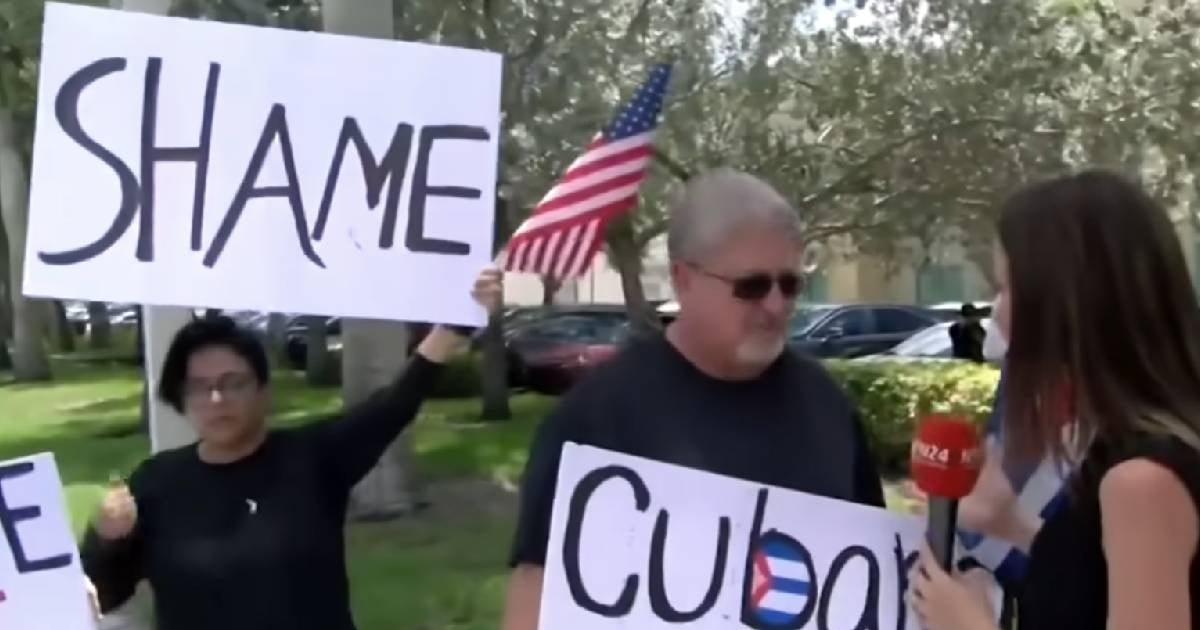
A group of activists and residents from South Florida gathered on Monday in front of the district offices of Congress members María Elvira Salazar and Carlos Gimenez to demand a change in their stance on the immigration and social policies promoted by their party.
The protesters accused both representatives from Districts 27 and 28 of Miami, respectively, of supporting reforms that would severely impact immigrants and the elderly, reported the channel TNT24.
With banners, slogans, and direct demands, the protesters labeled both Republican Cuban-American lawmakers as "traitors" for supporting—or at least not actively opposing—initiatives deemed harmful to vulnerable communities in the state.
The protesters denounced Salazar and Giménez's lack of opposition to the agreements between the Florida police and the federal agency ICE, which have led to increasing collaboration to detain migrants.
According to figures mentioned during the protest, 75% of state police departments are now cooperating with ICE, a measure that has instilled fear in immigrant communities.
Additionally, the congress members are criticized for their support of tax reforms that, according to activists, jeopardize access to Medicaid, Medicare, and subsidized insurance under the Obamacare program, making healthcare more expensive for thousands of residents, especially seniors.
"Carlos Giménez voted in favor of a law that cuts benefits and then said that there are no problems at the Krome detention center. That is not true," denounced a resident of Homestead who was present at the demonstration.
Among the voices raised during the protest, there were also specific requests.
A woman called for greater collaboration between Democrats and Republicans to pass the so-called Dignity Act, proposed by Congresswoman Salazar herself, which includes a conditional pathway to legalization for undocumented immigrants.
"It is time to change things. We need real political will from both parties," he demanded.
Florida is one of the states with the highest proportion of foreign-born population—over 50% in some areas of the south—making immigration a highly sensitive political issue.
Frequently Asked Questions about Protests and Immigration Policies in Florida
Why did activists protest outside the offices of Congress members María Elvira Salazar and Carlos Giménez?
The activists protested to demand a change in the stance of the congress members regarding immigration and social policies that affect immigrants and the elderly in Florida. They accused both of supporting harmful reforms and not opposing agreements between Florida police and ICE to detain migrants.
What is the I-220A form and why is it important for Cubans in the United States?
The I-220A form is a "conditional parole order" that allows certain migrants, such as many Cubans, to stay in the U.S. while their immigration situation is being resolved. However, it is not considered a valid "parole," which makes it difficult for holders to benefit from the Cuban Adjustment Act and obtain permanent residency.
What is Congresswoman María Elvira Salazar's stance on the deportation of Cubans?
Congresswoman María Elvira Salazar has advocated for protecting Cubans with I-220A from deportation and has requested that the DHS not deport them while they await their status adjustment process. Salazar has been critical of immigration policies that affect these communities and has worked to seek legislative solutions in their favor.
How does the collaboration between Florida police and ICE affect immigrant communities?
The collaboration between Florida police and ICE has generated fear in immigrant communities, as 75% of police departments in the state cooperate with ICE in the detention of migrants. This has led to arrests and deportations that negatively impact the lives of many immigrants.
Filed under: