
Related videos:
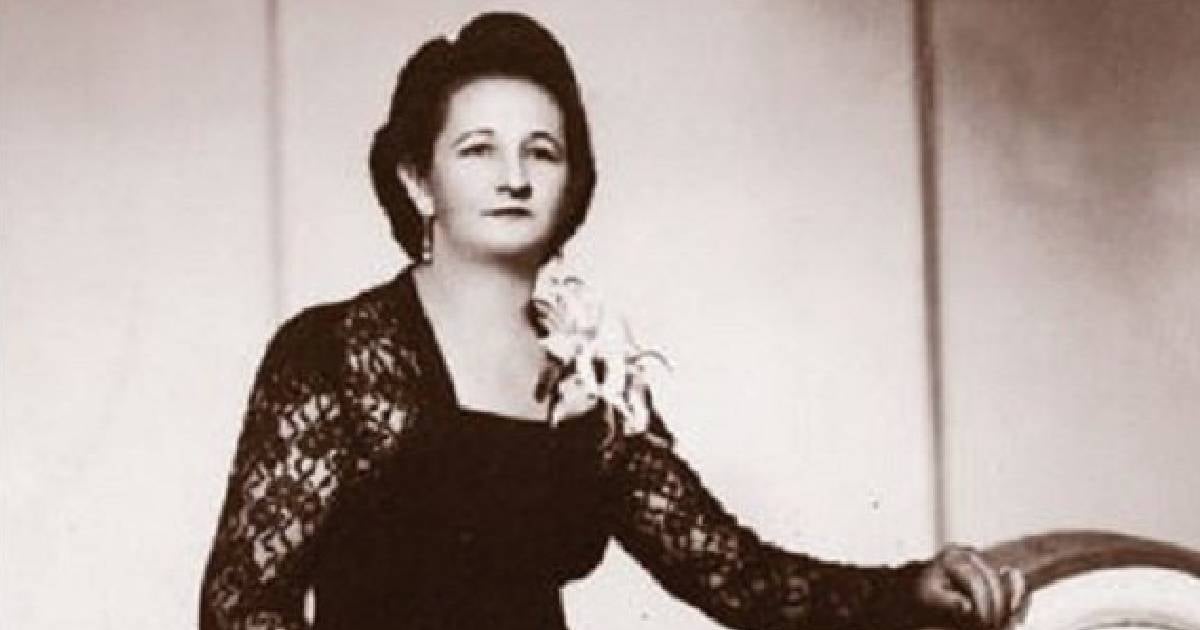
The Ministry of the Revolutionary Armed Forces (MINFAR) of Cuba dedicated a commemorative message on Wednesday to Lina Ruz González, mother of Fidel and Raúl Castro, highlighting her as a symbol of “courage and strength” during the “political persecution” experienced by her sons before the revolutionary triumph.
“FAR #Cuba remembers August 6, 1963, the day Lina Ruz González passed away. Her sons Fidel and Raúl were the most wanted men by the dictatorship, yet she never hid. What tremendous bravery!” the organization posted on its official X account (formerly Twitter), accompanied by the hashtag #100AñosConFidel.
The exaltation of Lina Ruz occurs amid a new campaign to promote the personality of the founders of the Cuban revolution, which has gained momentum in the context of the upcoming centenary of Fidel Castro's birth, set for 2026.
The regime does not mention how Lina Ruz dealt with the family conflicts arising from the ideological tensions between her sons Fidel and Raúl; and her exiled daughters, Angela María and Juanita Castro Ruz, the latter becoming one of the most critical voices against the regime established by her brothers, which she openly opposed since the 1960s.
In 2016, following Fidel's death, she was the only sister absent from the official ceremonies.
From the official perspective, the figure of Lina Ruz has been shaped as a selfless and silent mother who supported her revolutionary children.
However, the contrast with Juanita Castro illustrates how the Castro family's very own household reflected the historical and political division that has marked the nation for more than six decades.
The tribute from MINFAR, more than a memorial act, is perceived as part of a political narrative aimed at safeguarding the legacy of the Castros during times of growing social and economic strain on the island; this stands in stark contrast to the situation faced by the thousands of mothers of political prisoners and those being persecuted on the island, who are constantly subjected to state violence.
Recently, the case of Jenni M. Taboada came to light, the mother of the political prisoner from the 11J protests, Duannis Dabel León Taboada, who staged a protest in front of the prison to demand that authorities allow her to see her son on hunger strike.
After convincing him to end the protest, the young man was taken to a punishment cell, a fact that Taboada reported in a state of desperation.
The woman reported that the Cuban government puts the families of political prisoners in extreme situations, stigmatizes them, and subjects them to the most cruel forms of violence.
Filed under: