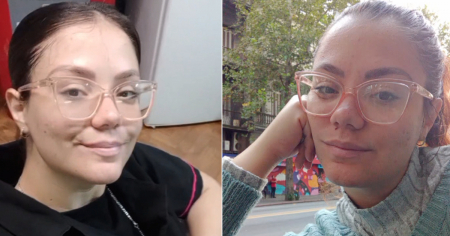
The Cuban youtuber Frank el Makina shared on TikTok his first experience in a public hospital in Uruguay, specifically in the city of Maldonado, and his statements sparked a wide debate among users of the social network.
"I just left the Maldonado hospital here with Claudia; we went to schedule an appointment, and it’s clear that Uruguayans have no idea what a hospital in terrible condition is," he began saying in his video @frankelmakina.
Frank explained that he had heard criticisms about Uruguay's public health system and decided to see for himself: "I have to go in there after what I experienced in Cuba… to see if what they are telling me is true." He described finding "a normal place" that "might need to be expanded a bit because more people have started to live in Maldonado," but it is very far from the precarious conditions of centers like the polyclinic in Alamar or the Calixto García Hospital in Havana.
"Everything can be improved... but it's not a place where you would say 'oh no, what is this,'" she added, while her partner, also Cuban, pointed out: "Considering the experience of hospitals in Cuba, this one seemed much more organized, incredibly cleaner, and more efficient."
Mixed reactions
Reactions came quickly and reflected opposing positions. Among those who defended the system, one user wrote: "In all of Uruguay, public and private healthcare is excellent. If anyone says otherwise, they should go get treated wherever they like." Another commented: "We complain fully, brother. Even if it's a palace, we're never satisfied; that's just how we are, unfortunately."
Others were critical of the current state of the Maldonado hospital: “The Maldonado hospital is a disaster; you have to be there all day in the emergency room to be attended to,” said one internet user. Another added, “You’re comparing something you shouldn’t; in Cuba, it’s an extreme situation, while here we are used to something else… the service was different; today it has fallen into complete decay.”
Several people pointed out that the reference to Cuba is not valid for measuring the local situation: “For you, it's normal, not for Uruguayans… for you, everything is fine and it’s a luxury here.” Another agreed: “If you compare it to your country, Cuba is a lot for you, but for us Uruguayans, it's little; much more is needed.”
There were also comments pointing to the delays in appointments and overcrowding: “I have been waiting for almost 7 months for an appointment with the ear, nose, and throat specialist, and no matter how much I insist, I can't get a solution,” shared a user from Montevideo. “In emergencies, you have to wait for hours, but they treat you for free in all the hospitals in Uruguay, and that's not insignificant,” defended another.
This is not the first content from Frank el Makina about Uruguay that sparks debate. Last February, he described the country as “a paradise” for its basic services, safety, and cleanliness in the streets, although he acknowledged that “like anywhere in the world, Uruguay has its flaws.” He has also expressed his surprise at services like automatic laundries and how they operate.
Frank's experience adds to a series of testimonies from Cubans who, after emigrating, have compared healthcare in their new countries of residence with that of the island. Among them is the case of a young man in Peru who found it “very satisfying” to realize that Cuba is not a medical powerhouse; a Cuban woman in Mexico who praised the organization and biosecurity at a Salud Digna center; and another in Spain who described public healthcare as “five-star hotels” .
In a similar vein was the testimony of a Cuban in Chile who shared the benefits received from the state program "Chile Crece Contigo" following the birth of his daughter, contrasting the experience with the "misery" of Cuban hospitals.
These stories, primarily published on TikTok, have sparked conversations between citizens of the host countries and migrants, highlighting the contrast between the sanitary conditions on the island and those abroad.
Frequently asked questions about the experience of Cubans with the healthcare system in Uruguay
How does Frank El Makina compare the healthcare system of Uruguay with that of Cuba?
Frank El Makina believes that the public health system in Uruguay is more organized, clean, and efficient than that of Cuba. While he acknowledges that there is always room for improvement, his experience at the hospital in Maldonado was positive in comparison to the precarious conditions of hospitals in Cuba.
What are the main criticisms that hospitals in Uruguay receive according to users?
Uruguayan users primarily criticize the delay in obtaining appointments and the overcrowding in emergencies. Some report waiting months for medical appointments and long hours in emergency rooms. However, they also highlight the free nature of the public health system.
Why do some users believe that Frank's comparison is not valid?
Some users believe that Frank's comparison is not valid because the conditions in Cuba are extreme and do not accurately reflect the reality in Uruguay. They argue that what may seem like a luxury for a Cuban can be considered inadequate for a Uruguayan.
What do other Cuban migrants think about the healthcare systems in their host countries?
Other Cuban migrants have expressed similar opinions to Frank's, highlighting the improvements compared to Cuba. In countries like Spain, Mexico, Peru, and Chile, migrants appreciate the organization, cleanliness, and safety of health services, and some describe them as "five-star hotels."
Filed under: