
Related videos:
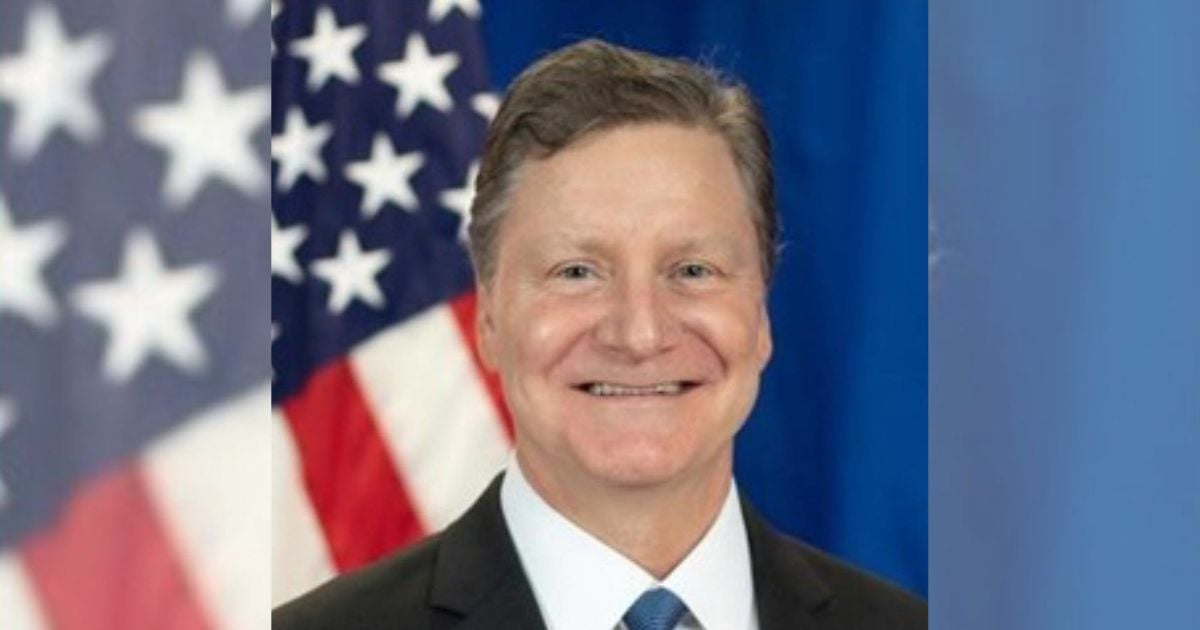
The U.S. Embassy in Cuba announced on Thursday the appointment of Roy Perrin as Deputy Chief of Mission in Havana, a career diplomat with over two decades of experience in the Foreign Service.
According to the information provided by the diplomatic mission on its official Facebook profile and on its website, Perrin recently completed a mission as Minister Counselor at the United States Embassy in Tegucigalpa, Honduras, where he also served as Chargé d'Affaires.
As the deputy chief of mission in Havana, Roy Perrin becomes the second in command at the U.S. Embassy in Cuba, under the chief of mission Mike Hammer, and will be responsible for ensuring the continuity of diplomatic work on the island.
In practice, the position of deputy chief of mission involves overseeing the daily operations of the diplomatic mission, coordinating various sections (political, economic, consular, security, and public affairs), and ensuring that the embassy’s actions align with the priorities of the State Department.
Additionally, he acts as the chargé d'affaires when the head of the mission is absent.
Perrin will also play a key role as a liaison between Washington and Havana, conveying strategic information about the situation in Cuba and strengthening bilateral relations on sensitive issues such as immigration, consular matters, and human rights.
Before his mission as Minister Counselor at the United States Embassy in Tegucigalpa, Perrin spent three years in Turkey as the Economic Counselor of the U.S. mission in Ankara.
The diplomat has also served as deputy director of the Central America Affairs Office in Washington, as deputy consul general in Erbil (Kurdistan Region of Iraq), and as chargé d'affaires at the U.S. Embassy in San José, Costa Rica, in addition to holding positions in China, Venezuela, Thailand, and at the State Department in Washington.
Originally from New Orleans, Louisiana, Perrin graduated with a degree in Engineering from Vanderbilt University and in Law from Tulane University, where he served as the editor-in-chief of the Tulane Maritime Law Journal.
Before joining the Foreign Service in 1999, he worked as a lawyer in San Francisco and New Orleans, specializing in class action lawsuits and product liability.
Married to Michele Perrin, also from New Orleans, he is the father of a daughter, Isabel.
With this appointment, Perrin joins the diplomatic team in Havana, which has been led by Mike Hammer since November 2024, succeeding Benjamin G. Ziff as the head of the mission.
Hammer, during his tenure at the embassy, has carried out actions of public diplomacy and support for Cuban civil society, with meetings involving young people, activists, and representatives from various sectors.
Additionally, it has reiterated that the United States maintains its commitment to human rights on the island, freedom of expression, and support for the families of political prisoners.
Frequently Asked Questions about the New Deputy Chief of Mission in Cuba and the Current Diplomatic Context
Who is Roy Perrin, the new Deputy Chief of Mission at the U.S. Embassy in Cuba?
Roy Perrin is a career diplomat with over two decades of experience in the United States Foreign Service. He recently served as Minister Counselor at the United States Embassy in Honduras and has held diplomatic positions in countries such as Turkey, China, Venezuela, and Thailand. Originally from New Orleans, he has a background in Engineering and Law.
What is the current context of diplomatic relations between the United States and Cuba?
Diplomatic relations between the United States and Cuba are marked by tensions and mutual accusations. Under the administration of Donald Trump, the United States has taken a critical stance toward the Cuban regime, supporting civil society and denouncing repression and economic difficulties on the island. On the other hand, the Cuban regime accuses American diplomats of interfering in its internal affairs.
How has the Cuban regime responded to the presence of American diplomats on the island?
The Cuban regime has intensified its smear campaign against American diplomats, accusing them of interfering in internal affairs. They have filed formal protests and launched media campaigns against them. Despite this, the United States has reaffirmed its commitment to support Cuban civil society and continue dialogue with opposition leaders and activists.
What impact does U.S. policy have on the situation in Cuba?
The United States' policy towards Cuba aims to pressure the Cuban regime to respect human rights and promote greater political openness. This policy has generated diplomatic tensions, but it also seeks to be a support for the sectors of civil society that advocate for change on the island. Washington's approach includes sanctions and support for dissidents as part of a broader strategy to promote democracy in Cuba.
Filed under: