
Related videos:
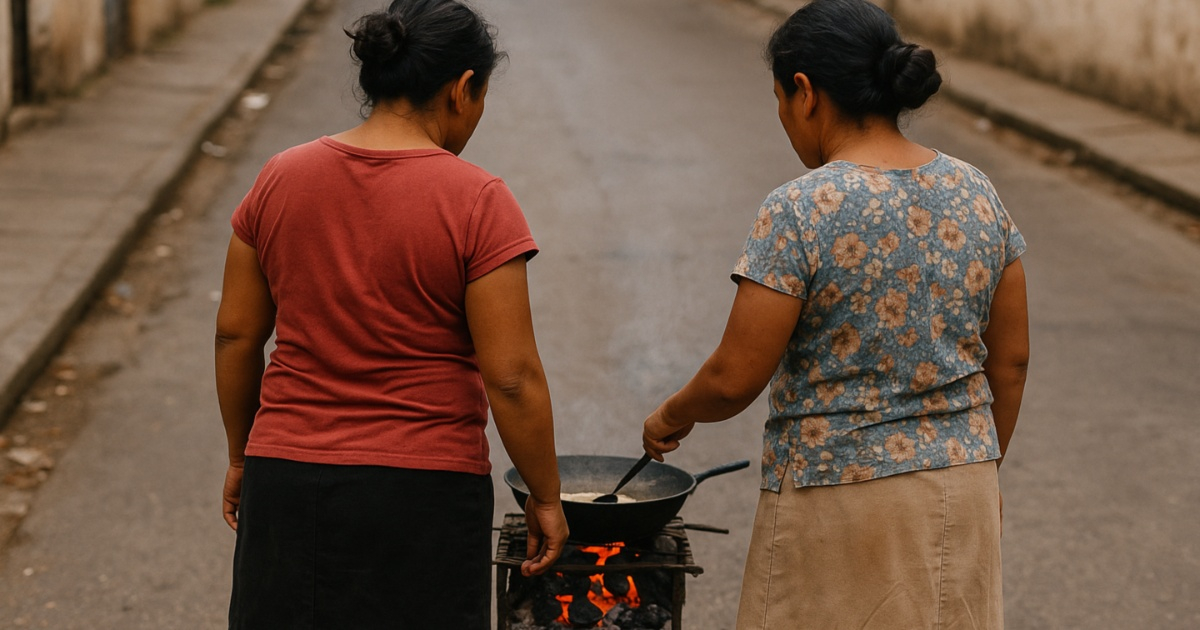
A representative from the Electric Union of Cuba revealed at a public event that, in light of the energy crisis affecting the island, she is forced to cook with coal "like almost all women", referring to the hardship faced by thousands of Cuban families.
The statement took place during the establishment of the Gender Committee of the Electric Union, a space in which the contributions of female workers in the sector amid prolonged blackouts and the challenging economic situation were recognized.
We arrived late without power, cooking with charcoal like almost all women. The next morning we put on our makeup with a lamp in hand, but we went out to work,” the official stated during her remarks.
The event featured representatives from the Federation of Cuban Women (FMC) and the Ministry of Energy and Mines, who highlighted the "merits and contributions" of the workers in the electrical system amidst the crisis.
The general director of the Electric Union described the women in the sector as “inspiring heroines,” asserting that “they fight more than men, are more disciplined, and are better leaders”.
The official's words highlight the contradiction between official acknowledgments and the daily reality faced by Cuban women, who resort to rudimentary methods such as cooking with coal due to power outages that exceed 12 hours a day in several provinces of the country.
The energy crisis affecting Cuba continues with long power outages across the country. This Wednesday, the Electric Union (UNE) reported that the service disruption left a generation capacity deficit of 1,746 MW at 10:00 PM on Tuesday, coinciding with the peak national demand hours.
The UNE explained in its statement that the situation was more critical than expected due to the outage of unit 8 at the Mariel Thermal Power Plant (CTE) and demand exceeding forecasts.
The official report details multiple technical and structural incidents. Amid one of the worst phases of the energy crisis affecting Cuba, more than 9 million people are cooking today under precarious, unsanitary, and dangerous conditions, as warned by the Food Monitor Program (FMP), an independent organization that has been monitoring access to basic services on the island for three years.
The figure comes from the analysis of the latest Population and Housing Census in Cuba and from the FMP's own studies, which estimate that around 1.7 million households use liquefied gas (LPG), another 2 million rely exclusively on electricity, and about 220 thousand cook with manufactured gas.
The rest of the population remains completely exposed to power outages, interruptions in gas supply, or rudimentary means.
Considering an average of 3 to 4 people per household, more than 9 million Cubans are facing serious difficulties or total inability to cook in their homes, the organization emphasized.
Frequently Asked Questions about the Energy Crisis in Cuba
Why are many Cubans, including women, cooking with charcoal?
The energy crisis in Cuba has resulted in extended blackouts that can last over 12 hours a day, forcing many families, including women, to resort to alternative methods such as cooking with charcoal. The lack of electricity makes the use of electrical appliances for cooking unfeasible, necessitating the search for traditional and rudimentary solutions.
What are the main causes of the energy crisis in Cuba?
The energy crisis in Cuba results from multiple factors, such as the outdated thermal power plants, fuel shortages, and a lack of investment in infrastructure. Numerous units are out of service due to breakdowns and extended maintenance, and there is a significant reliance on fossil fuel energy in a context of poor logistics.
What measures is the Cuban government taking to address the energy crisis?
The Cuban government has attempted to alleviate the energy crisis through scheduled maintenance of power plants and the implementation of alternative energies like solar parks. However, these measures have proven insufficient to compensate for the energy deficit, leaving the population in a critical situation without long-term solutions.
How does the energy crisis affect the daily lives of Cubans, particularly women?
The energy crisis severely impacts daily life in Cuba. Women, in particular, face an additional burden, such as having to cook without electricity, taking care of their families under adverse conditions, and seeking alternatives to sustain their households. This situation compounds the already existing economic and social difficulties on the island.
Filed under: