
Related videos:
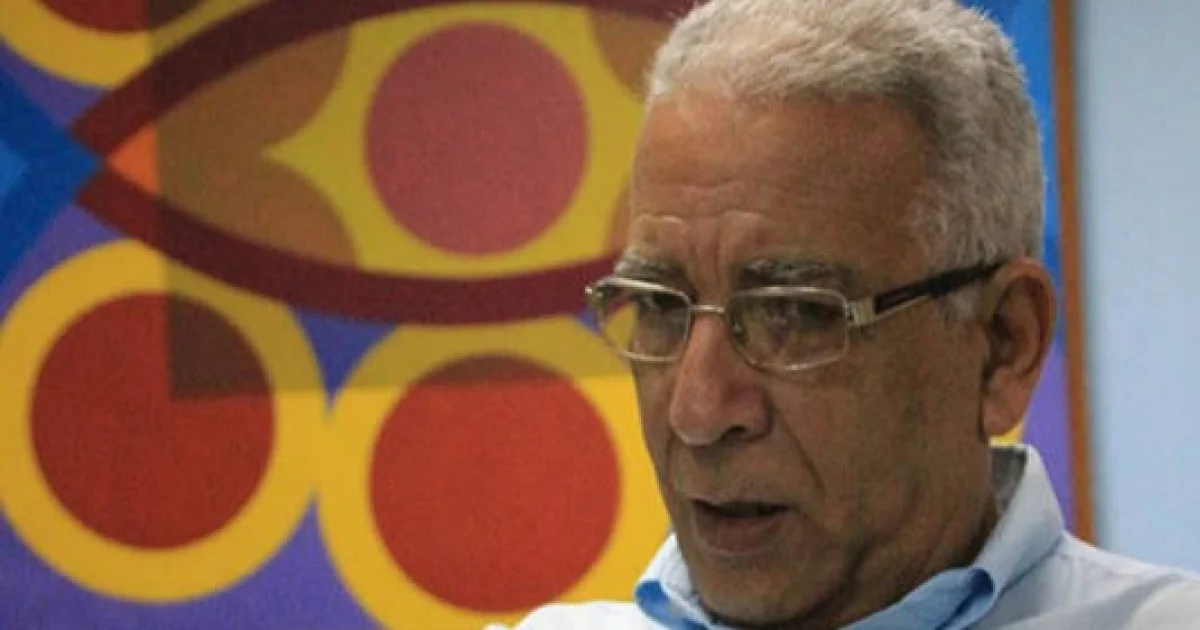
The eminent historian, academic, and Cuban professor Eduardo Moisés Torres Cuevas passed away this Sunday in Havana at the age of 81, reported Cubadebate.
Born in Havana on September 4, 1942, Torres Cuevas began his connection with teaching as an adult literacy educator in the Sierra Maestra during the campaign of 1961.
Doctor in Historical Sciences and Full Professor at the University of Havana, Torres Cuevas was a teacher to several generations of students.
He published about twenty books and numerous articles in Cuban and foreign magazines. His studies focused primarily on the 19th century and the intellectual roots of nationality.
He is considered a specialist in the work of Father Félix Varela, for whom he wrote an extensive biography and edited his fundamental texts.
It also rigorously explored the ideas of José de la Luz y Caballero, José Antonio Saco, José María Heredia, and Bishop Espada, as well as examining the figure of Antonio Maceo in a deep analysis of the ideas that supported the independence struggle.
Among his most recent works is "History of the Catholic Church in Cuba: the Church in the Homelands of the Creoles (1516-1789)," co-authored with Professor Edelberto Leiva Lajera.
Torres Cuevas's career extended beyond academia. He served as the director of the José Martí National Library of Cuba for over a decade and presided over the Academy of History of Cuba.
In 2019, he took over the leadership of the Marti Program Office and the presidency of the José Martí Cultural Society.
Furthermore, he was a speaker at dozens of universities in America and Europe, an active member of the Latin American Studies Association (LASA) and the Cuban Academy of Language, which positioned him in a prominent place within international historiography.
He was a deputy in the National Assembly of People's Power from the VII Legislature and was part of the Council of State.
He received numerous awards: the Carlos J. Finlay Order, the Frank País Order of First and Second Class, the National Social Sciences Prize, the National History Prize, the Maestro de Juventudes Distinction from the Hermanos Saíz Association, and the Félix Varela Prize.
His prestige was also recognized abroad, where he received the Legion of Honor from the Republic of France and the title of Knight of the Order of Academic Palms, among other distinctions.
Frequently asked questions about the legacy of Eduardo Torres Cuevas
Who was Eduardo Torres Cuevas and what was his contribution to Cuban history and culture?
Eduardo Torres Cuevas was an eminent historian, academic, and professor from Cuba who dedicated his life to the study of Cuban history, particularly that of the 19th century. He published about twenty books and numerous articles on the intellectual roots of Cuban nationality and was a specialist in the work of Father Félix Varela. In addition, he held important positions such as director of the National Library of Cuba and president of the Academy of History of Cuba, leaving a significant legacy in both Cuban and international historiography.
What were the main distinctions received by Eduardo Torres Cuevas throughout his career?
Eduardo Torres Cuevas received numerous awards both in Cuba and abroad, including the Carlos J. Finlay Order, the Frank País Order of First and Second Degrees, the National Social Sciences Award, and the Legion of Honor of the Republic of France. These awards reflect his impact and contribution to Cuban culture and education.
How did Eduardo Torres Cuevas influence higher education in Cuba?
Eduardo Torres Cuevas was a prominent figure in Cuban higher education, serving as a Full Professor at the University of Havana and being a mentor to several generations of students. His focus on critical thinking and historical analysis left an indelible mark on the academic training of his students, as well as his role as a lecturer at universities in America and Europe.
Filed under: