
Related videos:
On Sunday, September 7, the setup of containers adapted as homes for families affected by the Hurricane Oscar will begin in the community of Buena Vista, in the municipality of San Antonio del Sur, Guantánamo, which struck the region in October 2024.
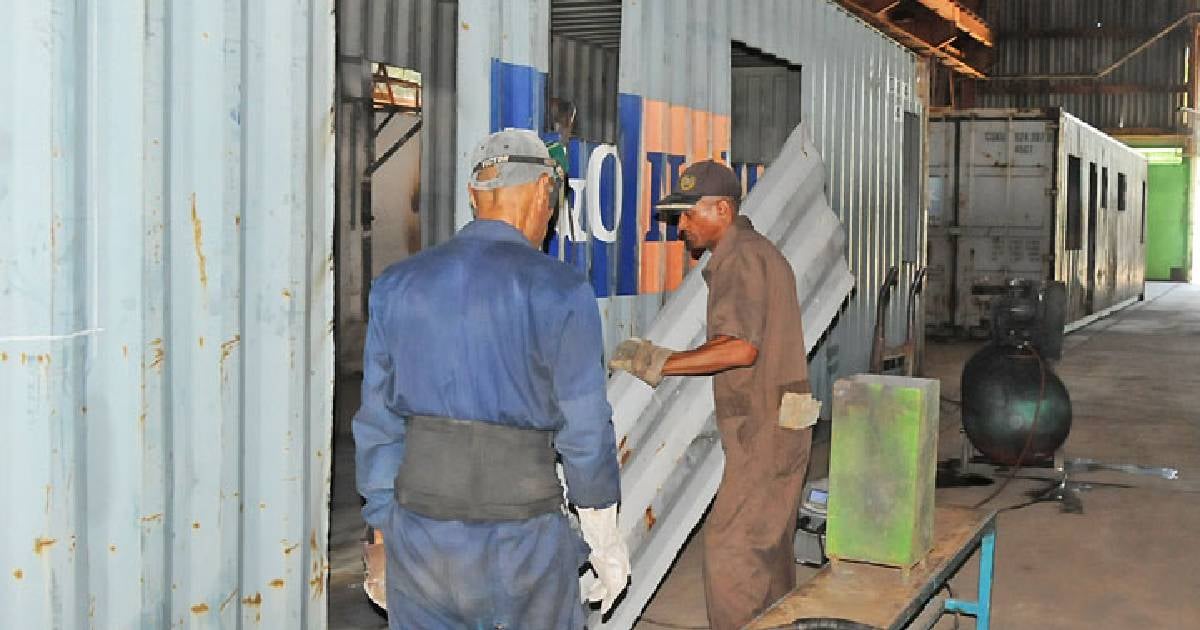
According to the official newspaper Venceremos, 23 containers will be installed as part of a program that plans 60, all recycled from packaging used in the photovoltaic park under construction in Guantánamo, which confirms the makeshift nature of the measure.
Each module has two rooms, a bathroom, a kitchen, and a living room, and according to the released figures, two units are completed each day.
The adaptation involves several state-owned companies, coordinated by the Génedis business unit, along with Muebles Imperio, Valbo, Cedai, the provincial Housing Directorate, and the Ministry of Construction (Micons).
During a visit to the construction site, Yoel Pérez García, the first secretary of the Party in the province, urged the acceleration of work and to “make the most” of the metal structure of the containers, which are protected from corrosion with layers of paint, in a strategy that highlights the lack of real alternatives to the housing crisis.
The hurricane Oscar left a trail of destruction in Guantánamo. Houses without roofs, fallen zinc roofs, partial collapses of homes, especially those made of wood, plantations destroyed, damaged utility poles, and flooding were the result of the force of the winds and the intensity of the rains that struck the easternmost territory of Cuba.
By the end of November 2024, only 8% of the 13,000 houses affected by the meteor had been repaired, while thousands of families were waiting for a solution. At that time, Venceremos reported that most of the damage was merely partial repairs of roofs.
However, of the 700 state facilities damaged after the hurricane, 525 had already been restored (75% of the total); meanwhile, of the 175 remaining, 97 already had the resources for their rehabilitation.
In a country where temperatures hover around 30 degrees on average and easily exceed 35, a metal container without proper insulation becomes an uninhabitable oven.
Without efficient ventilation or air conditioning, the interior can reach extreme levels, posing a risk of heat strokes and serious health issues, especially for children and the elderly.
The use of thermal insulation coatings and separate roofs can alleviate the problem, but international experience shows that these structures only function as livable spaces with significant investments in insulation, which increases project costs.
In countries like Spain, container homes have gained popularity as a sustainable alternative, but they are accompanied by insulation standards, occupancy permits, and structural guarantees.
The Cuban government is trying to enhance several projects that include buildings made from shipping containers, as part of its proposals to alleviate the housing deficit in Holguín province.
A similar initiative is being carried out in Las Tunas, presenting it as an "innovative solution" to the housing deficit. This measure comes after decades of failure to meet official housing construction plans and at a time when approximately 10,659 families in Las Tunas still live in homes with dirt floors, in the 21st century.
Granma reported that the first houses, of type 3, will be installed in micro-localized areas of the municipalities of Manatí, Puerto Padre, Jesús Menéndez, Majibacoa, and the provincial capital.
In an attempt to demonstrate "creativity" in the face of a critical shortage of materials, the government of the province of Villa Clara is constructing two experimental homes—one in Santa Clara and the other in Remedios—that completely forgo cement and steel.
Meanwhile, in Pinar del Río, an ancient technique is being utilized: building houses with earth, lime, and clay, which experts say can withstand hurricanes. With the support of the United Nations Development Programme (UNDP), Mexican specialists trained local builders and students in the construction of vaulted roofs using materials found in the region.
The significant decline in housing construction in Cuba is a clear indication of the economic and social crisis the country is facing: in 2024, fewer houses were built than in the worst years of the Special Period, highlighting the sustained collapse of the State's ability to meet one of the most basic needs of the population.
Another revealing fact is that the housing deficit in Cuba exceeds 800,000 homes, but the regime is only able to build a minimal fraction: the lack of materials, the collapse of the local industry, and poor state management exacerbate a structural crisis that directly affects the quality of life of hundreds of thousands of Cubans.
Frequently Asked Questions about Using Containers as Homes in Guantánamo
Why are containers used as housing in Guantánamo?
Containers are being used as housing in Guantánamo due to the housing crisis and the urgent need for solutions for families affected by Hurricane Óscar in 2024. This measure is part of a program aimed at alleviating the housing deficit in the region with limited resources.
What are the main challenges of living in converted shipping containers?
The main challenges of living in adapted containers include the risk of high temperatures inside, especially in a warm climate like that of Cuba. Without proper insulation, containers can become uninhabitable "ovens," posing a danger to the health of their occupants.
What measures are being taken to improve the habitability of containers?
To improve the livability of containers, thermal insulation coatings and separate roofs are being applied to alleviate the heat problem. However, the effectiveness of these measures is in question if significant investments in insulation are not made.
How has Hurricane Óscar affected the housing situation in Guantánamo?
The hurricane Óscar left a trail of destruction in Guantánamo, affecting more than 13,000 homes, of which only 8% had been repaired by the end of November 2024. This disaster has exacerbated the already critical housing situation in the region.
Filed under: