
Related videos:
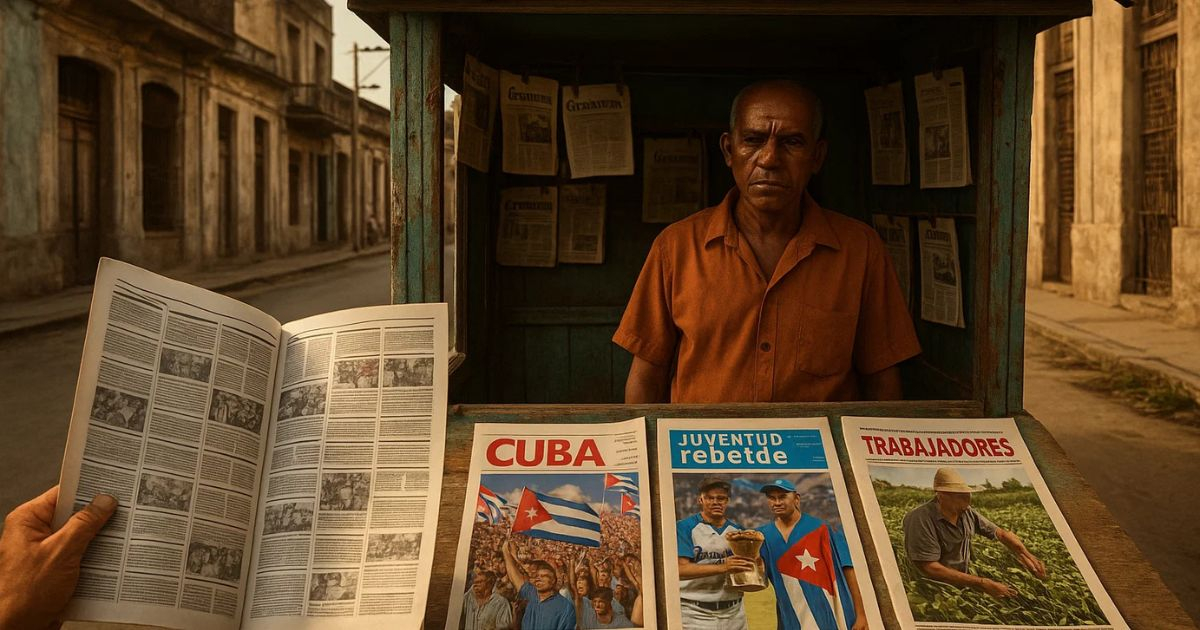
The modernization of the Poligráfico General José Miró Argenter in Holguín will enable national newspapers to begin circulating in color in eastern Cuba before the end of the year, official sources reported.
According to a report from Cubadebate, the installation of new printing machines is part of a "transformation" process in the national graphic industry that spans several provinces, following an agreement with the People's Republic of China to equip the island with more competitive printing capabilities.
However, this "transformation" that will bring color to the pages of newspapers will be limited to the technological realm, as news will still be printed in black and white—thousands and thousands of pages where the published opinion will turn its back on public opinion.
The head of the organization, Carlos González Mulet, confirmed that the color print edition of the press is expected to be released in December.
He also explained that the Holguin polygraph is in the third stage of an investment program that has already seen previous processes in Havana and Villa Clara.
Currently, the civil works in Holguín are 50% complete, although the printing has not stopped thanks to the use of the installed traditional machinery, where some consider that newspapers are merely a covert way of selling toilet paper.
With the new equipment, the company expects to enhance the quality of products such as magazines, catalogs, books, and brochures, in addition to newspapers, which are completely disconnected from social reality.
The printing press operates under the trade name SoyGraf and is part of the Newspaper Company.
Its representatives claim that industrial reconversion will create opportunities for productive linkages with new economic players, expanding their reach beyond the state press, although they did not provide further details on what these partnerships might be.
The official portal boasted that the incorporated technology meets international competitiveness standards, featuring specialized equipment for flat printing and materials that withstand quality demands similar to those of countries with advanced graphic industries.
The investment is part of a national graphic modernization program stemming from negotiations with China, aimed at providing better-finished products and increasing production capacity.
However, the announcement comes at a time when the main concern of readers in Cuba is not related to the quality of the ink, but rather to the informative content published on those pages.
Although newspapers in the eastern part of the country will soon appear more vibrant, with color images and greater clarity, the underlying issue remains unchanged: a media system controlled by the State that restricts access to independent voices and critical narratives of Cuban reality.
Modernization, therefore, unveils an evident paradox: more gloss on the pages, but the same discourse in the content.
In a recent debate in Cienfuegos about the state-run media, a journalist was expelled from the meeting after questioning the role of state media in constructing a narrative that is disconnected from the reality of Cuba.
Internal censorship and the rejection of criticism highlight the repressive environment within the official journalism community, where any attempt to practice journalism with independence is swiftly neutralized.
This type of incident fits into a broader context where official media seem more focused on justifying the country's collapse than on holding power accountable.
Instead of offering solutions or addressing the deterioration of infrastructure and the economy, newspapers recommend patience and resilience, perpetuating a hollow discourse that ignores the urgency of the national crisis.
On the international stage, Cuba has once again been classified as the worst country in Latin America for press freedom, according to Reporters Without Borders.
The ranking reaffirms the absolute dominance of the regime over the media and the systematic exclusion of independent voices, in a context where free journalism is regarded as a threat to the stability of the system.
Furthermore, the regime has increased digital control over information, implementing new monitoring software that allows it to identify and block content deemed "subversive."
This technological tool consolidates surveillance over journalists, activists, and ordinary users, further diminishing the space for critical expression in both media and social networks.
Frequently Asked Questions about the Modernization of the Press in Cuba
What changes will the modernization of the Poligráfico General José Miró Argenter in Holguín bring?
The modernization will allow for color newspaper printing in eastern Cuba before the end of the year due to an agreement with the People's Republic of China. However, the content of the newspapers will continue to be controlled by the State, with no changes in the official narrative.
How will the state press benefit from the new printing technology?
With the new equipment, the quality of printed products such as magazines, catalogs, books, and brochures will be enhanced, in addition to newspapers. The incorporated technology meets international competitiveness standards, although the content will remain aligned with state guidelines.
What criticisms exist regarding the content of newspapers in Cuba?
Despite the visual improvement of newspapers, the informational content remains controlled by the State, restricting access to independent voices and critical narratives of the Cuban reality. This reflects a disconnection between the appearance of modernization and the lack of press freedom.
What other technological investments are being made in Cuba thanks to agreements with China?
In addition to graphic modernization, Cuba has been investing in the transportation sector and solar energy, also with support from China. Microbuses have been purchased to improve public transportation, and solar parks have been inaugurated to help alleviate the energy crisis.
Filed under: