
Related videos:
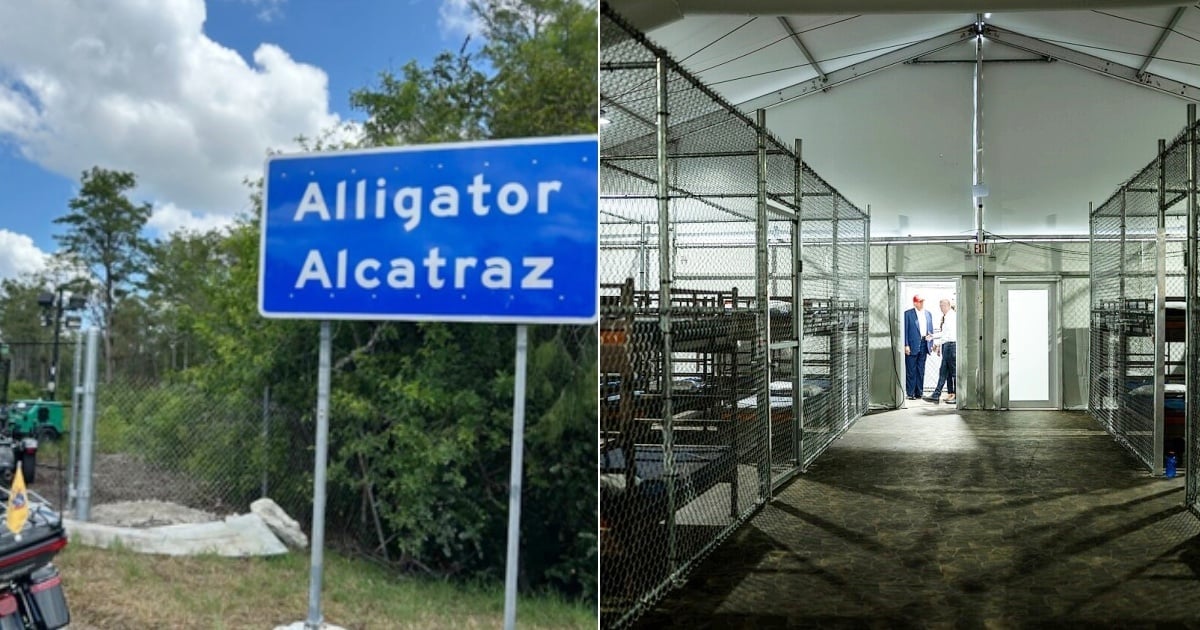
Florida Governor Ron DeSantis is facing a financial and legal dilemma regarding the immigrant detention center known as "Alligator Alcatraz," built in the Everglades.
A panel of appellate judges
But the ruling opened a new front: Florida must choose between foregoing hundreds of millions of dollars in federal reimbursements for the construction and operation of the complex, or accepting those funds and undergoing an environmental review that could halt operations.
The installation was hastily set up in June by the DeSantis administration on an isolated airstrip surrounded by wetlands, as part of President Donald Trump's efforts to expand the infrastructure for mass deportations.
Trump himself visited the center in July and described it as a model for future projects.
An analysis by AP revealed that Florida had already signed state contracts totaling over $405 million for the construction and operation of the facility, which could cost up to $450 million annually.
The largest contract, worth 78.5 million, was awarded to the company Critical Response Strategies, responsible for managing personnel, security, and administration.
The facility has been surrounded by controversy due to allegations of unsanitary conditions and restrictions on detainees' access to legal assistance.
In addition, it faces three federal lawsuits, including one that challenges its construction in a fragile ecosystem without an environmental impact study.
“Florida taxpayers should not pay for federal immigration services,” said Paul Schwiep, a lawyer for the environmental organization Friends of the Everglades.
Elise Bennett, from the Center for Biological Diversity, warned that the ruling allows agencies to delay reimbursements until after projects are completed, significantly diminishing the value of environmental assessments.
For now, the operation of “Alligator Alcatraz” continues as planned, while the legal and political battle determines whether it will be funded with federal money or face an uncertain future amid growing criticism.
Frequently Asked Questions about the "Alligator Alcatraz" Detention Center in Florida
What financial dilemma is Florida facing with the "Alligator Alcatraz" center?
Florida faces the decision to forgo hundreds of millions of dollars in federal reimbursements for the construction and operation of the "Alligator Alcatraz" center, or to accept those funds and undergo an environmental review that could halt operations. This dilemma arises amid a legal and financial controversy, as the state has signed contracts totaling over 405 million dollars for the center.
What legal issues is the "Alligator Alcatraz" center facing?
The center faces multiple federal lawsuits questioning everything from its construction in a fragile ecosystem without an environmental impact study to the unsanitary conditions and lack of access to legal assistance for detainees. Furthermore, Federal Judge Kathleen Williams issued an order to close the center, which has been appealed by the state of Florida.
What are the environmental criticisms related to "Alligator Alcatraz"?
The center has been criticized for ignoring environmental laws by being built in a protected wetland area in the Everglades, which jeopardizes the ecosystem and endangered species. Environmental groups and the Miccosukee tribe have sued the state for failing to conduct an environmental impact study prior to its construction.
What is Governor Ron DeSantis's stance on the detention center?
Ron DeSantis firmly defends the continuation of the "Alligator Alcatraz" center as part of his immigration control strategy. Despite criticism and court orders, DeSantis insists that the facility is necessary to address an "unprecedented immigration crisis" and plans to open a second center in northern Florida.
What economic impact would the closure of the "Alligator Alcatraz" center have on Florida?
The closure of the center could cost Florida taxpayers between 15 and 20 million dollars and put at risk 218 million dollars already invested. Moreover, the state could lose significant federal reimbursements if it does not comply with the required environmental reviews.
Filed under: