
Related videos:
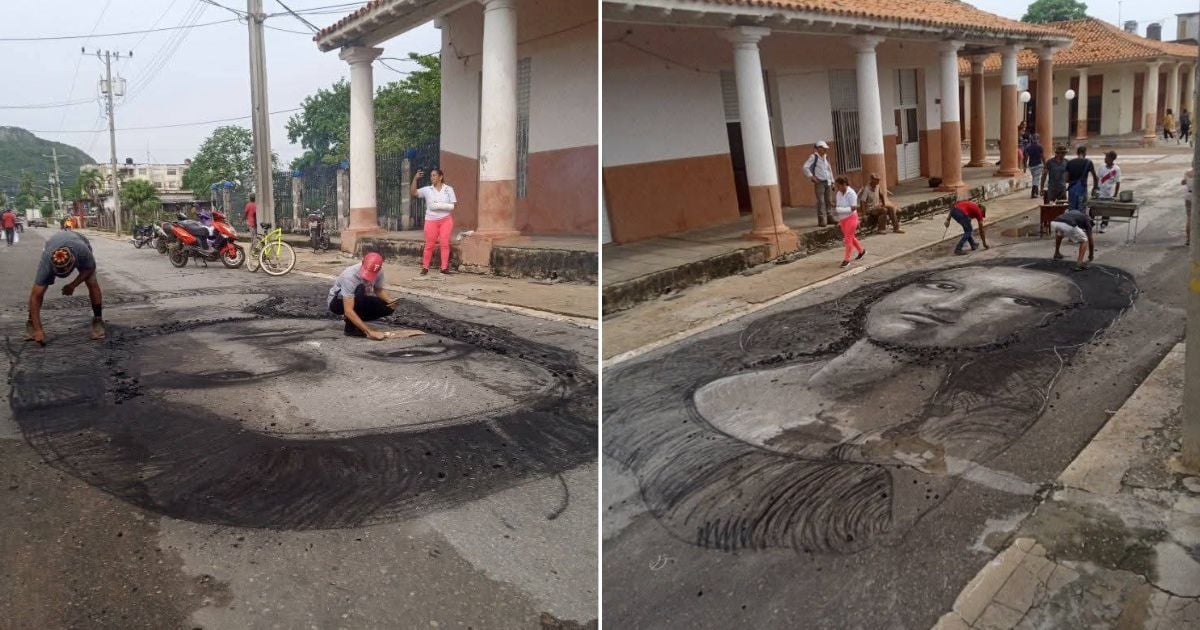
A street in the Isle of Youth was transformed into a canvas this Monday as a group of young artists created a monumental, street version of the Mona Lisa using charcoal, surprising locals and passersby.
The news was shared on Facebook by the local broadcaster Ramón Leyva Morales, who showcased images of the performance and highlighted the creativity of the participants.
The protagonists were Carlos Cabrera, known as "El Lobo," along with Emilio Caboverde "El Pescao," Elías Heredia, and Francisco Leyva, members of the Hermanos Saíz Association (AHS).
With charcoal —the same type that is currently used extensively in Cuban homes due to the lack of electricity and gas—, the artists painted a Cuban and monumental Mona Lisa on the asphalt of 26th street, between 39 and 41.
The result was a street artwork where the enigmatic smile of Leonardo da Vinci's most famous figure blended with a symbol of everyday life on the island: coal, transformed into trendy fuel due to the energy crisis.
In that combination, and amidst coffee breaks –another product that has vanished from many Cuban homes– art suggested more than it revealed.
The intervention, in addition to being a celebration of young talent, highlighted how materials of scarcity and daily tensions also seep into artistic creation, transforming the pavement into a stage and turning a basic resource into an expressive tool.
Frequently Asked Questions about the Artistic Intervention with Charcoal in the Isle of Youth
Who were the artists behind the giant Mona Lisa on Youth Island?
The artists responsible for the work were Carlos Cabrera "El Lobo", Emilio Caboverde "El Pescao", Elías Heredia, and Francisco Leyva. These young individuals are members of the Hermanos Saíz Association (AHS) and used charcoal to create their artistic intervention on the street.
What does the use of charcoal symbolize in the artistic creation of the Mona Lisa in Cuba?
The use of coal in this work symbolizes the energy crisis facing Cuba, where coal has become a common resource for cooking due to the lack of electricity and gas. The work reflects how materials born of scarcity are integrated into art, showcasing the creativity and ingenuity of Cuban artists.
How does this artistic intervention relate to the current energy situation in Cuba?
The artistic intervention with coal reflects the serious energy crisis that Cuba is experiencing, where the lack of electricity and gas has forced citizens to seek alternatives such as coal for cooking. This context is evident in the work as it uses a material that, while basic, is vital in the daily lives of Cubans.
What social impact does street art have in times of crisis in Cuba?
Street art in Cuba, especially in times of crisis, serves as a means of expression and resistance, allowing artists to reflect the social and economic realities they face. These artistic manifestations not only beautify the urban environment but also create a space for dialogue about everyday challenges and possible solutions.
Filed under: