
Related videos:
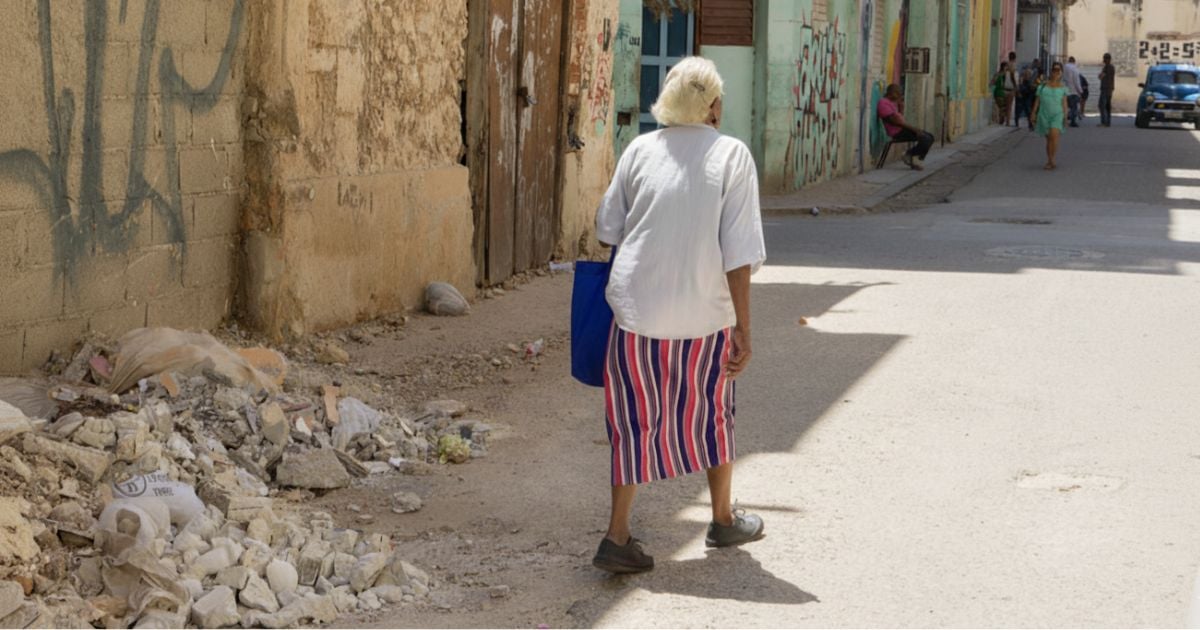
Aging in Cuba is much more than just counting years: for thousands of women in the country, the passage of time is measured not in birthdays, but in endless lines, in blackouts that disrupt daily life, and in goodbyes that break the heart.
This is reflected in a stark text published by the platform Enlavozdeellas, a Camagüey space where women dare to "speak without fear" about the reality they live.
With the title “Aging in Cuba is More than Just Adding Years,” writer Yuneisy Leyva González powerfully and poignantly captures how many Cuban women reach their fifties already feeling the burden of an elderly existence imposed by circumstances.
"It is not the wrinkles of time that mark their faces, but those of fatigue," he writes.
In her words, old age in Cuba is not a natural process, but rather one forced by the anxiety of not knowing what will be on the table tomorrow, by the darkness of a power outage that interrupts even silence, and by the waiting for children who have left and may never return.
There are women who, at seventy, walk as if all they have left is to wait, Leyva emphasized in a poignant metaphor.
But there are also those who resist, those who, despite the hardships and the distance, put on lipstick, dress in colorful clothes, and defy sadness.
In them, old age is not surrender: it is rebellion. Every act of self-care becomes a form of everyday resistance. As the author states, "self-love is also resistance."
Reflection goes beyond the intimate and becomes a social denunciation: in Cuba, aging resembles surviving more than living. Time is measured in the wait for a phone call, in a letter kept hidden, in constant absence.
However, those women who cling to their tenderness, their dignity, and their right to beauty embody a form of immortality. In a country where life becomes an uphill battle all too soon, their resilience not only moves us—it inspires.
The testimony of a Cuban mother, shared recently, starkly exposes how childhood on the island is marked by shortages and nostalgia. In her account, she reminisces about a past filled with scarcity and uprootedness, experiences that still resonate in the lives of many families today.
Days ago, another group of mothers publicly shared their anguish of raising children in a hostile environment. They recounted that the lack of food, medicine, and security creates a constant fear that accompanies every daily decision and limits their children's opportunities for development.
More recently, the story of a woman who, faced with the impossibility of securing a future on the island, chose to emigrate as the only act of love and sacrifice.
Her decision reflects the dilemma faced by thousands of Cuban mothers: to endure adversity or to leave in search of a more dignified life for their children.
Frequently asked questions about the reality of women in Cuba
How does the crisis in Cuba affect older women?
The crisis in Cuba imposes a forced and precarious old age for older women. Aging in Cuba becomes a process of survival amid shortages, blackouts, and loneliness, rather than a period of fulfillment and tranquility. Women must confront food insecurity, the lack of basic resources, and the distance from their family members who emigrate in search of better living conditions.
What role do Cuban women play in daily resistance against the crisis?
Cuban women become symbols of resistance and dignity in the face of the crisis. Despite the challenges, many women in Cuba continue to care for themselves and their families through everyday acts of rebellion, such as wearing lipstick or dressing in vibrant colors. These gestures represent a way to defy adversity and keep their self-esteem and dignity intact.
What are the main challenges faced by Cuban women in their daily lives?
Cuban women face challenges such as food shortages, prolonged blackouts, and separation from their families. The never-ending lines to obtain basic products, the constant fear of not being able to feed their children, and the uncertainty about the future are part of their daily lives. Furthermore, the separation from their loved ones who have emigrated exacerbates the feeling of loneliness and helplessness.
How does the economic situation in Cuba reflect on the lives of older women?
The economic situation in Cuba creates extreme hardship for elderly women. Many of them rely on minimal pensions that do not meet basic needs for food and medicine. Without support from family members abroad, they must survive on the little they receive in a context of inflation and scarcity.
Filed under: