
Related videos:
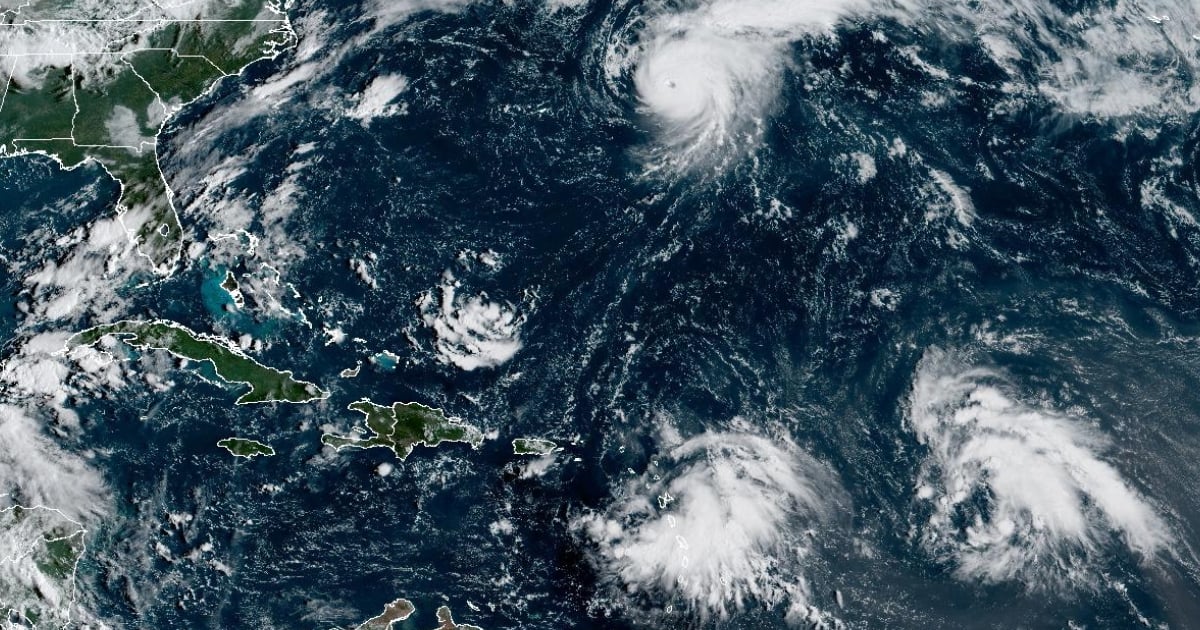
The National Hurricane Center (NHC) of the United States reported on Tuesday that two active tropical waves in the Atlantic have a high likelihood of developing into cyclones in the coming days.
The first disturbance, identified as AL93, is located less than 1,000 miles east of the Lesser Antilles. It is showing organized rains and storms, and the environmental conditions are favorable for its development.
According to the details from the entity, the probability of formation in 48 hours is 50%, while it rises to 90% for the upcoming seven days.
The system is expected to move west-northwest, approaching the western Atlantic in the second half of the week, with a high likelihood of developing into a tropical depression.
AL94 Wave – possible impact in the Caribbean and Bahamas
The second tropical wave, AL94, is moving with rain showers and gusty winds over the Windward and Leeward Islands. During the night and into Wednesday, its effects will be felt in Puerto Rico and the Virgin Islands, before heading towards the southwestern Atlantic near the Bahamas later this week.
In this case, the probability of formation within 48 hours is 20%, whereas for the following week it rises to 60%.
The NHC warned that this system could slow down and turn northwest, conditions that favor cyclonic development.
Surveillance in the Caribbean
Meteorological authorities urged the population of Puerto Rico, the Virgin Islands, the Bahamas, and the Turks and Caicos to closely monitor the development of these waves, which could lead to heavy rainfall, gusty winds, and the potential for cyclonic development.
It is worth noting that the NHC is currently monitoring Hurricane Gabrielle, which is located in the central subtropical Atlantic.
This Monday, the atmospheric phenomenon turned into a hurricane over the central subtropical Atlantic and although it does not pose a threat to land, caution is advised for vessels passing through the area due to the intensity of the winds and the associated waves.
Frequently Asked Questions about Tropical Waves AL93 and AL94 in the Atlantic
What is the probability that the AL93 and AL94 waves will develop into cyclones?
The AL93 wave has a 50% chance of becoming a cyclone in 48 hours and a 90% chance in seven days, while the AL94 wave has a 20% chance in 48 hours and a 60% chance in a week. These probabilities indicate active monitoring by the National Hurricane Center (NHC) due to favorable conditions for cyclonic development.
What areas could be impacted by these tropical waves?
The AL93 wave could move toward the western Atlantic, while the AL94 wave will affect Puerto Rico, the Virgin Islands, and eventually the Bahamas. Residents in these areas are advised to stay alert, as they may experience heavy rains and gusty winds due to the advancement of these disturbances.
What is the current situation of Hurricane Gabrielle?
The hurricane Gabrielle is located in the central subtropical Atlantic and does not pose a threat to land. However, caution is advised for vessels in the area due to the strong winds and associated wave activity it may generate.
How does the current hurricane season affect the Caribbean, and especially Cuba?
The 2025 hurricane season has shown activity above the historical average, with forecasts of 16 named storms. September is a critical month for the Caribbean, particularly for Cuba, where significant hurricanes have historically made landfall. Authorities advise staying informed and prepared for any eventuality.
Filed under: