
Related videos:
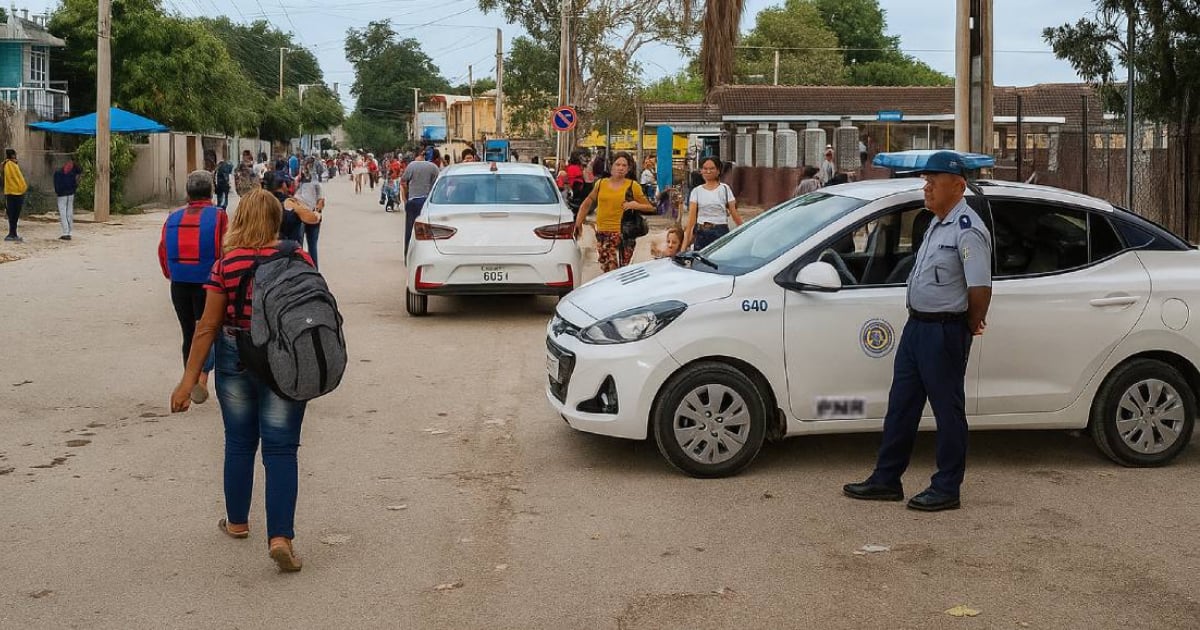
Cuban authorities carried out an operation against sellers on Calle 13 in Holguín as part of the government's call to reinforce "internal order," in a context marked by popular unrest, blackouts, and protests in various provinces.
The ruler Miguel Díaz-Canel called to reinforce "citizen tranquility" and "internal order" at the beginning of the IV National Exercise for Crime Prevention and Confrontation, which is taking place across the country.
This Wednesday, pro-government profiles on Facebook reported an operation in the mentioned area, known for informal trade in the city of Holguín.
The actions took place on 13th Street, 8th Street, and the surroundings of Las Baleares, in Holguín, where agents and officials were deployed to impose fines and confiscate goods from informal vendors.
Neighbors in the area compared the situation to the well-known "Cuevita" in Havana and reported on social media a "dictatorship of inspectors and corrupt police" imposing arbitrary fines.
“Today they are issuing fines on 13th Street, Holguín,” reported a user.
The operation also involved workers from Comunales and Materia Prima, responsible for cleaning the intervened areas. The actions were presented as part of the fight against "illegality" and the organization of public spaces.
Meanwhile, the regime intensified its response to the recent protests with mass arrests and severe sentences. In Gibara, Holguín province, at least 27 people were detained following civic demonstrations. In Bayamo, 15 protesters who participated in the demonstrations on March 17, 2024, were sentenced to prison terms ranging from three to nine years.
The charges filed include public disorder, contempt, resistance, disobedience, and incitement to commit crimes. Human rights organizations have reported procedural irregularities, arbitrary detentions, and a systematic pattern of repression.
"The fight against crime must be an everyday task," warned Díaz-Canel, who ordered the updating of institutional security plans and to act decisively against issues such as the theft of electrical cables, transformers, administrative corruption, tax evasion, and gender-based violence.
Nevertheless, the focus remains on control and repression, rather than providing concrete answers to the population suffering from increasing shortages of food, drinking water, medicine, and basic services.
Filed under: