
Related videos:
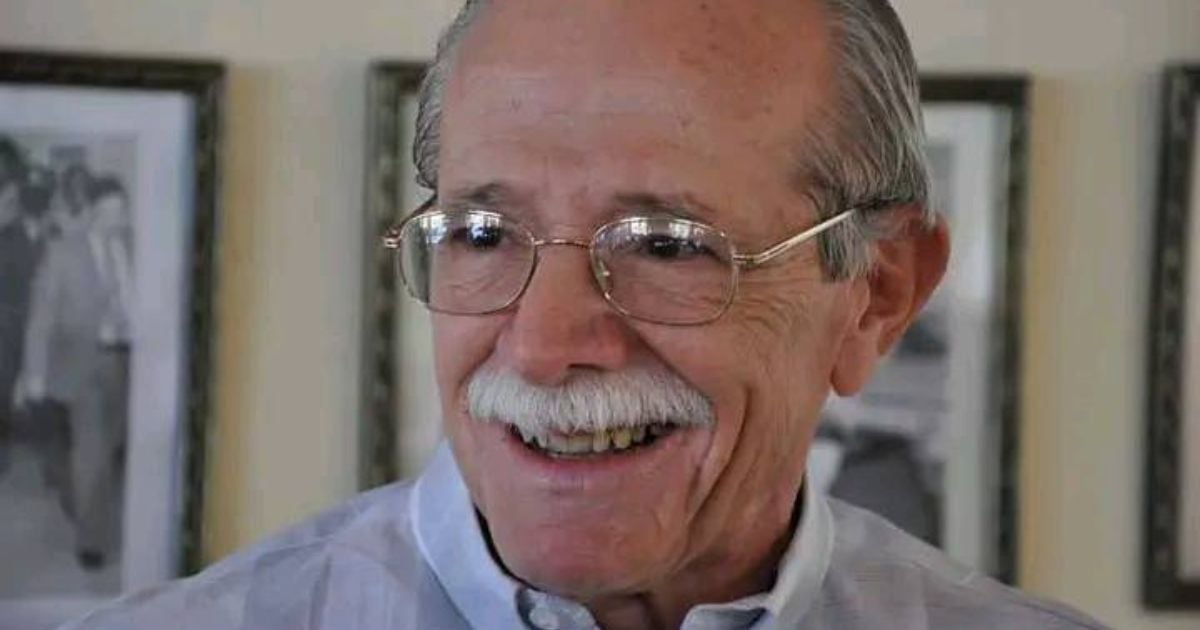
The renowned Cuban neurologist Néstor Pérez Lache passed away under circumstances that have not yet been officially confirmed, although versions circulating on social media suggest a possible suicide.
The news was announced this Wednesday by the official profile Logística de Vanguardia on Facebook, on behalf of the Medical Services of the FAR and the Central Military Hospital "Carlos J. Finlay," institutions where the doctor spent a significant part of his career.
In the message, he is described as "a colossal figure of national medicine" and "a flagship professor" whose impact remains on generations of Cuban doctors.
"Dr. Pérez Lache was not just a colleague; he was an institution. His name will forever be inscribed in gold letters in the history of Cuban neurology," stated the official publication, which also highlighted his legacy as a mentor, researcher, and guide.
For his part, Héctor Bayarre expressed his shock on Facebook: “He was an eminent neurologist (…) with whom I had the privilege of working on selecting the best scientific works in the country.”
In his post, Bayarre added: “The news takes us by surprise, as he was a person from whom I never expected such self-harm,” in apparent reference to a possible suicide.
Luis Francisco Heredero directly asked in the comments: “Violent death?” to which Bayarre responded: “They say he jumped from the Santa Catalina and Vento bridge… God.”
Another user, Tomás Reinoso, wrote: “I live nearby and saw the police activity and the rumors that it was an elderly doctor, but I never imagined it was the professor. What a shame.”
Julio González Gutiérrez, for his part, warned about the mental health of professionals in the sector: “A very sad occurrence... at my clinic, we had two doctors who also committed suicide, and we could have a third one at risk of doing the same... the mental situation of many people is very sad.”
Doctor Viviana Falcón remembered him with these words: “I met him personally at the CIMEQ Hospital. His love and professionalism captivated me. His wisdom and experience overflowed with simplicity and unconditional dedication.”
Saili Valdés Sánchez, for her part, sent her condolences to his children Lizette and Néstor: “A great person, friend, father, doctor, and teacher. Light for him and our eternal gratitude.”
The passing of neurologist Néstor Pérez Lache has once again highlighted the difficult conditions under which Cuban doctors operate, both inside and outside the country.
It's not just about material shortages or lack of supplies, but rather about a system that exposes them to political pressures, surveillance, and economic exploitation.
Recently, a Cuban exiled doctor debunked the myth of "medical power" by denouncing that doctors on the island not only face low salaries, but also work under constant surveillance, are victims of ideological control, and are subjected to exhausting work hours without real recognition.
"What exists in Cuba is not medicine; it is a survival structure where patients and doctors fight every day against institutional neglect," he declared.
Many doctors have chosen to emigrate, despite facing repercussions. A group reported that after fulfilling internationalist missions, they were banned from returning to Cuba for years, simply for deciding to remain in the country where they provided services.
These sanctions affect not only their personal life but also their professional and emotional stability.
Abroad, the abuses continue. Several professionals sent to Angola revealed that the Cuban government confiscated up to 80% of their salaries, leaving them in a state of absolute precariousness.
Despite generating millions in revenue for the State, many live in deplorable conditions, without access to basic services or autonomy to make decisions.
Preguntas frecuentes sobre la muerte del neurólogo Néstor Pérez Lache
How did Néstor Pérez Lache die?
Néstor Pérez Lache passed away under circumstances that have not yet been officially confirmed, although a possible suicide is speculated, according to comments on social media.
What was Néstor Pérez Lache's legacy in Cuban medicine?
Néstor Pérez Lache is remembered as a "colossal figure of national medicine" and a "distinguished professor." His legacy endures in generations of Cuban doctors, particularly noted for his role as a mentor, researcher, and guide in the field of neurology.
How do the circumstances of his death affect the perception of mental health in Cuba?
The death of Pérez Lache has highlighted the critical situation of mental health among medical professionals in Cuba. Comments on social media suggest that there is a growing mental health issue that is not being properly addressed among doctors, reflecting a lack of institutional support in a challenging national context.
What reactions have emerged following the death of Néstor Pérez Lache?
Many people have expressed their dismay on social media. The passing has generated a mix of surprise and sorrow, highlighting the importance of supporting the mental health of medical professionals in the country.
Filed under: