
Related videos:
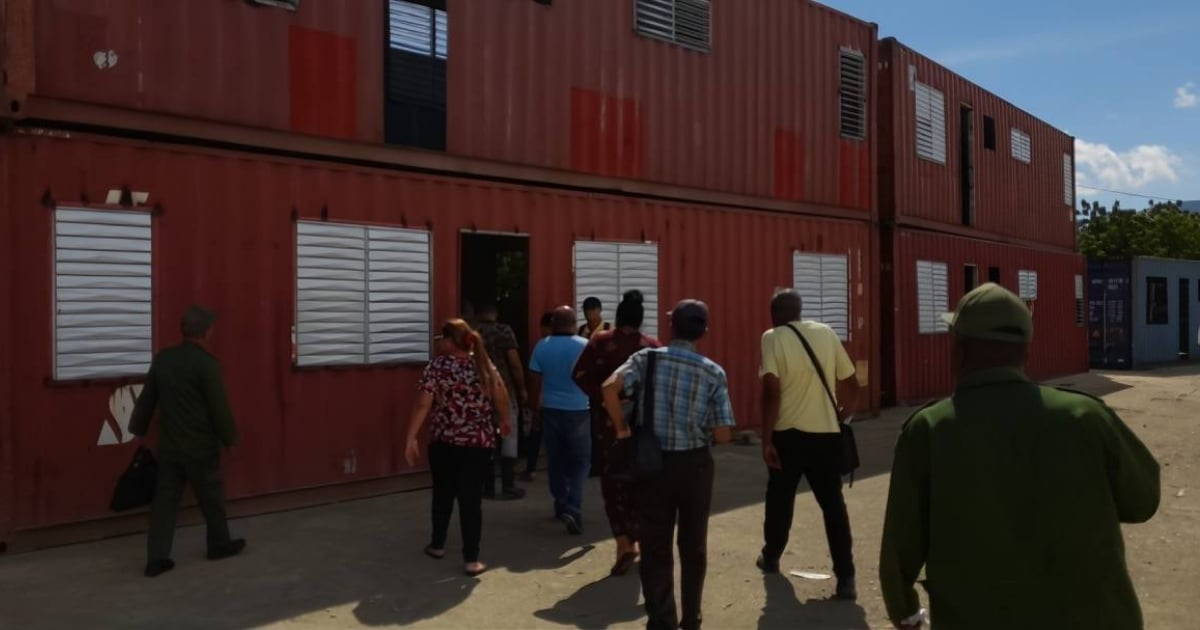
The government in Sancti Spíritus is implementing a housing construction program using recycled metal containers, a "strategy" by the regime to address the shortage of essential materials such as cement, steel, and aggregates.
The official newspaper Escambray reported that the project includes the construction of 133 houses of this type spread across the eight municipalities of the province.
According to Néstor Borroto González, director of Housing in Sancti Spíritus, it is an "innovative concept," widespread in other parts of the world, that allows containers which have reached the end of their useful life after transportation operations to be repurposed.
Although in Cuba it is understood that, more than innovation, it is merely a band-aid to a crisis that has been affecting the population for years, such as the failure to fulfill housing construction programs.
According to the official spokesperson, work is currently underway on the micro-location of the areas where the buildings will be erected, under the supervision of municipal and provincial authorities.
The designs are centrally developed by the Company of Architecture and Engineering Projects of Mariel, while local entities will be responsible for foundations and urban developments.
Escambray assured that the containers will have "the same livability as a conventional house," thanks to thermal insulation coatings and aesthetic finishes.
Each structure will be anchored on reinforced concrete piles cast in situ to prevent moisture and corrosion, ensuring its durability and strength, boasted the cited source.
"It is something very nascent, but, given the scarcity of resources, the housing construction plan relies on that modality," Borroto acknowledged, detailing that the main beneficiaries will be those affected by meteorological events, particularly in Yaguajay, as well as mothers with more than three minor children.
Container homes will have different dimensions depending on the size of the structure and will include a kitchen, bathroom, dining area, bedrooms, doors, and windows made with local raw materials, in some cases supplemented with supplies from the national balance.
In recent months, the Cuban regime has fervently defended the conversion of shipping containers into housing as a "creative solution" to the housing deficit.
This alternative is presented as a "sustainable" model, although in reality it reflects the collapse of the national materials industry and the government's inability to fulfill its own housing construction plans.
In the province of Holguín, several projects have been initiated that include container homes, prefabricated modules, and buildings that do not rely on the use of cement and steel, inspired by traditional techniques.
However, these proposals arise in a context marked by shortages, inflation, and low wages, making them inaccessible options for the majority of Cubans.
In the Buena Vista community, in Guantánamo, a plan is being carried out to install 60 housing units made from recycled containers from a photovoltaic park.
The construction has progressed slowly, and concerns remain about the thermal insulation and living conditions in these metal structures, particularly for vulnerable individuals such as children and the elderly.
Meanwhile, the population has reacted with skepticism and criticism to the design of these homes. Many believe that these are makeshift solutions that do not address the core of the problem.
Social media has gathered opinions that question everything from the distribution of spaces to the quality of materials and the associated costs.
In contrast, in European countries, the use of containers as housing follows very different standards. Thermal insulation, building permits, and structural safety are essential requirements to ensure habitability.
In Cuba, however, these conditions are often overlooked or minimized, calling into question the long-term viability of these dwellings.
Frequently asked questions about container houses in Cuba
What are container houses and why are they being built in Cuba?
Container houses in Cuba are homes built from recycled metal containers, which the government presents as an "innovative" solution to the shortage of construction materials such as cement and steel. This initiative aims to alleviate the housing deficit, though it is, in reality, a temporary remedy amidst a structural housing crisis affecting the country.
What are the main criticisms of container houses in Cuba?
Criticism focuses on the fact that these metal structures, without proper insulation, can turn into unlivable ovens in Cuba's warm climate. The lack of adequate air conditioning and ventilation systems poses a health risk, especially for children and the elderly. Furthermore, there are concerns about the lack of investment and planning in these solutions, which are presented as temporary but do not effectively address the housing problem.
How does the use of container houses in Cuba compare to other countries?
In other countries, such as Spain, container homes are seen as a sustainable and economical alternative, but they come with standards for insulation, climate control, and habitability permits. In Cuba, the lack of these elements and material limitations mean that these homes are more of an emergency solution than a viable and lasting alternative.
Who are the main beneficiaries of container homes in Cuba?
The main beneficiaries of container houses in Cuba are those affected by weather events, such as hurricanes, and mothers with more than three minor children. However, access to these homes remains a challenge for many families due to precarious economic conditions and a lack of adequate resources.
Filed under: