
Related videos:
Cuba faces another day marked by widespread blackouts this Thursday, September 25, with a generation deficit that, according to the Electric Union (UNE), will exceed 1,700 megawatts (MW) during peak hours.
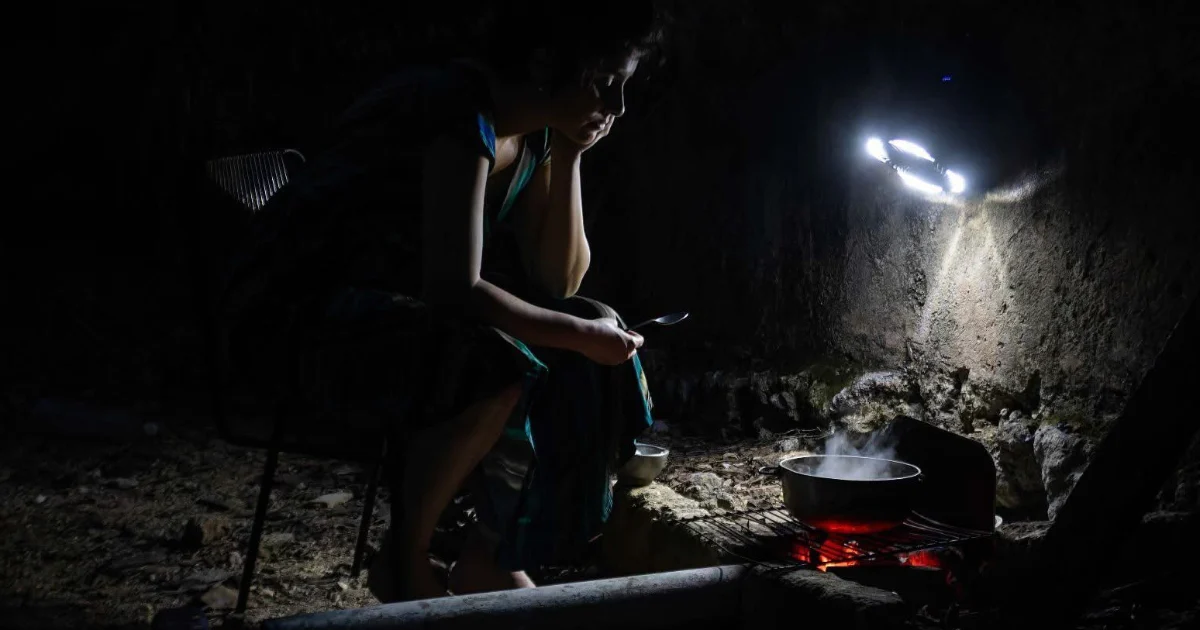
The ongoing electrical crisis, which has no real solutions in sight, keeps millions of Cubans in the dark for nearly the entire day, directly impacting daily life and the economy.
The UNE revealed that on Wednesday the service was affected for 24 hours, with outages continuing into the early hours of today. The highest impact was 1,686 MW at 8:50 PM, practically a collapse of the national electrical system.
This Thursday, at 6:00 am, the total availability of the SEN was 1,910 MW compared to a demand of 3,070 MW, which indicated a deficit of 1,179 MW from early on.
By noon, a deficit of 900 MW is expected, but the most alarming forecasts pertain to the nighttime hours: a 1,710 MW shortfall if the current trend continues.
A system in ruins: breakdowns, maintenance issues, and lack of fuel
The electrical landscape described by UNE itself confirms the collapse of the system: unit 2 of the Felton thermoelectric plant is out of service due to a malfunction, while three blocks of the Santa Cruz and Carlos Manuel de Céspedes power plants in Cienfuegos remain halted for maintenance, further reducing generation capacity.
Additionally, there are technical limitations that keep 484 MW inactive and a fuel and lubricant supply crisis that leaves another 530 MW out of operation.
Together, these factors reveal a situation where not only do the equipment fail due to age and wear, but also the governmental management falls short in ensuring the basic supplies necessary to minimally sustain electricity generation.
Havana also collapses
The Electric Company of Havana confirmed that the capital experienced blackouts lasting nearly 12 consecutive hours, from 3:49 PM yesterday until 3:00 AM this Thursday.
At that time, the maximum impact reached 119 MW at 8:50 PM.
Although some planned interruption blocks were not implemented, the service relied entirely on the orders from the SEN, which shows that even the most prioritized city in the country is not immune to the electrical breakdown.
Renewable energies: a minimal contribution in the face of the crisis
The UNE report highlighted that the 31 solar photovoltaic parks delivered a maximum power of 670 MW at noon, generating a total of 3,011 MWh. However, this contribution is insufficient compared to a demand that exceeds 3,600 MW during peak nighttime hours.
A model without an exit
Far from being a temporary issue, the energy situation in Cuba reflects chronic disinvestment, the obsolescence of the thermal power plant infrastructure, and complete dependence on imported fuels.
The government attempts to justify the crisis with technical reports and figures, but it avoids acknowledging its responsibility for the lack of planning and the failure of projects that were announced as solutions.
Meanwhile, the population suffers the consequences: prolonged power outages, spoiled food, disruptions in hospitals, halted transportation, and an increasingly tense social climate.
Instead of a coherent strategy, the official response is limited to publishing daily reports that confirm what Cubans already know all too well: the blackouts have no end in sight in the short term, and each day will be worse than the last.
Frequently Asked Questions about the Energy Crisis in Cuba
What is the current electricity generation deficit in Cuba?
The electricity generation deficit in Cuba exceeds 1,700 megawatts (MW), according to the latest report from the Electric Union (UNE). This critical situation persists during peak hours, impacting millions of Cubans.
What are the causes of the collapse of the Cuban electrical system?
The collapse of the Cuban electrical system is due to several factors, including breakdowns in thermal power plant units, scheduled maintenance, and a lack of fuel and lubricants. Moreover, the obsolescence of the thermal power fleet and poor government management exacerbate the crisis.
How do blackouts affect the Cuban population?
Prolonged blackouts severely affect the daily life of Cubans. They cause the loss of stored food, interruptions in hospitals, the paralysis of transportation, and an increasingly tense social climate.
What role do renewable energies play in Cuba's energy crisis?
Although solar photovoltaic parks in Cuba provide some amount of energy, their contribution remains insufficient in light of the high demand. Renewable generation fails to meet the energy deficit exacerbated by the deterioration of the thermoelectric system.
What solutions does the Cuban government propose for the energy crisis?
The Cuban government has attempted to justify the crisis with technical reports and figures, but it does not offer concrete solutions nor does it foresee a short-term recovery. Instead, it is limited to publishing daily reports that confirm the seriousness of the situation without addressing the structural causes of the problem.
Filed under: