
Related videos:
The energy crisis in Cuba continues to worsen and hits daily life of the population even harder.
The instability of the national electrical system, characterized by the obsolescence of thermal power plants, the lack of fuel, and poor state management, results in longer and more widespread power outages than the government itself predicts in its official reports.
The Electric Union (UNE) reported that on Tuesday the service was interrupted for 24 hours and into the following morning, with a maximum impact of 1,821 megawatts (MW) at 8:30 PM, a figure higher than what was anticipated in their forecasts.
According to the official report, at 6:00 am this Wednesday, the availability of the National Electric System (SEN) was only 2,010 MW compared to a demand of 2,920 MW, indicating a shortfall of 950 MW due to generation deficit.
For the midday schedule, the company calculated impacts of about 900 MW.
Dismal forecast for peak hours
Under these conditions, the UNE announced that during peak evening hours, the availability would be 2,010 MW compared to a maximum demand of 3,650 MW, resulting in a deficit of 1,640 MW.
If the current situation persists, the expected impact would be around 1,710 MW, which means that power outages would be almost inevitable across the country.
Out-of-service plants and accumulated issues
The main incidents are concentrated in the breakdown of unit 2 at the Felton thermoelectric plant (CTE), maintenance work on unit 2 of the Santa Cruz CTE, and on unit 4 of the Carlos Manuel de Céspedes CTE in Cienfuegos, in addition to 554 MW lost due to technical limitations.
This is compounded by problems arising from the lack of fuel and lubricant: 53 distributed generation plants are out of service, with 320 MW compromised, and another 113 MW unavailable due to a lubricant deficit, resulting in a total of 433 MW halted solely for this reason.
Although the authorities highlighted that the 31 new photovoltaic solar parks provided 2,482 MWh, with a peak of 482 MW at noon, their impact is insufficient to cover the growing gap in generation.
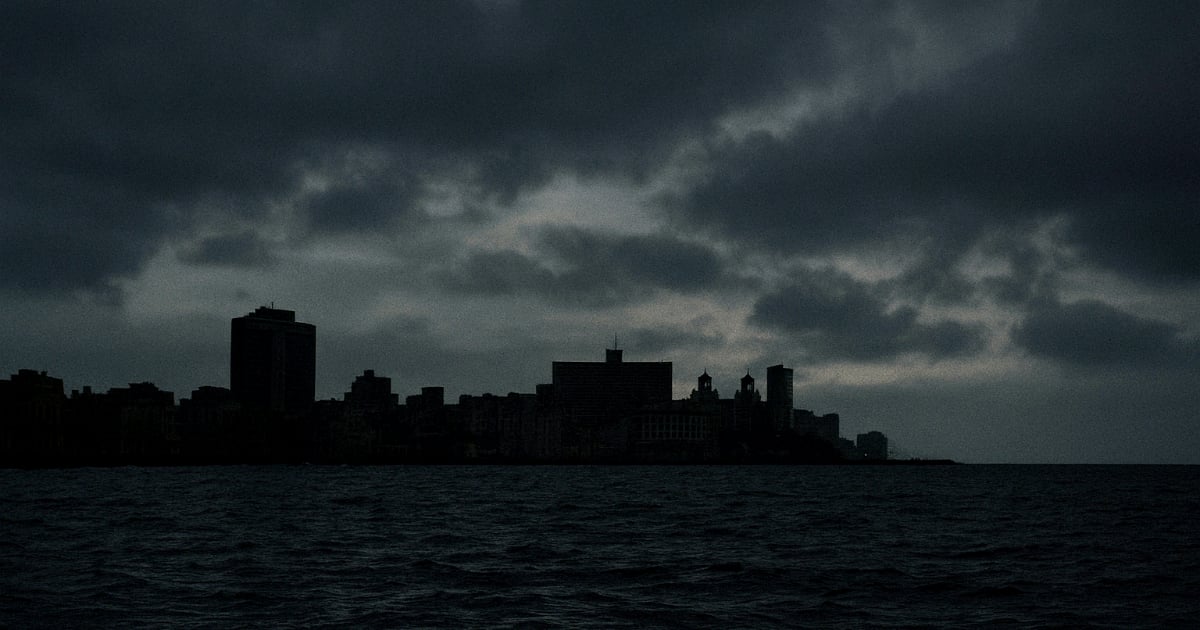
Havana also in the dark
The Electric Company of Havana detailed on that the capital experienced power outages for eight hours on the same day.
The service was restored after 1:49 AM, with a maximum impact reaching 173 MW at 8:30 PM, confirming that even the prioritized blocks of the capital are not exempt from power outages.
An unchecked deterioration
The official balance of the UNE once again demonstrates the government's inability to ensure a stable electricity supply.
The thermal power plants, outdated and constantly breaking down, along with the chronic fuel shortage and the lack of a real strategy for energy diversification, are plunging the country into longer and more unpredictable blackouts than the authorities acknowledge in their daily reports.
In practice, the electric system operates on the brink of collapse: every megawatt lost to failure or negligence increases the burden on a population that, day after day, survives amid darkness and uncertainty.
Frequently Asked Questions about the Energy Crisis in Cuba
Why is Cuba experiencing an increase in blackouts?
Cuba is experiencing an increase in blackouts due to the obsolescence of its thermoelectric plants, a lack of fuel, and poor state management. The Electric Union of Cuba (UNE) has repeatedly reported significant deficits in electricity generation that exceed the available capacity to meet national demand, resulting in prolonged power outages across the country.
What are the main causes of the electrical deficit in Cuba?
The causes of the electrical deficit in Cuba include breakdowns in several units of the thermoelectric plants, postponed maintenance, thermal limitations, and a lack of fuel and lubricants that impact the operation of distributed generation plants. Furthermore, the country's energy infrastructure is in a critical state due to the lack of investment and modernization.
What is the impact of renewable energy on the energy crisis in Cuba?
Although new photovoltaic solar parks have been added, their impact is insufficient to cover the energy deficit in Cuba. Renewable energy generation barely meets a fraction of daily demand, especially during peak hours, which shows that despite investments in alternative energy, the system still heavily relies on traditional thermoelectric plants.
How does the energy crisis affect the Cuban population?
The energy crisis significantly affects the daily lives of Cubans, as prolonged blackouts disrupt access to essential services such as electricity and water. This leads to food spoilage, hospitals operating under critical conditions, and households facing serious economic difficulties. The uncertainty and frustration among the population are palpable, as no short-term solutions are in sight.
Filed under: