
Related videos:
The municipal station Radio Cabaniguán, in Jobabo, Las Tunas, announced that it will only be able to broadcast six hours a day due to a lack of fuel for its generator.
Since Sunday, September 21, the radio station has interrupted its broadcasts during the prolonged blackout hours affecting the province, leaving the population almost without access to this community service.
According to a statement released by the station's management on , the usual broadcast times are now limited to the hours when electricity is available, from 7:00 am to 1:00 pm.
For the rest of the day, about 18 hours, the plant remains shut down, not due to a lack of effort from its workers, but because of the Cuban government's inability to ensure the necessary fuel.
"We understand the importance of our service to the community and the inconvenience this situation represents," stated the broadcaster, who apologized to the audience.
The note emphasizes the commitment to continue providing information, although it acknowledges that dependence on the current situation limits any efforts.
Community reactions
The responses on the Facebook page itself reflect frustration and hopelessness. One user wrote: "Oh God, how do we stay informed? We can't even have that."
A teacher questioned, "What a tremendous lack of respect it is to have to stop broadcasting a radio station, which is one of our sources of information, due to a power outage."
From the commerce sector, another worker commented: "It's so desperately needed in that area; the only thing that matters is our station. This has really gone from bad to worse."
Other testimonies report the weariness of the population in the face of the crisis.
"It's very sad what we are going through… we have been without electricity at 8:00 pm for over 20 days. Please, this is not easy," said a nurse-midwife.
Even colleagues from other stations confirmed that the problem is not isolated.
A broadcaster from Radio Libertad in Puerto Padre stated that, out of 16 hours of programming, they can only keep between two and three hours on the air.
Background: Charging cell phones at the station
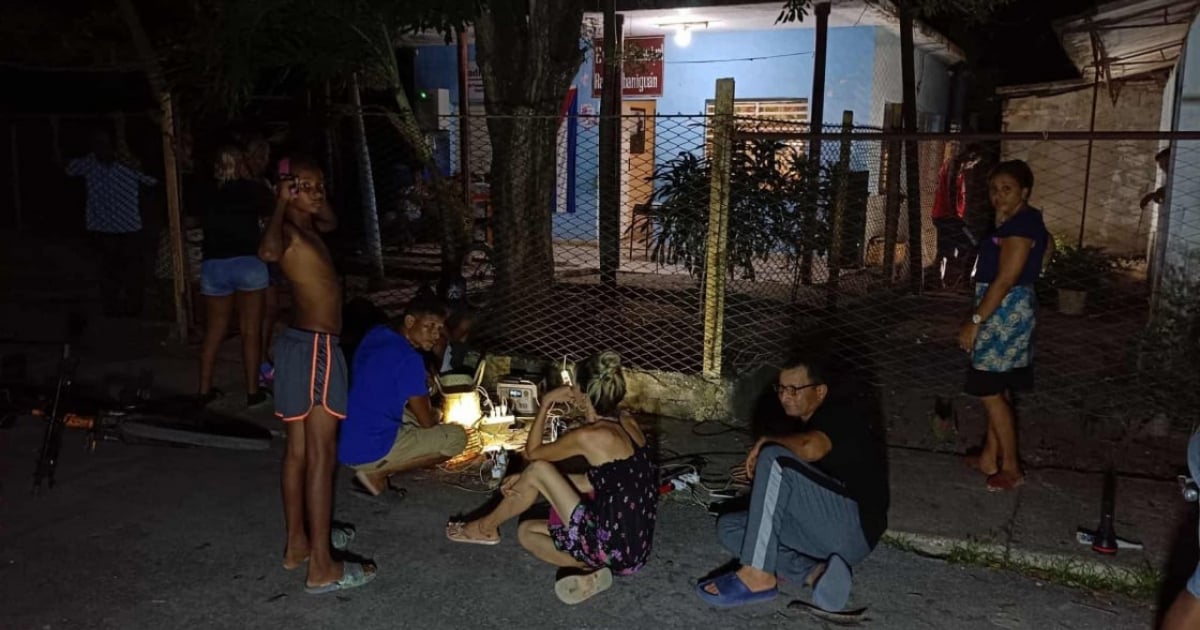
The crisis had already been reflected on September 11, when Radio Cabaniguán broadcast images of dozens of people sitting on the sidewalk, late at night, waiting to charge their cell phones at the station thanks to an improvised service.
That day, the center also broadcast the signal from Radio Victoria to partially compensate for the lack of information in Jobabo.
A sample of the system's collapse
The partial closure of this local station highlights a fundamental contradiction of the Cuban system: while the regime claims that radio and television are cornerstones of its political strategy and propaganda, in practice it cannot even sustain the operation of municipal stations.
The lack of fuel, which strikes equally hard at public transportation, hospitals, and thermoelectric plants, now leaves entire communities without access to their most immediate means of communication.
For the residents of Jobabo, it's not just about entertainment, but a vital channel of information amid blackouts that disrupt daily life.
The situation of Radio Cabaniguán thus becomes another symbol of governmental failure: a country where not even radio—this traditional resource in times of crisis—can ensure continuity.
Frequently Asked Questions about the Energy Crisis in Cuba and Its Impact on Local Stations
Why does Radio Cabaniguán in Las Tunas only broadcast for six hours a day?
Radio Cabaniguán in Jobabo, Las Tunas, broadcasts only six hours a day due to the lack of fuel for its generator. The station has reduced its programming to the hours when there is electricity, from 7:00 am to 1:00 pm, leaving the community without access to the service during the prolonged power outages that the province suffers.
What is the community's reaction to the reduction of broadcasting hours of Radio Cabaniguán?
The community has reacted with frustration and hopelessness to the reduction of broadcast hours of Radio Cabaniguán. The residents see the station as a vital source of information amid power outages, which has generated negative comments on social media and criticisms of the government for being unable to maintain this essential service.
How does the energy crisis affect other services in Cuba?
The energy crisis is severely impacting various services in Cuba, including public transportation, hospitals, and thermoelectric plants. In several provinces, radio and television broadcasts have also been interrupted due to a lack of energy backup, and the fuel shortage has rendered many distributed generation plants inoperative.
What is the Cuban government's stance on the energy crisis and blackouts?
The Cuban government has attempted to justify the situation with technical explanations regarding the increase in demand and the lack of generation capacity. However, the population perceives that more than a technical crisis, it is a political failure, as there are resources allocated to other sectors instead of prioritizing the basic needs of the citizens.
Filed under: