
Related videos:
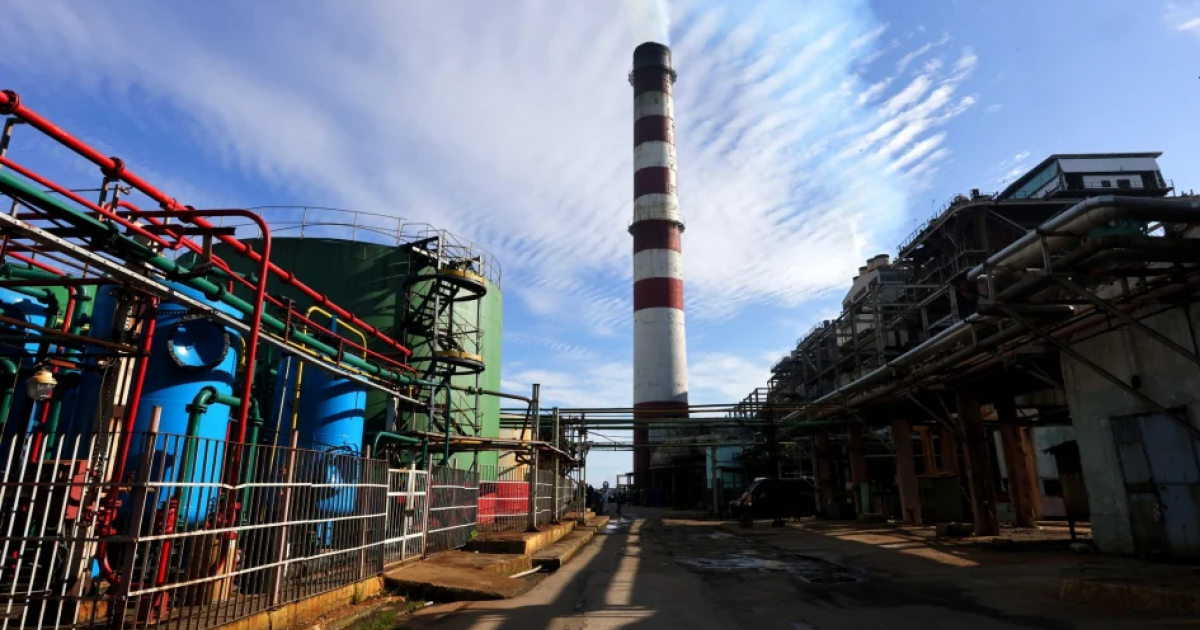
The Electric Union (UNE) of Cuba announced that unit 6 of the Máximo Gómez thermoelectric power plant in Mariel went out of service this Friday at 8:53 am.
The cause, according to the note shared on Facebook, was oil contamination and vibrations in the feed water pump.
The official statement was brief and did not provide details about the repair work or an estimate of when the block could be reintegrated into the National Electric System (SEN).
The departure of this unit comes during one of the most critical periods for the Cuban electric system.
The UNE projected that during peak night hours, demand would reach 3,550 megawatts (MW), while availability would only reach 1,950 MW, resulting in a deficit of 1,600 MW and actual service disruptions of up to 1,670 MW.
The situation is worsening due to issues at other plants: unit 2 of the CTE Felton is out of service due to breakdowns, while three blocks at the CTE Santa Cruz del Norte and Carlos Manuel de Céspedes are under maintenance.
In addition, thermal limitations keep 492 MW out of operation, and the lack of fuel and lubricants impacts 56 distributed generation plants (460 MW out of service), totaling an additional 153 MW unavailable.
About two weeks ago, the UNE reported that the unit 8 of the Mariel thermoelectric plant was synchronized with the SEN as part of an effort to ease the crisis of power outages.
Work was also being done on starting the Fuel engines at the plant, intended to be integrated into the system immediately; however, the persistent unavailability of blocks like number 6 shows that efforts are insufficient given the structural precariousness and scarcity of resources.
Prolonged power outages continue to impact the daily lives of millions of Cubans, and the lack of planning and maintenance of the electrical system reflects the government's direct responsibility in the continuation of this situation.
The commissioning of this new power block highlights the fragility of the Cuban electrical system and the government's inability to ensure a reliable supply, keeping millions of citizens in constant uncertainty regarding power outages.
Frequently Asked Questions about the Energy Crisis in Cuba
Why was Unit 6 of the Máximo Gómez thermoelectric plant in Mariel taken out of service?
Unit 6 has gone out of service due to "oil contamination and vibrations in the feed water pump," according to the Electric Union (UNE). This situation reflects the maintenance issues and resource shortages that are affecting the Cuban electrical system.
What is the impact of the energy deficit in Cuba?
The energy deficit in Cuba causes prolonged blackouts and affects the daily life of millions of Cubans, who face constant interruptions in electrical service. This impacts everything from household consumption to hospital services and industrial production.
What measures is the Cuban government taking to address the energy crisis?
Although some measures have been implemented, such as synchronizing units with the National Electric System and incorporating distributed generation engines, the efforts are insufficient in the face of structural precariousness and resource scarcity. The lack of effective planning and adequate investments in the electrical system is evident.
What role do renewable energies play in the current energy crisis in Cuba?
The photovoltaic solar parks in Cuba provide a significant amount of energy, but their contribution is insufficient to compensate for the deficiencies of the electrical system. Renewable generation fails to cover the deficit caused by a lack of maintenance and fuel in the thermoelectric plants.
Filed under: