
Related videos:
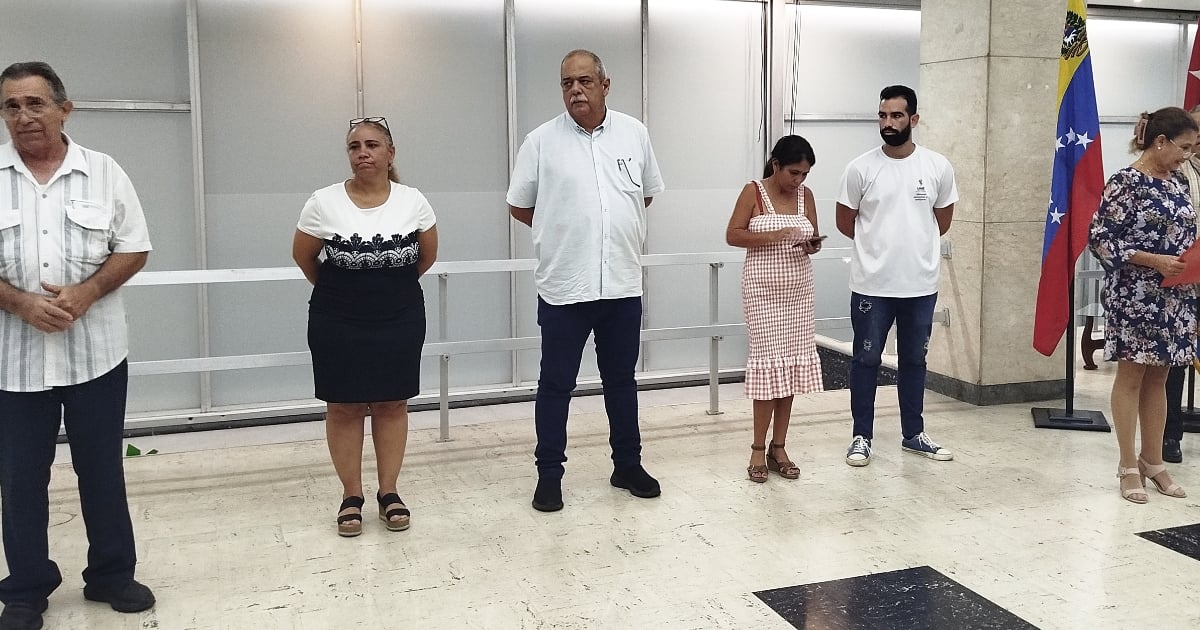
The latest political initiative of the Cuban regime has sparked a wave of public outrage: workers from the Electric Union (UNE), the Ministry of Energy and Mines (MINEM), and the CUPET company, led by Minister Vicente de la O Levy, participated in a signature collection event in support of the regime of dictator Nicolás Maduro.
The activity, presented as a gesture of solidarity in response to the "hostility of the empire," was shared on social media by UNE itself, which published images of the event in a well-lit hall, with officials from the Communist Party as witnesses.
The post, accompanied by slogans such as "we embrace our brother people of Venezuela" and "we will record, with our signatures, total support for the Bolivarian nation," generated a wave of negative comments.
Most users criticized the disconnect between the political campaign and the harsh national reality characterized by endless blackouts, food shortages, and growing social unrest.
"And the petitions against the blackouts?"
“When will the petition drive take place to complain about the power outages, the misery, and the hopelessness?”, wrote an internet user, summarizing the feelings of hundreds of Cubans who denounced the hypocrisy of the authorities.
Other users sarcastically pointed out that while extreme savings measures are being requested in hospitals, the UNE is wasting electricity to illuminate a political event that has nothing to do with its social purpose: providing energy to the country.
Comments such as "they spend more electricity in that act than an entire circuit of a province" or "sign also to fix the country's terrible electricity situation" highlighted the frustration of a people who endure blackouts daily.
Obligation, coercion, and disinterest
Among the messages, several Cubans hinted that attendance at these events is not voluntary, but rather part of the coercion exerted by the system in state workplaces. “Here goes the flock”, wrote one user, while another commented: “tomorrow they will take attendance at the workplaces, and no one will be able to refuse”.
There were also those who reported that the signature collection is nothing more than a "poll" to measure the loyalty of workers, disguised as international solidarity. According to a commentator, the true goal of the regime is to "know how many support it out of conviction, how many out of fear, and how many are against it."
Between sarcasm and indignation
The UNE's post became a space filled with mockery and sarcasm. Some users wondered if those signatures would be able to "stop destroyers and submarines" or if they would serve as "toilet paper".
Others ridiculed: "This is how it's done, let's show that we are capable of everything except generating the energy the country needs" .
In the midst of frustration, insults and expressions of anger were not lacking. "What a shame", "disgusting government", or "what a huge joke" were some of the words directed at the MINEM and the UNE.
Inverted priorities
The citizen discontent has a clear background: the energy crisis that Cuba has been experiencing for years. Prolonged blackouts affect not only the daily lives of Cubans but also key sectors such as food production, education, and health.
In that context, the fact that the institution responsible for electricity allocated time, resources, and personnel to a political act in support of another country was seen by many as an insult.
“Wasting time on that nonsense instead of seeing how they fix the disaster of the electrical system”, wrote a user. Another summed it up with a direct question: “What are they going to achieve with those signatures?”.
Questioned solidarity
The event also reignited criticism of the Cuban regime's foreign policy, which prioritizes the defense of allies like Venezuela or Nicaragua while neglecting internal issues. “Take care of your country and your people first”, several commentators insisted.
The comparison with other political campaigns was quick to emerge. Many recalled how schools, workplaces, and neighborhoods have been used for decades to collect signatures, always in support of official causes and never to allow citizens to express their discontent freely.
“Collect signatures to see if the people support them or despise them and want them far from this country”, suggested a user, convinced that the outcome would be overwhelmingly against the government.
A crack in the official propaganda
Although the UNE's publication aimed to demonstrate unity and political commitment, the outcome was the opposite: thousands of Cubans publicly expressed their rejection, highlighting the growing divide between the official discourse and the real concerns of the population.
The signing event led by De la O Levy will go down as yet another of the numerous political propaganda campaigns organized by the regime, but it exposed a significant element: an increasing number of Cubans are using the official platforms to openly question the government's priorities and denounce the decline of life on the island.
Filed under: