
Related videos:
The recent exclusion of Cuba, Nicaragua, and Venezuela from the X Summit of the Americas, scheduled for December 4 and 5 in Punta Cana, continues to generate reactions in the political sphere and on social media.
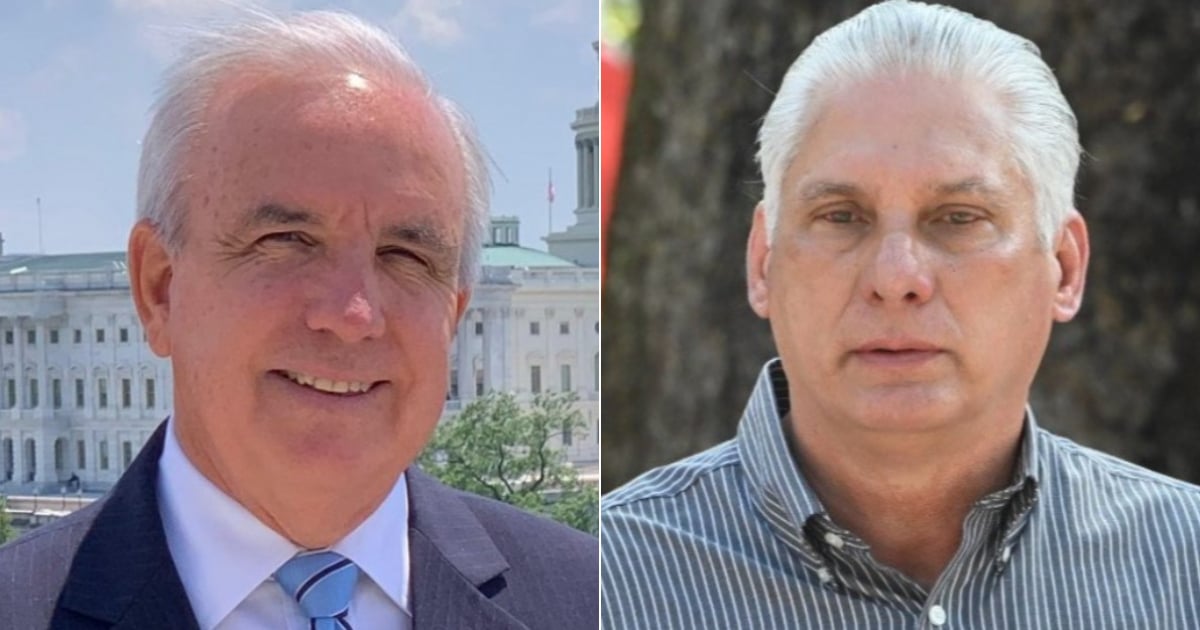
While the Cuban regime condemned the measure as an act of "exclusion and coercion" promoted by the United States, Cuban-American Congressman Carlos A. Giménez launched harsh criticisms against Miguel Díaz-Canel, Bruno Rodríguez, and Havana's diplomacy.
In a message on X, Giménez reminded Cuban leaders of their own words: "You yourselves said: 'We don’t want them, we don’t need them.' Now, reap what you have sown for years," he said.
Giménez, who arrived in the United States in 1960 after fleeing with his family from the Castro revolution, emphasized that the democratic countries in the region do not want to sit down with "little dictators" like the one in Cuba.
"Wherever we are, there will be no room for you," he affirmed.
In another tweet, the Republican representative directly attacked Chancellor Bruno Rodríguez Parrilla, whom he labeled as a "henchman of the regime" and a "Mexican of the high Castro bourgeoisie."
According to Giménez, Cuban foreign policy "seeks to win the favor of the United States while inviting Communist China to take over our hemisphere," and he concluded that its diplomacy is "as incoherent and incompetent as everything the dictatorship does."
The messages were published in response to an official greeting from Bruno Rodríguez to the Chinese government on the 76th anniversary of the founding of the People's Republic of China, in which he highlighted the "strategic, multifaceted, and comprehensive ties" that unite the two countries.
The exclusion from the Summit and the regime's reaction
The announcement from the Dominican Republic, the current pro tempore president of the forum, not to invite Cuba, Venezuela, and Nicaragua, sparked an immediate protest from Havana.
The Ministry of Foreign Affairs (MINREX) denounced that the measure is a response to the "brutal unilateral pressures" from the United States and accused the Dominican government of "yielding" to Washington.
The statement, released on September 30, described the exclusion as a "historical setback" that revives old tensions from the Cold War and asserted that a summit built on "coercion" is "doomed to fail."
According to the regime, the measure constitutes an "open challenge" to the Proclamation of Latin America and the Caribbean as a Zone of Peace, in addition to ignoring the progress made in previous editions, such as the one in Panama in 2015, when Cuba participated for the first time.
The official text emphasized that hemispheric dialogue cannot occur "on the basis of censorship and exclusion," while reiterating the willingness for a "respectful and constructive" exchange.
Both Miguel Díaz-Canel and Prime Minister Manuel Marrero echoed the official stance on X.
The Cuban leader stated that his country maintains "a willingness for respectful dialogue under conditions of sovereign equality," while Marrero accused the United States of resuming the "gunboat policy" and the Monroe Doctrine.
The position of the Dominican Republic and Washington
The Dominican Foreign Ministry justified the decision as a necessary step to ensure "the largest possible turnout" and to prevent political polarization from hindering the forum's outcomes.
He emphasized that the three countries also did not participate in the previous edition and that bilateral relations with them remain active, although in the case of Venezuela, Santo Domingo does not recognize the results of its last two presidential elections.
From the United States, the stance remains clear: participation in the Summits of the Americas is contingent upon a commitment to democracy.
In 2022, the White House advisor for Latin America, Juan González, expressed it bluntly: "How can we invite a country when they are throwing people in jail just for singing and asking for food?"
Citizen mockery on social media
Cuba's exclusion also sparked reactions on social media. Díaz-Canel's message rejecting the decision received thousands of critical and mocking responses.
The Cuban comedian Andy Vázquez quipped: "The purchase at the mall in La Romana was leaked to the Machi", referencing Lis Cuesta, the president’s wife. Other comments proliferated in the same vein: "Time to cry, their little trip is over", "Unpack, you and the Machi", "Don't get dressed, you’re not going."
Among the users, there were also more direct messages against the system: "You want to exercise democracy outside of Cuba, but at home you suppress and imprison"; "It's very good that dictators are not given space at a summit of democratic countries."
Frequently Asked Questions about Cuba's Exclusion from the Summit of the Americas
Why was Cuba excluded from the X Summit of the Americas?
Cuba was excluded from the X Summit of the Americas because, according to the Dominican Republic and the United States, its participation does not align with the democratic commitment expected in such forums. This decision aims to avoid political polarization and ensure a broader and more effective gathering.
What has been the Cuban government's reaction to their exclusion?
The Cuban government, through its Ministry of Foreign Affairs, described the exclusion as a "act of coercion and exclusion" promoted by the United States. Havana denounced that it responds to "brutal pressures" and that it is a "historic setback" in hemispheric relations.
What stance has Cuban-American Congressman Carlos Giménez taken regarding the exclusion of Cuba?
Carlos Giménez has taken a critical stance towards the Cuban regime, expressing that hemisphere democracies do not want to associate with dictatorships like that of Cuba. His statements on social media reflect a strong rejection of Cuban diplomacy and its ties with countries like China.
How has the Cuban citizenship reacted to their country's exclusion from the summit?
Cuban citizens have responded with criticism and mockery towards the government on social media, highlighting the inconsistency between the official dialogue rhetoric and internal repression. Many comments express dissatisfaction with the regime's management and denounce the misery and everyday problems they face.
Filed under: