
Related videos:
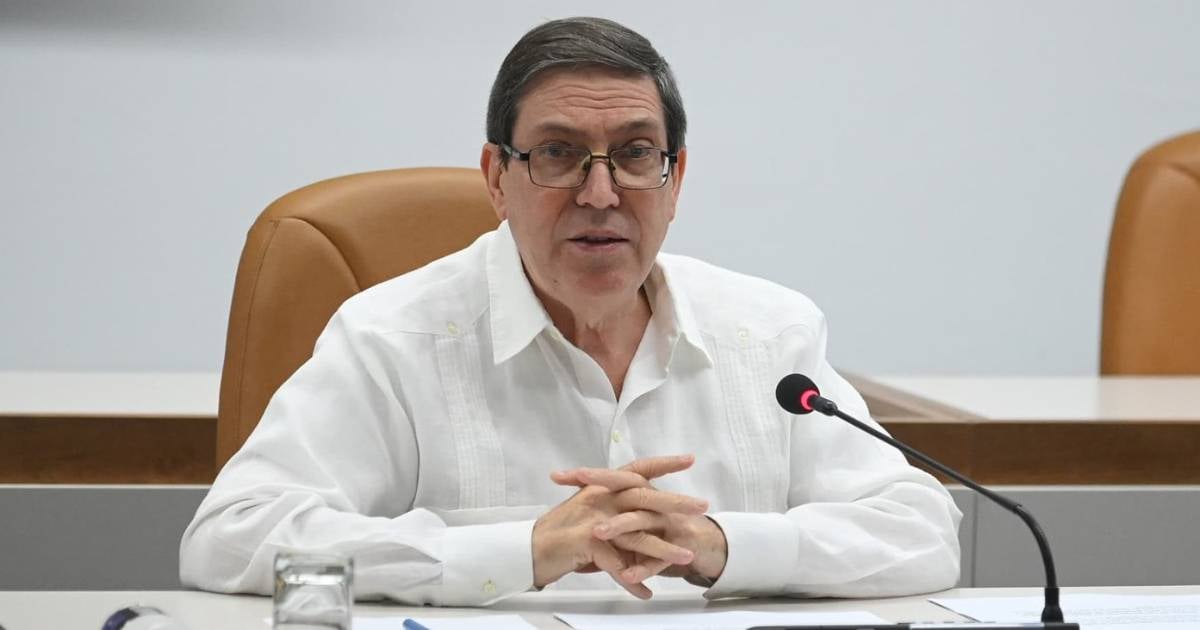
The Cuban foreign minister, Bruno Rodríguez Parrilla, stated in an interview with CNN that Havana fully supports the government of Venezuela in the face of what he described as a "direct threat" from the United States to regional stability.
However, the head of Cuban diplomacy avoided responding to whether that support could include military intervention in the event of a U.S. attack.
"Cuba fully supports the Government of the Bolivarian Republic of Venezuela," Rodríguez stated during the interview granted in New York, in the context of the United Nations General Assembly.
The key question of whether Havana would come to Caracas's defense in the event of a military invasion was evaded by the official.
"It's a hypothetical case. When you inform me that there has been a U.S. military intervention, I will tell you," he replied.
Tension in the Caribbean
Rodríguez's statements come amid the deployment of warships, nuclear submarines, F-35 fighter jets, and more than 7,000 U.S. personnel in the Caribbean Sea, marking the largest military operation of its kind since the 1980s.
Washington claims that the mobilization aims to combat drug trafficking, but Caracas contends that it is a threat to its sovereignty.
President Donald Trump has announced that his administration has entered a "new phase" of operations: following the lethal attacks on vessels in Caribbean waters, which resulted in more than a dozen deaths without conclusive evidence of links to drug trafficking, the focus will now be on land routes.
“We had a lot of drugs coming in by water (...). We attacked several boats, and since we did that, we haven't had any drugs coming into our country by sea, because it was lethal. And now we are going to look at the cartels. We are going to take a very serious look at the cartels that come by land,” he declared.
According to sources cited by NBC News, the Pentagon is assessing drone strikes against criminal leaders and labs inside Venezuela, although final authorization has not been issued.
In response, Nicolás Maduro declared a "state of external commotion," which grants him extraordinary powers to mobilize the Armed Forces and control strategic sectors.
Her vice president, Delcy Rodríguez, stated that the measure aims to prepare the country for a possible "aggression" from the United States.
Bilateral relationship and conditioned dialogue
Rodríguez accused the U.S. of attempting to "reinstate the gunboat policy" and reestablish the "Monroe Doctrine with the empire of arms."
According to the chancellor, the U.S. military mobilization constitutes "a direct threat to regional peace, stability, and security."
The chancellor emphasized that Cuba is open to dialogue with the United States, even under the Trump administration, but "without preconditions."
According to him, that dialogue should be based on international law, the independence, and the sovereignty of each country.
In recent years, bilateral relations have deteriorated. Washington included Cuba on the list of countries sponsoring terrorism, strengthened the economic embargo, and reinstated restrictions on American tourism.
Marco Rubio, Secretary of State, has stated that he has "nothing to discuss" with Havana and accused the Cuban government of fueling the regional migration crisis.
Cuba distances itself from the war conflict
A few days ago, Deputy Foreign Minister Carlos Fernández de Cossío clarified in New York that Havana will provide "full political support" to Maduro, but without military involvement.
“Cuba will not go to war with the United States,” he emphasized.
He warned that a U.S. attack on Venezuela would be "a threat to the entire region."
It also reported that Washington aims to "disconnect Cuba from the global economy," which exacerbates the internal crisis on the Island, characterized by blackouts, shortages, and precariousness in basic services.
Risk escalation
The debate over a possible intervention within Venezuelan territory keeps the region on edge.
Analysts warn that an attack could reinforce the Chavista narrative of "defense of sovereignty" and create a scenario of even harsher internal repression.
Meanwhile, Trump insists that he will use "all elements of American power" to curb drug trafficking.
Sources consulted by NBC assure that military operations on Venezuelan soil could occur within weeks, although the final decision has not yet been made.
In this context, Cuba finds itself in an intermediary position: it diplomatically supports its main regional ally but refuses to commit to a military confrontation with its historic adversary.
Frequently Asked Questions about the Tension between Cuba, Venezuela, and the United States
Will Cuba intervene militarily in defense of Venezuela?
Cuba has avoided committing to a military intervention in defense of Venezuela. In recent statements, Cuban Foreign Minister Bruno Rodríguez Parrilla asserted that Cuba fully and completely supports the Government of Venezuela, but did not respond to whether that support would include a military intervention. Days earlier, Deputy Foreign Minister Carlos Fernández de Cossío clarified that Cuba would provide "full political support" to Maduro, but without military involvement.
Why has the United States increased its military presence in the Caribbean?
The United States has launched a military operation in the Caribbean under the pretext of combating drug trafficking. The administration of Donald Trump has deployed warships, nuclear submarines, and thousands of troops in the region. However, both Cuba and Venezuela view this mobilization as a maneuver of pressure and intimidation with interventionist aims, rather than a genuine anti-drug operation.
What is Venezuela's position regarding the threat of military intervention?
Venezuela has declared a "state of external commotion" to mobilize its Armed Forces and control strategic sectors. In response to the perceived threat from the United States, President Nicolás Maduro has activated the mobilization of militias and strengthened the country's military defense. The Venezuelan government claims that the actions of the U.S. violate its sovereignty and pose a direct threat to regional peace.
How does this conflict affect the relations between Cuba and the United States?
The relations between Cuba and the United States have deteriorated in recent years. Washington has included Cuba on the list of state sponsors of terrorism and has strengthened the economic embargo. Furthermore, there is a strong rhetoric of mutual accusations and a lack of dialogue, especially under the Trump administration. Cuba insists on its willingness to engage in dialogue, but without preconditions, which the United States has not accepted.
Filed under: