
Related videos:
Cuba's National Electric System (SEN) is experiencing an unprecedented crisis, leaving millions of Cuban citizens facing prolonged blackouts that exceed 20 hours a day.
The situation became especially critical on Wednesday, a day marked by a complete interruption of supply for 24 hours, which extended into the early hours of Thursday.
According to the report from the Unión Eléctrica, the highest impact was recorded at 8:40 PM, with a deficit of 1906 MW, a figure that significantly exceeded the planned 1870 MW, due to the unavailability of Unit 3 of the Renté CTE and the unexpected shutdown of Unit 6 of Energás Jaruco.
Early this morning, the available capacity of the National Electric System was barely reaching 1,640 MW, against a demand of 2,800 MW, resulting in a deficit of 1,190 MW and extending outages in numerous provinces.
The average for the day does not improve the situation: a shortfall of 1150 MW was estimated, highlighting the system's inability to maintain a stable minimum supply.
The causes of this energy disaster are many and reflect the inefficient and negligent management of the government.
Breakdowns in key units, such as Unit 2 of the Felton Thermoelectric Plant, Units 3 and 5 of the Renté Thermoelectric Plant, and Unit 5 of Mariel, are compounded by scheduled maintenance that takes several plants offline, including Blocks 1 and 2 of the Santa Cruz Thermoelectric Plant and Block 4 of the Carlos Manuel de Céspedes Thermoelectric Plant in Cienfuegos.
This is complemented by thermal restrictions that keep 387 MW out of operation.
The lack of fuel and lubricants further exacerbates the crisis: 68 distributed generation plants, which could contribute 478 MW, remain out of operation, while another 160 MW are offline due to a lack of lubricants, totaling 638 MW affected solely by these deficiencies.
The consequence is clear: an electrical system on the verge of collapse, leaving the population at the mercy of unpredictable blackouts.
The forecast for peak demand hours is not encouraging.
Despite the expected arrival of some units from CTE Renté, each with 50 MW, the projected maximum demand is 3480 MW, while the availability will barely reach 1740 MW, indicating an estimated deficit of 1810 MW during peak times.
In other words, the critical situation will continue, and power outages will remain widespread, with no immediate solutions in sight.
Although the 32 new photovoltaic solar parks contributed 3,188 MWh during the day, with a peak of 565 MW, this contribution is insufficient to offset the decline in thermal generation and meet the country's demand.
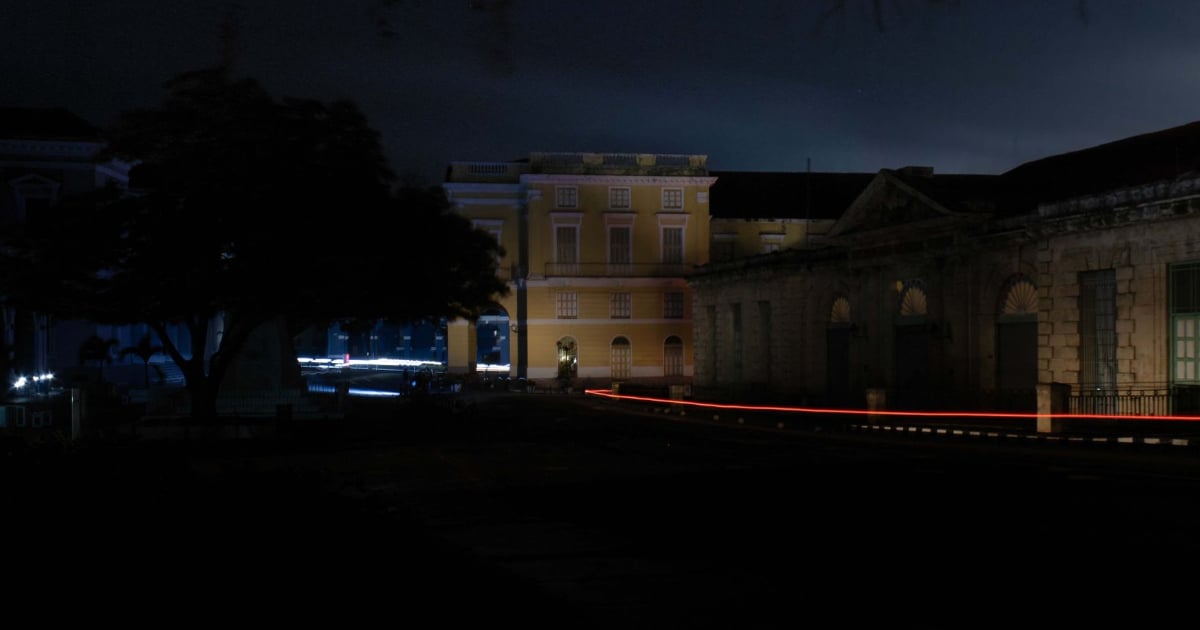
In Havana, for example, the electricity service was interrupted on Wednesday for 24 hours, recording a maximum of 341 MW at 8:50 PM, affecting all six supply blocks and failing to meet the initial schedule.
Cuba's energy crisis, reflected in these figures, highlights an irresponsible and ineffective management by the authorities, who are unable to ensure a basic supply for the population.
The lack of maintenance, insufficient planning, and reliance on aging and limited equipment continue to keep the Island in darkness, with prolonged blackouts impacting daily life, the economy, and essential services.
Wednesday was marked as an example of the precariousness of the SEN, and the outlook for the coming days does not show significant improvements.
While the population suffers the consequences, the government continues to provide no clear answers or urgent measures that could reverse this situation that has become chronic.
Frequently Asked Questions about the Energy Crisis in Cuba
What is the current situation of the electric system in Cuba?
The National Electric System (SEN) of Cuba is on the brink of collapse, with extended blackouts exceeding 20 hours a day. The power generation deficit is one of the highest recorded, reaching up to 1906 MW during peak demand. This energy crisis is due to a combination of breakdowns in power plants, lack of maintenance, fuel shortages, and governmental negligence.
What factors have contributed to the energy crisis in Cuba?
The energy crisis in Cuba is due to multiple factors, including the obsolescence of thermoelectric plants, a lack of investment in infrastructure, shortages of fuel and lubricants, and inadequate maintenance of facilities. Additionally, the inefficient and negligent management by the government has worsened the situation, leaving the population without a stable electricity supply.
How are power outages affecting daily life in Cuba?
Power outages are severely impacting daily life in Cuba. The lack of electricity hinders food refrigeration, cooking, the use of basic electrical appliances, and access to digital services. This creates an atmosphere of despair and social unrest, also affecting medical services, small businesses, and the country’s urban infrastructure.
What role do renewable energies play in the Cuban energy crisis?
Although new photovoltaic solar parks have been added, the energy generated from renewable sources is still insufficient to offset the decline in thermal generation and meet the country's demand. The 32 new solar parks provide only a partial contribution to the system, but they cannot cover the significant generation deficit that Cuba is facing.
Filed under: