
Related videos:
The United States government announced on Friday a new offensive against drug trafficking in Latin America and the Caribbean, which includes aerial surveillance, maritime patrols, combined operations, and closer cooperation with allied countries in the region.
The initiative will be coordinated from Miami under the leadership of Southern Command (SOUTHCOM), which announced the establishment of a new Joint Task Force (JTF) led by the II Marine Expeditionary Force (II MEF) in an official statement. The goal is to strengthen and synchronize anti-drug trafficking operations throughout the hemisphere.
“Transnational criminal organizations threaten the security, prosperity, and health of our hemisphere,” stated Admiral Alvin Holsey, commander of Southern Command.
“With this new strength, we will be able to detect, disrupt, and dismantle illicit trafficking networks more quickly and thoroughly, in coordination with our partner agencies and nations,” he added.
The new Task Force will have as its main mission to detect drug trafficking routes and neutralize shipments before they reach the U.S. or allied countries.
To achieve this, intelligence, surveillance, and reconnaissance aircraft will be used, along with maritime patrols and rapid response forces.
This is aimed at identifying traffic patterns through advanced aerial surveillance, merging real-time intelligence among military forces, federal agencies, and partner countries, joint training to enhance military interoperability, and conducting combined operations and direct advisory to strengthen local anti-drug capabilities.
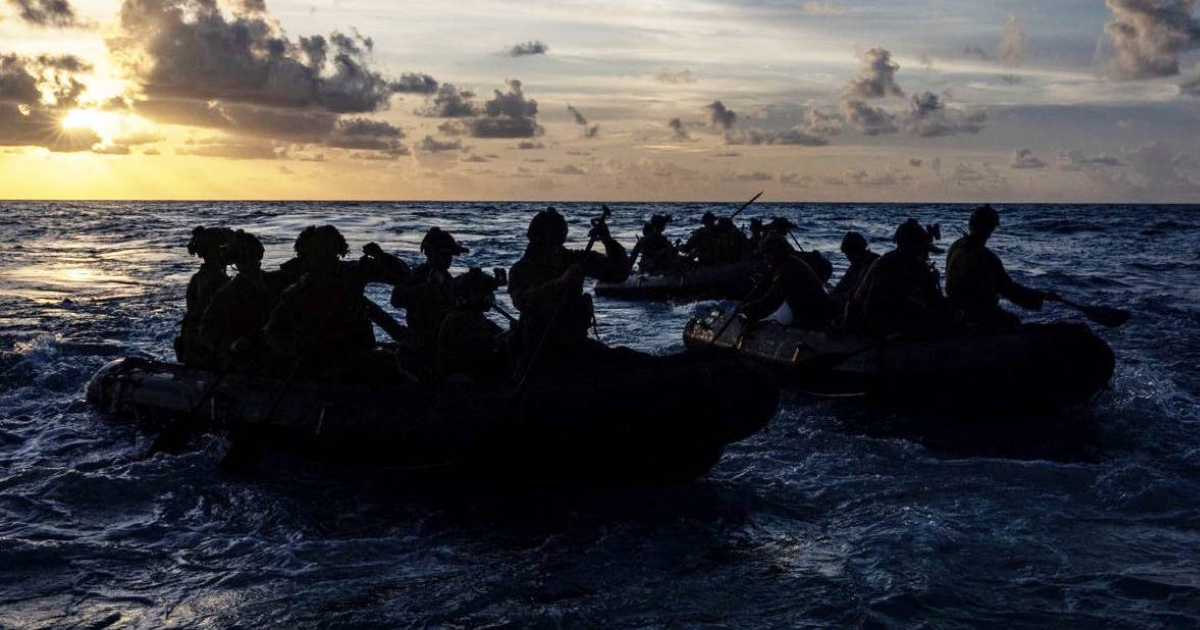
The general Calvert Worth, commander of the II MEF and now leader of the JTF, emphasized that this is a “primarily maritime” operation.
“Our team is trained, equipped, and ready to lead this mission. We will utilize maritime patrols, aerial surveillance, precision interdictions, and intelligence sharing to curb illegal trafficking, uphold the rule of law, and protect vulnerable communities, both in the U.S. and in the region,” he assured.
The new Joint Task Force will depend directly on Southern Command and will include the participation of key partners such as the Department of Homeland Security, federal agencies, and forces from allied countries.
The establishment of this operational structure comes after the U.S. sank at least four vessels near the territorial waters of Venezuela, a country it accuses of sending drugs to its shores.
Frequently Asked Questions about the New U.S. Drug Offensive in the Caribbean
What does the new U.S. anti-drug offensive in the Caribbean consist of?
The new U.S. anti-drug offensive in the Caribbean includes aerial surveillance, maritime patrols, and combined operations with allied countries. This strategy will be coordinated from Miami under the leadership of Southern Command (SOUTHCOM) and will involve the establishment of a Joint Task Force aimed at detecting and neutralizing drug trafficking routes before the drugs reach the U.S. or allied countries.
What is the role of Southern Command in this initiative?
The Southern Command (SOUTHCOM) leads the coordination of the new anti-drug offensive in the Caribbean. The Southern Command oversees the establishment of the Joint Task Force, which will be headed by the II Marine Expeditionary Force. This entity will be responsible for synchronizing operations to detect and neutralize illicit trafficking networks, working closely with federal agencies and partner countries.
How will this operation affect Venezuela?
The U.S. anti-drug operation in the Caribbean has escalated tensions with Venezuela, a country that Washington accuses of being a source of drug trafficking. The United States has sunk vessels near the Venezuelan coasts, which Caracas has denounced as acts of aggression. Furthermore, the Trump administration has pointed to Nicolás Maduro's regime for its alleged leadership in drug trafficking, increasing pressure on the South American country.
What means will the United States use in its anti-drug offensive in the Caribbean?
The United States will use intelligence, surveillance, and reconnaissance aircraft, as well as maritime patrols and rapid response forces for its drug enforcement offensive in the Caribbean. These tools will allow for the identification of drug trafficking patterns, the integration of real-time intelligence, and the execution of combined operations to dismantle transnational criminal networks.
Filed under: