
Related videos:
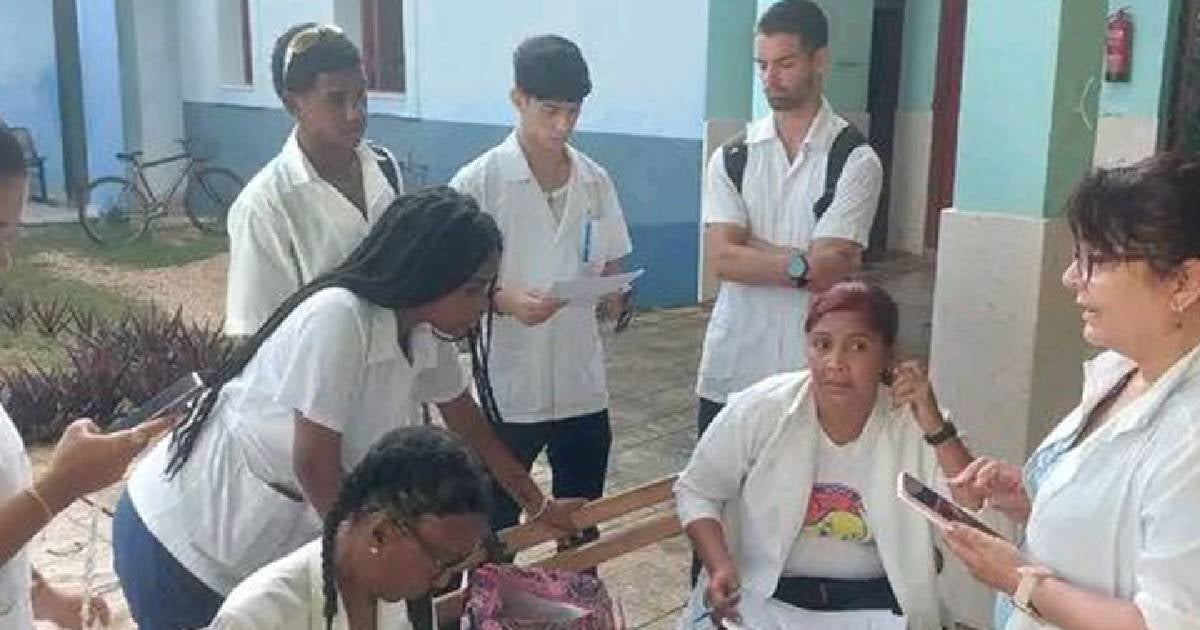
About 2,500 students from the University of Medical Sciences of Matanzas (UCMM) were mobilized to support efforts in controlling arboviruses in a province facing high rates of dengue and chikungunya.
The tasks include active research, the detection of suspected cases, and the elimination of mosquito breeding sites, reported the president of the University Student Federation (FEU) at the institution, Sunay de la Caridad Pérez Borroto.
The young people work in coordination with the Eliseo Noel Caamaño Pediatric Hospital and specialists from the Ministry of Public Health, focusing their efforts on high-risk areas, although they cover all 13 municipalities of the territory.
Its main function is to identify symptoms compatible with arbovirosis and report them to the basic health teams, in addition to detecting water deposits and breeding sites within homes, reported the Cuban News Agency.
The rector of UCMM, Arístides L. García Herrera, stated that the inclusion of the students "is a testament to the commitment of future physicians to the people of Matanzas."
He also recalled his participation in health campaigns during the COVID-19 pandemic and other prioritized programs in the sector.
Health authorities reported that the province has 543 hospital beds available for patients with nonspecific febrile syndrome, of which 43% were occupied as of Friday morning.
Meanwhile, monitoring and preventive measures are being maintained in light of the resurgence of mosquito-borne diseases.
A significant portion of the Cuban population remains on alert due to the health crisis in Matanzas, where the spread of diseases is compounded by the traditional secrecy of the Cuban government.
This official opacity intensifies the fear that the magnitude of the health problem exceeds what is publicly acknowledged.
The public distrust has been validated recently, when a figure close to the official media decided to speak out.
The journalist Yirmara Torres Hernández from the local radio station published an emotional message on Facebook in which she reports deaths due to the chikungunya outbreak in her community, a revelation that categorically refutes the official statements that deny the existence of deaths.
In this regard, on Thursday, the Minister of Public Health of Cuba, José Ángel Portal Miranda, stated that no deaths from dengue or chikungunya have been reported in Matanzas, despite the reports of health system collapse and increase in febrile cases in the province.
In contrast, the Cuban historian and activist Alina Bárbara López Hernández denounced that the national and provincial authorities are manipulating information about the epidemic affecting the province of Matanzas.
According to López, there is an explicit order to deny deaths caused by arbovirosis. "The order to refute the deaths from arbovirosis has been given. This is confirmed by Dr. Durán, the Minister of Health, and the authorities in Matanzas."
Although he acknowledged that chikungunya "does not tend to result in mortality," he warned that it can complicate and "therefore contribute to the cause of death in certain cases: children under one year old, elderly individuals over 65, or those with comorbidities, that is, with chronic diseases such as hypertension or diabetes."
"His death certificates won't say 'Chikungunya,' but that's what triggered the end," he added.
Frequently asked questions about the health crisis in Matanzas due to the arboviral outbreak
Why did 2,500 medical science students mobilize in Matanzas?
They mobilized to support the actions for controlling arboviruses in the province of Matanzas, which is facing high rates of dengue and chikungunya. Students are participating in active surveillance, detection of suspected cases, and elimination of breeding sites for the transmitting mosquito. This measure is part of an effort to contain the outbreak that has exceeded the capacity of the local health system.
What is the current health situation in Matanzas?
The province of Matanzas is facing a severe health crisis due to an outbreak of arboviruses including dengue and chikungunya. The health system is overwhelmed, with pediatric hospitals collapsing and an emergency annex center established. The situation is exacerbated by a shortage of resources, including insecticides and trained personnel for fumigation, which has compelled reliance on the support of students and volunteers.
Have there been any reported deaths from dengue or chikungunya in Matanzas?
Although official authorities have denied the existence of deaths from dengue or chikungunya, reports of fatalities have emerged from the community by local journalists and activists. The opacity and handling of information by the government have generated distrust among the population, which fears that the severity of the health issue may be greater than what is publicly acknowledged.
What actions are the authorities taking to control the outbreak in Matanzas?
The authorities have intensified surveillance, fumigation, and vector control actions in the province. Active surveys are being conducted house by house along with environmental sanitation campaigns. However, the lack of resources limits the effectiveness of these actions, and the response has been deemed slow and inadequate by the population, which has strongly criticized the official management of the crisis.
Filed under: