
Related videos:
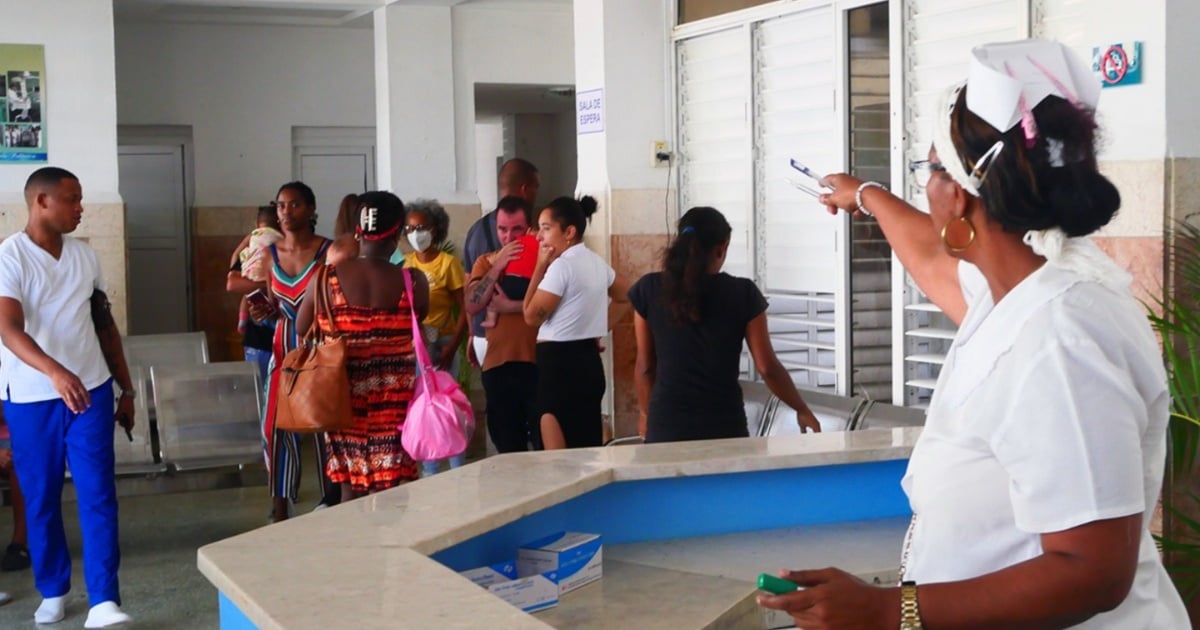
The Provincial Pediatric Hospital Eliseo Noel Caamaño is operating under maximum healthcare pressure, with bed occupancy at its limit due to the rise in viral illnesses in the province, according to local reports.
According to information released this Wednesday in the official newspaper Girón, the management of the center reports a high influx of admissions and is reorganizing care to address the peak in demand.
The report specifies that the hospital has strengthened protocols for admitting children with fever and symptoms compatible with viral conditions, prioritizing quick assessment and isolation when appropriate.
Additionally, they have proceeded to redistribute patients to other facilities within the province to decentralize hospital care.
The director of the center, Dr. Anaelis Santana Álvarez, specified that the filling of the wards is primarily due to the strict enforcement of the national protocol, which mandates the mandatory hospitalization of all children under 10 years old with fever and suspected arboviral disease, regardless of whether they have complications, which increases the pressure on healthcare services.
“We have a complex epidemiological scenario where arboviruses intersect with other viral infections, such as rotaviruses that cause diarrheal diseases, which increases the demand for care,” explained Dr. Santana.
To support the response, the hospital is strengthening the medical staff—specialists and residents—in the Emergency Department and reorganizing the involvement of Medical Sciences students to assist with care in the wards.
The strategy includes decentralizing the workload to the regional hospitals in Cárdenas and Colón, so that patients over 5 years old without alarm signs are attended to by pediatricians in their health areas.
With this, the Provincial Pediatric Hospital focuses its resources on infants under one year old, children showing alarming signs and severe conditions, “ensuring specialized care where it is most needed.”
The director emphasized that "resources to care for the children have not been lacking" and stated that, although occupancy is at capacity, "the province currently has neither serious nor critical cases of arbovirosis."
At the same time, he denied the existence of active cholera cases in the territory and attributed the current diarrhea cases to seasonal rotavirus.
As a recent update, Santana indicated that in the last 48 hours, there have been no recorded deaths in the center due to any illness, and that no child from Matanzas has died as a result of arboviruses, which he said reflects the "effectiveness" of timely medical monitoring and intervention.
He also urged families to remain calm and seek health services at any sign of symptoms.
The epidemiological situation in Cuba
Dr. Francisco Durán García assured this Wednesday that, although there is high demand for health services in that province, they have not collapsed.
Durán confirmed the circulation of three arboviruses: dengue (ongoing presence), chikungunya (initially detected in Matanzas and spreading within the province), and Oropouche (on the decline).
He pointed out that dengue continues to be transmitted in 12 provinces, 36 municipalities, and 44 health areas; while Oropouche is present in 12 provinces, 26 municipalities, and 31 health areas, with a trend towards a decrease in cases.
Regarding the severity, Durán reported that there are four patients hospitalized with dengue: three in serious condition and one in critical condition.
Frequently Asked Questions about the Crisis at the Pediatric Hospital of Matanzas
What is the current situation of the Pediatric Hospital of Matanzas?
The Provincial Pediatric Hospital Eliseo Noel Caamaño in Matanzas is operating under extreme pressure due to the rise in viral illnesses, with all beds occupied. Admission protocols have been strengthened, and priority is given to children under one year of age and those with severe symptoms. The hospital director assures that, although occupancy is full, there are no severe or critical cases of arbovirus in the province.
What diseases are affecting the pediatric population in Matanzas?
The province of Matanzas is facing an increase in viral diseases, mainly arboviral infections such as dengue and chikungunya, as well as infections caused by rotavirus. These diseases have contributed to the collapse of the pediatric hospital due to the high demand for medical care. Authorities have also denied the existence of cholera in the area, attributing diarrheal cases to seasonal rotavirus.
What measures are being taken to address the hospital crisis in Matanzas?
To address the crisis, several measures have been implemented at the Pediatric Hospital of Matanzas, such as the redistribution of patients to other facilities in the province and the reinforcement of medical staff in emergencies. Priority is given to the care of more severe cases and the decentralization of patients over 5 years old without alarming symptoms. Additionally, the involvement of Medical Sciences students is being reorganized to support in the care units.
Are there sufficient resources to care for pediatric patients in Matanzas?
The director of the Pediatric Hospital of Matanzas assures that resources to care for the children have not been lacking, despite the hospital being at full capacity. However, the overall situation in the province reflects deficiencies in the healthcare system due to high demand and material limitations, such as the lack of equipment for fumigation and vector control.
Filed under: