
Related videos:
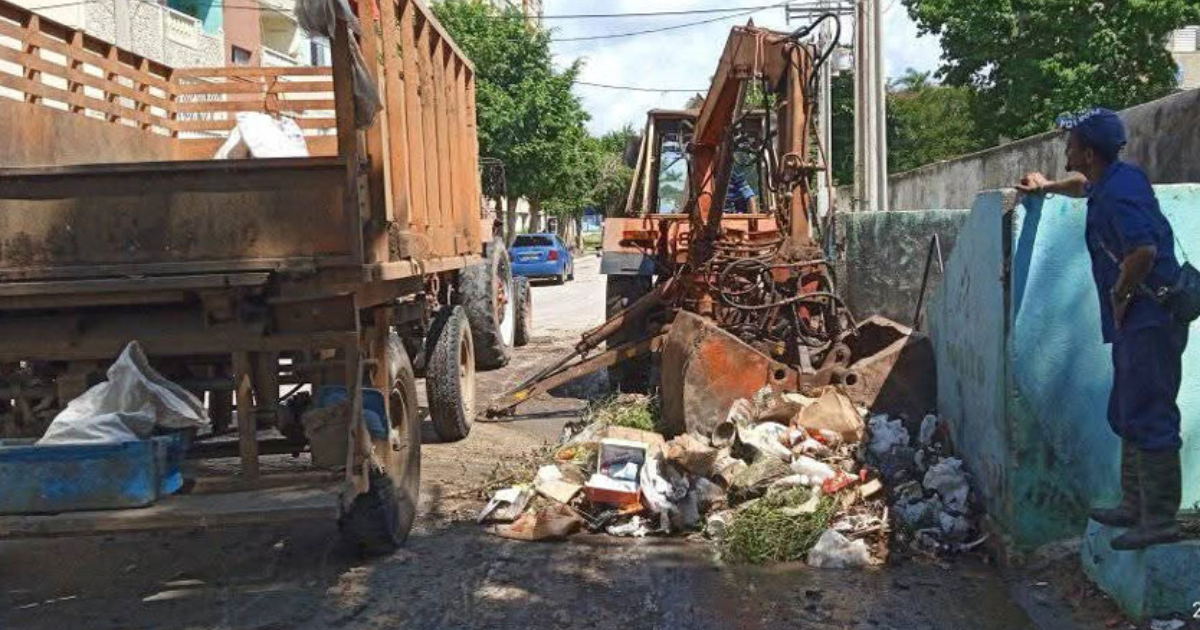
In light of the complex epidemiological situation in the province of Ciego de Ávila, the Provincial Directorate of Communal Services has intensified cleaning efforts in the municipalities with the highest generation of solid waste, as part of the actions to eliminate breeding sites for the Aedes aegypti mosquito, the main vector of diseases such as dengue, chikungunya, and the Oropouche virus.
According to the official newspaper Invasor, the contingent “El Vaquerito” is systematically working in all the popular councils, with an emphasis on the southern part of the main city. Just between Monday and Tuesday of this week, nearly 200 truckloads of waste were transported to the provincial landfill, which necessitated renting a bulldozer to manage the accumulated volumes.
The sanitation day involves all companies and organizations in the area, in coordination with Public Health, whose teams identify and eliminate the main sources of vectors.
"Although there are issues with fuel, the provincial government prioritizes the supply to ensure the continuation of this vital task," stated Luis Alberto Pérez Olivares, provincial director of Communal Services, who urged the public to dispose of their trash at designated points, known as "camas," and to avoid the creation of illegal dumps.
The official also addressed self-employed workers and Mipymes engaged in food sales, urging them to take responsibility for their waste disposal. “If you rent a truck to bring in the chicken, rent one to take out the garbage to the landfill or take it to a nearby waste facility,” he emphasized.
Pérez Olivares warned that if a shift in civic awareness is not achieved, fines will be imposed on those who violate hygiene regulations, with the involvement of the appropriate inspectors.
These hygiene actions are intensified in a context where the province has reported over 5,000 cases of febrile syndromes so far this year, with confirmed circulation of dengue, chikungunya, and Oropouche.
Recently, health authorities declared the active transmission of arboviral diseases in specific areas of Ciego de Ávila and Morón, in response to the increase in febrile cases and the proliferation of the vector mosquito.
Experts have warned about a crisis of “combined arboviral diseases” that the Cuban regime does not officially acknowledge, which limits the healthcare system's capacity to tackle multiple and simultaneous outbreaks of mosquito-borne diseases.
In this context, the authorities emphasize that maintaining cleanliness in the environment and eliminating mosquito breeding sites is not only an institutional task but a shared responsibility of the entire community.
The issue of solid waste transcends the local context and is linked to a structural crisis across the country. For years, the government has shifted the responsibility onto the population, calling for "voluntary work" and "social awareness," while the lack of resources, fuel, and planning in the waste collection systems continues to persist.
The accumulation of garbage in streets and neighborhoods not only reflects state inefficiency but also facilitates the spread of diseases such as dengue, chikungunya, and Oropouche, whose expansion is directly related to environmental unsanitary conditions.
Frequently Asked Questions about the Epidemiological Outbreak in Ciego de Ávila
Why is Ciego de Ávila intensifying garbage collection?
The province of Ciego de Ávila has intensified garbage collection to eliminate breeding grounds for the Aedes aegypti mosquito, the main vector of diseases such as dengue, chikungunya, and the Oropouche virus. These actions are part of the strategy to reduce mosquito proliferation and contain the transmission of these diseases.
What is the current epidemiological situation in Ciego de Ávila?
In Ciego de Ávila, more than 5,000 cases of febrile syndromes have been recorded so far this year, with confirmed circulation of dengue and Oropouche.
What measures are being taken to combat the outbreak of mosquito-borne diseases?
The authorities are implementing sanitation measures, such as intensive garbage collection and fumigation, in coordination with Public Health. A call is made to the public to maintain cleanliness in the environment and eliminate mosquito breeding sites, as part of a joint effort to curb the spread of diseases.
How does the lack of resources affect the fight against diseases in Cuba?
The lack of resources, such as insecticides and trained personnel, limits vector control campaigns. The scarcity of resources and official indifference complicate the situation, making sanitation efforts rely on the improvised efforts of volunteers and students.
Filed under: